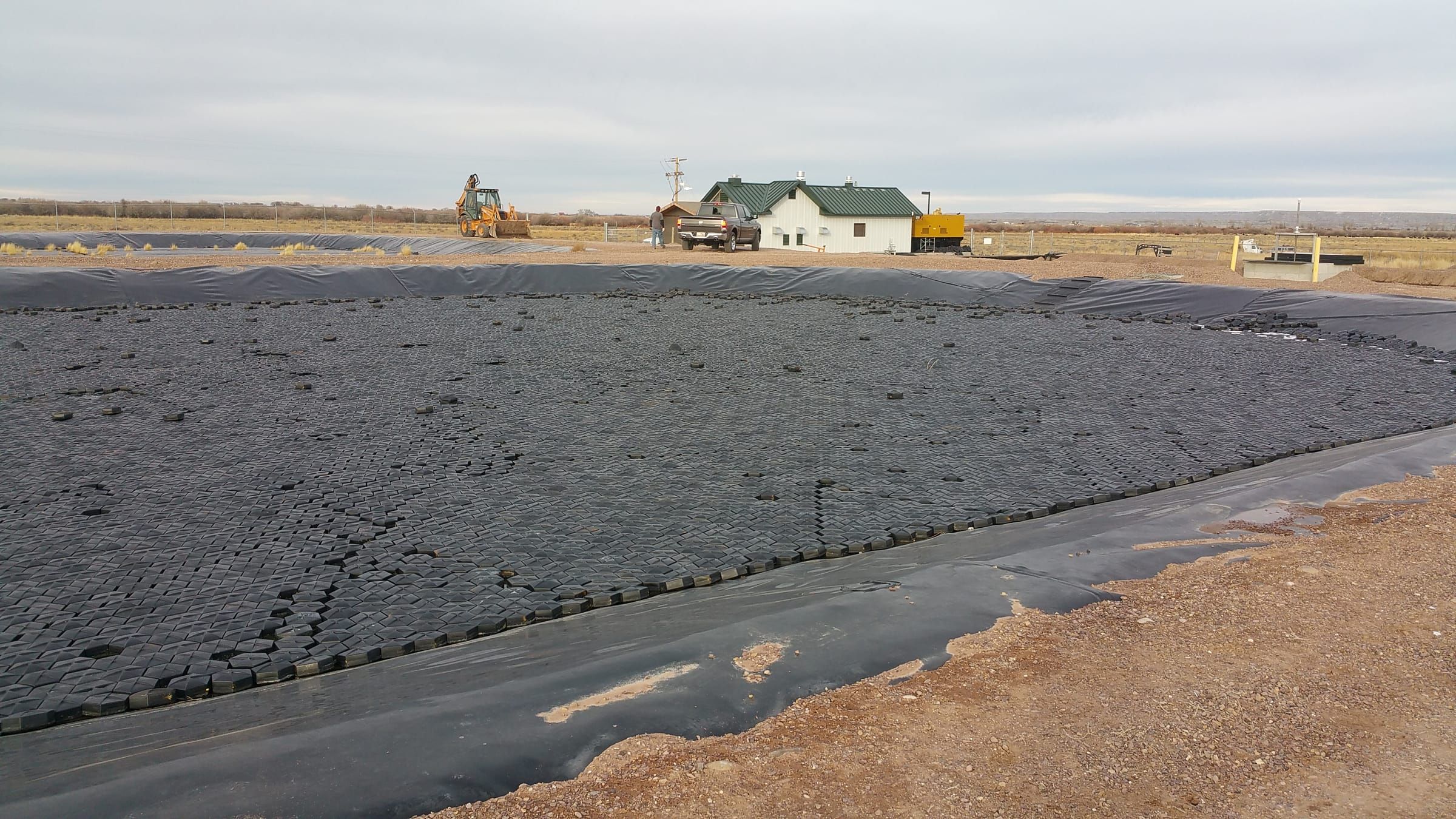
Floating Covers for Frac Ponds — Wind-Resistant Produced Water Storage & Evaporation Control
75 MPH wind-rated Armor Ball® AQUA 275 covers protect frac pond produced water from evaporation, VOC emissions, and wildlife mortality — no tools, no anchors, one-day deployment.
Hydraulic fracturing (frac) ponds store produced water, flowback, and completion fluids that require floating covers to prevent evaporation losses, contain VOC emissions, and exclude wildlife from contaminated water. Hydraulic fracturing operations generate large volumes of produced water and flowback fluid that must be stored in surface impoundments before treatment, reuse, or disposal. Open frac ponds face a convergence of operational challenges: extreme wind exposure that disperses standard covers, rapid evaporation in arid operating regions, BTEX and VOC off-gassing that creates air permit liability, and Migratory Bird Treaty Act (MBTA) exposure when waterfowl land on contaminated water surfaces.
AWTT's Armor Ball® AQUA 275 floating cover was engineered specifically for frac pond applications. The water-filled ballast design anchors each unit against sustained winds up to 75 MPH without mechanical fasteners or permanent installation. The modular system deploys in a single day on any pond geometry, requires no tools or heavy equipment, and can be redeployed to new pad locations as operations move — delivering the flexibility demanded by the dynamic pace of oilfield operations while reducing evaporation by up to 98% and protecting MBTA compliance. Quantify produced-water evaporation on your pad with the AWTT frac pond evaporation calculator — live wind, humidity, and salinity correction.
Related Engineering Guides
VOC Control for Oil & Gas
The topic hub behind this page — field-measured VOC reductions on producing wells, the emission-factor protocol, HDPE in hydrocarbon service, and where NSPS OOOOb actually applies.
Wind-Resistant Floating Covers for Frac Ponds
Selection guidance for produced water ponds exposed to high wind, evaporation, VOC, and wildlife risk.
Hexprotect vs. Armor Ball Cost Comparison
Compare delivered coverage, wind resistance, lifecycle value, and project risk across ball and hexagonal covers.
Common Frac Pond Industry Challenges
Uncovered water storage creates measurable operational, environmental, and compliance risks specific to frac pond facilities.
Produced Water Evaporation Loss
Produced water and hydraulic fracturing flowback fluid stored in open frac ponds evaporates rapidly in the high-heat, low-humidity conditions of the Permian Basin, Bakken, Marcellus, and DJ Basin operating regions — representing direct water resource loss and potential regulatory violations.
Extreme Wind Exposure
Frac pond sites in the Permian Basin, West Texas, Wyoming, and North Dakota regularly experience sustained winds of 50–80 MPH and gusts exceeding 100 MPH. Standard floating covers are displaced by these conditions, leaving ponds unprotected precisely when wind-driven evaporation is highest.
Hydrocarbon Vapors & VOC Emissions
Produced water stored in open ponds off-gases BTEX compounds (benzene, toluene, ethylbenzene, xylene) and other hydrocarbons — creating worker safety hazards, community air quality impacts, and EPA reportable quantity emission events that trigger regulatory action.
Wildlife Mortality in Produced Water
Open produced water ponds attract migratory birds and waterfowl that mistake the reflective surface for safe water. Birds that land in produced water containing hydrocarbons and high TDS (total dissolved solids) suffer rapid mortality — creating Migratory Bird Treaty Act (MBTA) compliance exposure.
Rain Dilution Increases Treatment Volume
Open frac ponds collect rainfall and snowmelt, diluting produced water, increasing storage volume requirements, and raising the total volume of fluid requiring treatment, disposal, or reuse — adding cost at every stage of the water management workflow.
Remote Site Logistics
Frac pond sites are frequently in remote desert, high plains, or mountain locations with limited infrastructure. Solutions that require heavy equipment, permanent installation, or ongoing maintenance are logistically impractical in these environments.
AWTT Floating Cover Solutions for Frac Ponds
Modular, maintenance-free floating covers engineered specifically to address the liquid containment challenges of frac pond operations.
75 MPH Rated Wind Resistance
AWTT's Armor Ball® AQUA 275 is specifically engineered for high-wind frac pond environments. Each ball unit is filled with water for ballast, anchoring the cover against sustained winds up to 75 MPH — tested and proven on exposed Permian Basin and Bakken frac pad sites.
Evaporation Reduction Up to 98%
Covering a frac pond with AWTT floating covers reduces evaporation losses by up to 98%, preserving produced water volume for reuse in future fracing operations. In the Permian Basin, where produced water management is a critical operational cost, this directly reduces truck haul and disposal volumes.
VOC & Hydrocarbon Emission Suppression
Floating covers create a physical barrier at the liquid-air interface, reducing BTEX and VOC off-gassing from produced water surfaces. This reduces air permit exceedance risk, lowers site-perimeter air monitoring readings, and protects field workers from hydrocarbon vapor exposure.
Bird & Wildlife Exclusion (MBTA Compliance)
AWTT floating covers eliminate the open water surface that attracts migratory birds to produced water ponds. By denying bird access to the liquid surface, floating covers are the most effective strategy for MBTA compliance at frac pond sites — replacing the reactive approach of netting with preventive exclusion.
Rain Exclusion Protects Fluid Chemistry
Covering the frac pond surface prevents rain and snowmelt from diluting stored produced water, maintaining consistent TDS and chemistry for reuse qualification — and reducing treatment costs by keeping water volumes and total dissolved solids concentrations stable.
Fast Modular Deployment at Remote Sites
AWTT floating covers require no tools, anchoring, or heavy equipment. A single crew can deploy Armor Ball® AQUA 275 covers on a standard frac pond in one day. The modular design scales to any pond footprint and can be redeployed to new pad sites as operations move.
Quick Facts — Frac Pond Floating Cover Performance
Recommended Products for Frac Ponds
AWTT engineers recommend these floating cover systems for frac ponds applications.
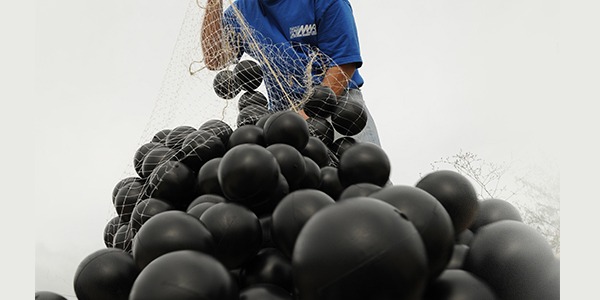
Wind resistance: 75 MPH | Water-ballasted
Armor Ball® AQUA 275
Engineered specifically for the extreme wind exposure of oil & gas frac ponds. Water-filled ballast anchors the cover against 75 MPH winds without mechanical fasteners. Achieves 91% coverage, reduces evaporation by up to 90%, suppresses VOC off-gassing, and excludes wildlife from produced water storage.
Learn more →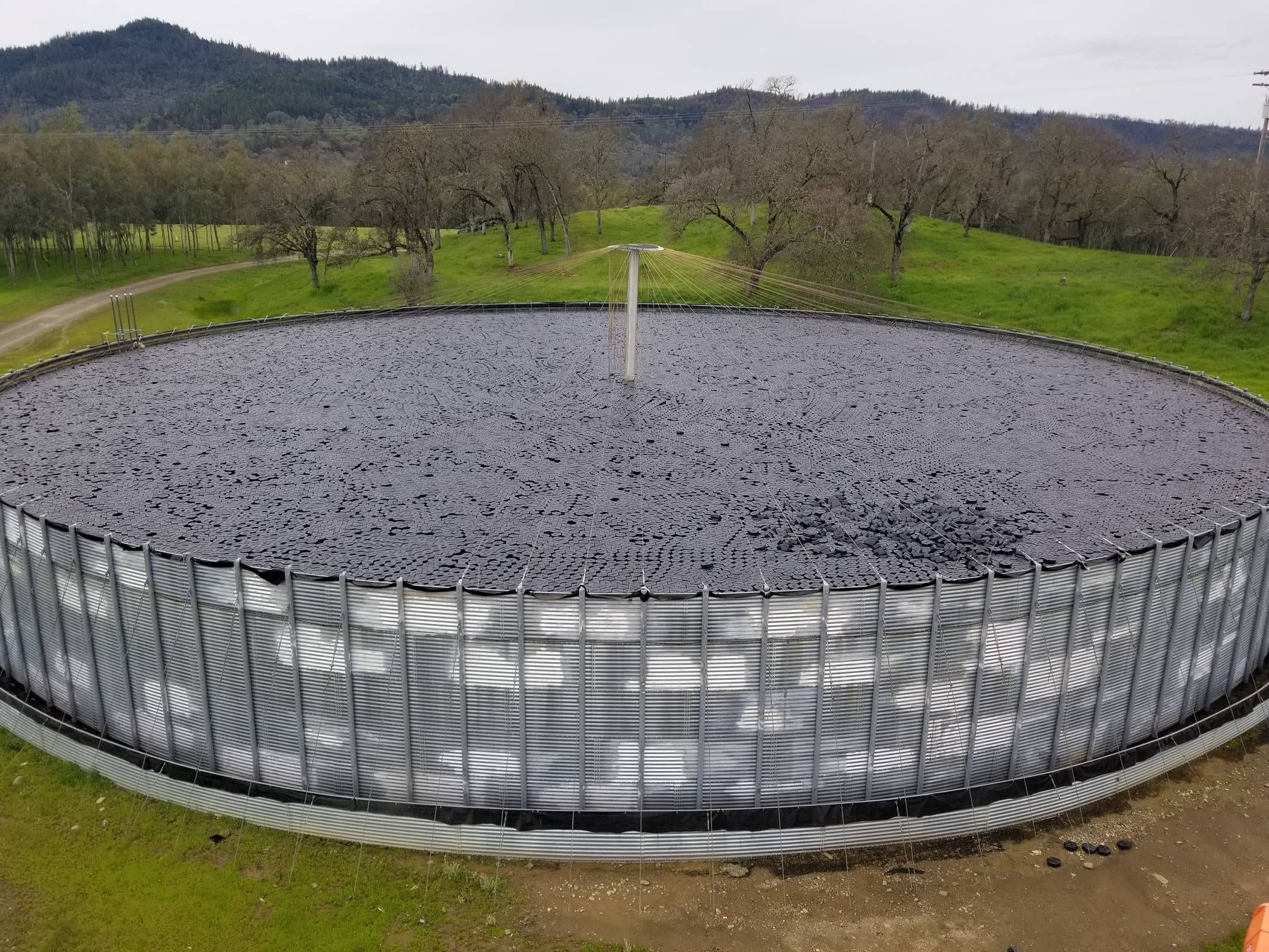
Coverage: up to 99% | Wind resistant
Hexprotect® AQUA
Ideal for larger produced water storage ponds where maximum surface coverage is required. The interlocking hexagonal tile design achieves up to 99% coverage, delivering superior evaporation reduction and more complete hydrocarbon vapor suppression than ball-based cover systems.
Learn more →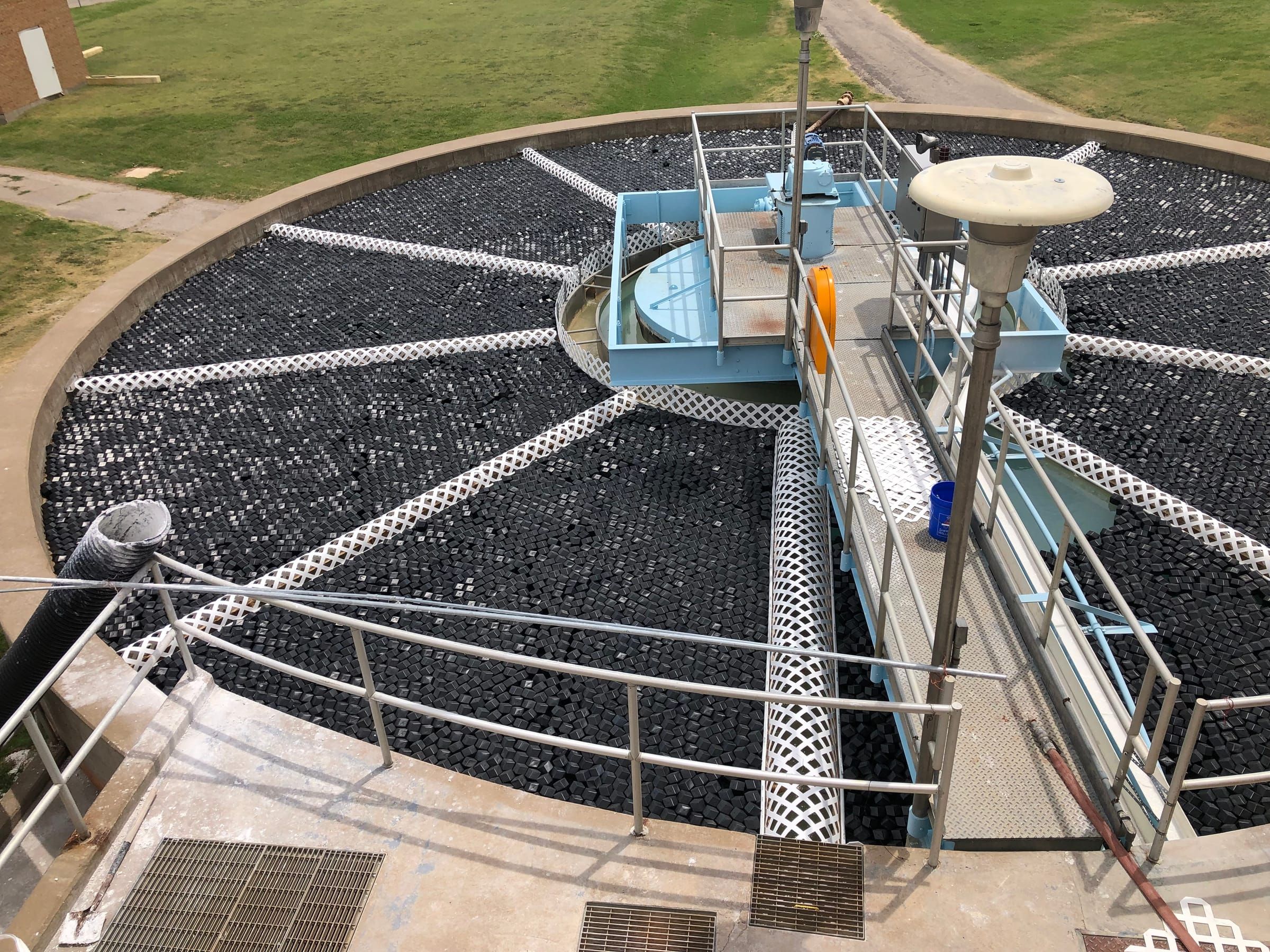
Evaporation reduction: up to 98%
Rhombo Hexoshield®
For produced water operations where water conservation and volume management are the primary drivers, the Rhombo Hexoshield® achieves up to 98% evaporation reduction — the highest in AWTT's product range — directly reducing the volume of water requiring treatment or disposal.
Learn more →Frequently Asked Questions — Frac Ponds
Common questions from frac ponds operators and engineers evaluating AWTT floating cover systems.
Can floating covers withstand the extreme winds at frac pond sites in West Texas and Wyoming?
How do floating covers reduce produced water losses in oil and gas operations?
Are AWTT floating covers chemically resistant to produced water and flowback fluid?
Do floating covers help oil and gas operators comply with Migratory Bird Treaty Act requirements?
Ready to Solve Your Frac Pond Water Storage Challenges?
Contact AWTT for a custom floating cover recommendation tailored to your frac ponds operation — including site assessment, specification sheets, and ROI analysis.
Engineering Tools & Resources
Evaporation Rate Calculator
Estimate evaporation losses on your pond or reservoir and the ROI of a floating cover, using five FAO-56 / Harbeck methods with real-time weather.
Heat Loss & ROI Calculator
Model heat loss from a heated pond with the ASHRAE 5-component balance, then compare insulation savings and 20-year cost of ownership.
Not Sure Which Cover?
Answer a few questions about your site conditions and get a personalized product recommendation.
Technical Specifications
View full engineering specs, wind resistance data, R-values, and material compliance details.