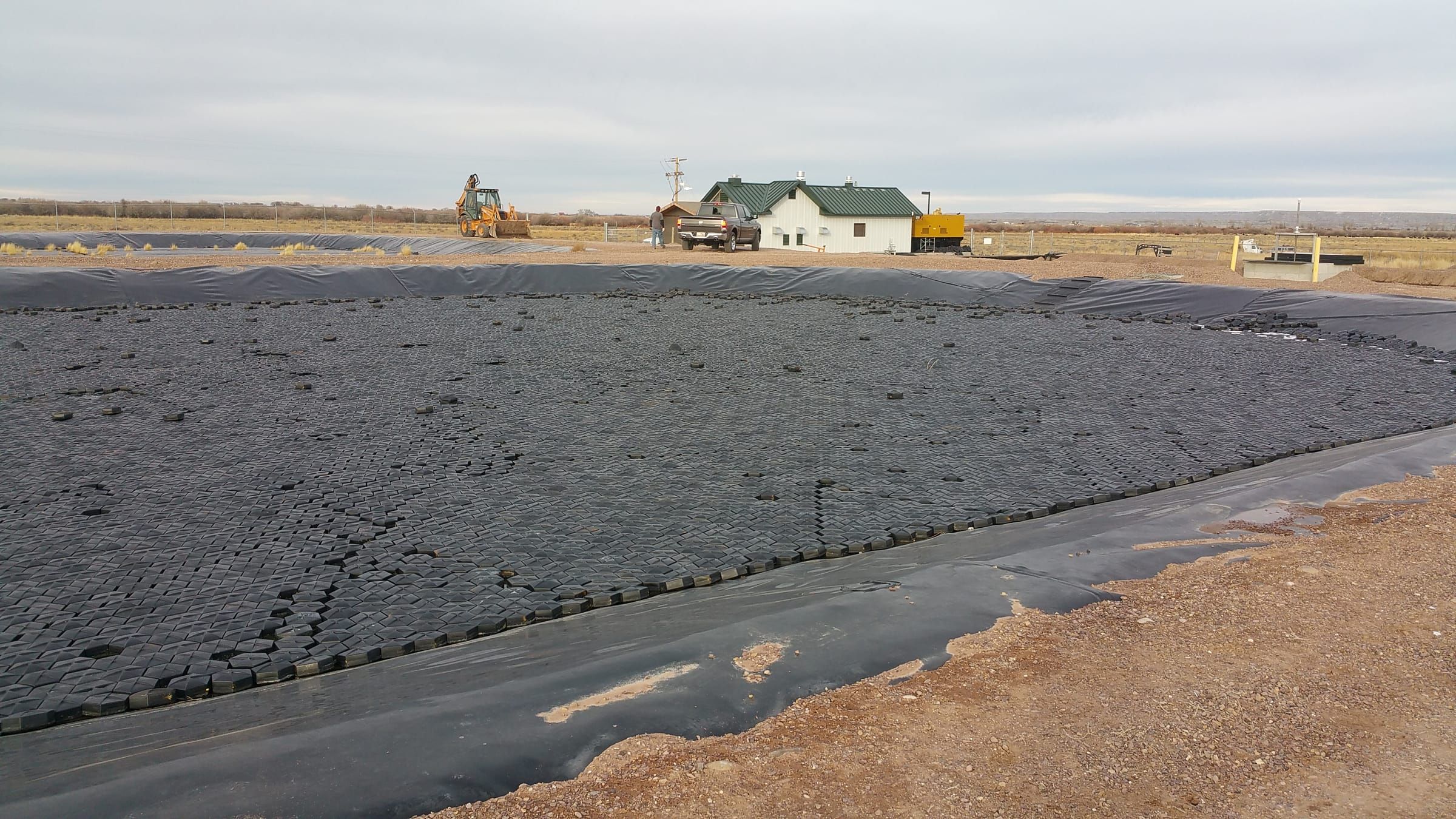
Algae Control Floating Covers — Block Sunlight, Prevent Harmful Blooms & Reduce Water Treatment Costs
Achieve up to 99% sunlight blockage on open reservoirs and ponds — permanently preventing algae and cyanobacteria blooms with passive HDPE floating covers.
Floating covers prevent algae growth in ponds and reservoirs by blocking 95-99% of sunlight at the water surface, eliminating the UV energy algae requires for photosynthesis. Algae is the most pervasive water quality threat facing open surface water storage systems. Open reservoirs, water supply impoundments, industrial cooling ponds, and wastewater treatment lagoons provide ideal conditions for algal growth: sunlight, warm water, and dissolved nutrients. Conventional algae management approaches — algaecide treatment, UV irradiation, biomanipulation — address blooms after they develop, incurring chemical costs and regulatory risk with each event. AWTT's modular floating cover systems prevent algae growth before it occurs, by removing the essential resource that drives bloom development: sunlight.
AWTT's Hexprotect® AQUA floating cover achieves up to 99% surface coverage, blocking solar radiation from 99% of the water surface simultaneously. Without light, algae and cyanobacteria cannot photosynthesize, divide, or form blooms — eliminating taste and odor events caused by geosmin and MIB, preventing cyanotoxin (microcystin, cylindrospermopsin) release, reducing treatment chemical costs at downstream water treatment plants, and supporting Safe Drinking Water Act compliance at surface water utilities. Covers are manufactured from food-grade HDPE, available in NSF/ANSI 61 certified, FDA-compliant resin (21 CFR 177.1520) for potable water contact — inert under disinfectant exposure, and warranted for 10 years. The certification is held by the resin; the finished cover assembly is not itself NSF-certified.
For wastewater lagoon specification context, see AWTT's specifier guide and anonymized application notes.
The Problem — Why Open Ponds Fail
Uncovered liquid storage creates measurable operational, environmental, and regulatory risks that floating covers directly address.
Algae Blooms Degrade Drinking Water Quality
Sunlight exposure drives photosynthetic growth of algae and cyanobacteria (blue-green algae) in open reservoirs and water supply ponds. Dense algae blooms elevate Total Suspended Solids (TSS), increase turbidity, and release taste and odor compounds — geosmin and 2-methylisoborneol (MIB) — that are detectable at concentrations as low as 5 parts per trillion and require expensive granular activated carbon (GAC) treatment.
Cyanobacteria Release Toxic Cyanotoxins
Cyanobacterial blooms — including Microcystis, Anabaena, Aphanizomenon, and Cylindrospermopsis — release cyanotoxins including microcystins (hepatotoxins), cylindrospermopsin (cytotoxin), and anatoxin-a (neurotoxin) during bloom senescence and cell lysis. These compounds are not removed by conventional chlorination and require specialized advanced treatment — raising Safe Drinking Water Act compliance risk at affected water utilities.
Algae Blooms Increase Treatment Chemical Costs
Algae cells and their extracellular organic matter increase chlorine demand, elevate disinfection byproduct (DBP) formation potential (THMs, HAA5s), and raise coagulation and flocculation chemical requirements at water treatment plants. Algae-related treatment cost increases of $0.10–$0.50 per 1,000 gallons are routinely documented at surface water utilities experiencing seasonal bloom events.
Algae Fouls Industrial Cooling Systems
Open cooling water ponds develop algae and biofilm that colonize cooling tower fill, distribution pans, and recirculating water systems — reducing heat exchange efficiency, increasing biological oxygen demand (BOD), and elevating microbiological risk including Legionella proliferation. Algae-related cooling system fouling increases biocide consumption, maintenance frequency, and unplanned downtime at industrial facilities.
Warm Water Accelerates Algae Growth
Algae growth rates double approximately every 10°C increase in water temperature (Q10 relationship). Open ponds in warm climates, solar-heated reservoirs, and industrial cooling ponds in summer operating conditions provide ideal thermal conditions for explosive algal bloom development — creating seasonal compliance challenges that intensify precisely when water supply demand is highest.
Regulatory Compliance Risk from HABs
Harmful Algal Bloom (HAB) events trigger EPA Safe Drinking Water Act compliance obligations, state drinking water advisories, recreational use closures, and public health notifications. Water utilities affected by HABs face mandatory source water monitoring, enhanced treatment requirements, public notification obligations, and — in severe events — emergency alternative water supply procurement.
The AWTT Solution
Modular, maintenance-free floating covers engineered to directly solve algae control challenges in industrial liquid containment.
Sunlight Blockage Eliminates the Algae Growth Driver
Algal growth is photosynthesis-dependent — algae require solar radiation to produce the energy needed for cell division and bloom development. AWTT floating covers with up to 99% surface coverage physically block solar radiation from reaching the water surface, depriving algae and cyanobacteria of the light energy needed for photosynthesis. Without light, algal populations cannot establish or bloom — eliminating the growth driver at its source rather than treating blooms after they occur.
Up to 99% Coverage for Complete Algae Suppression
AWTT's Hexprotect® AQUA achieves up to 99% surface coverage — blocking sunlight from 99% of the pond surface area simultaneously. This coverage level is sufficient to prevent bloom establishment in covered water bodies where even partial shade dramatically reduces algal growth potential. For drinking water reservoirs and treatment ponds, 99% coverage eliminates both the algal bloom and the associated taste, odor, and cyanotoxin compliance risks.
Reduced Treatment Chemical Consumption
Eliminating algal growth in source water directly reduces treatment chemical requirements at downstream water treatment plants. Algae-free raw water requires less coagulant, less chlorine, less activated carbon, and lower disinfection byproduct control effort — generating measurable chemical cost savings that are directly attributable to floating cover installation. Many utilities calculate floating cover ROI primarily from treatment chemical savings rather than water conservation benefits.
Cooling Water Quality Maintenance
By blocking sunlight on cooling water pond surfaces, AWTT floating covers prevent algae establishment in open cooling water systems — maintaining clean recirculating water quality, reducing biocide and algaecide consumption, protecting cooling tower fill from biofouling, and eliminating algae-related contribution to Legionella growth risk in recirculating cooling water systems.
HAB Prevention Supports SDWA Compliance
Proactive algae prevention through floating cover installation provides a more reliable and cost-effective compliance strategy than reactive HAB response — avoiding the emergency chemical treatment costs, public notification obligations, and alternative water supply expenses associated with cyanobacterial bloom events at surface water utilities.
Passive, Chemical-Free Algae Management
Unlike algaecide treatment (copper sulfate, sodium carbonate peroxyhydrate) or UV/ozone systems, AWTT floating covers prevent algae growth passively with zero chemical input, zero energy consumption, and zero ongoing operating cost after installation — making floating cover installation the lowest total lifecycle cost algae management strategy for large open ponds and reservoirs.
Technical Specifications — Algae Control Floating Covers
Recommended Products for Algae Control
AWTT engineers recommend these floating cover systems for algae control applications.
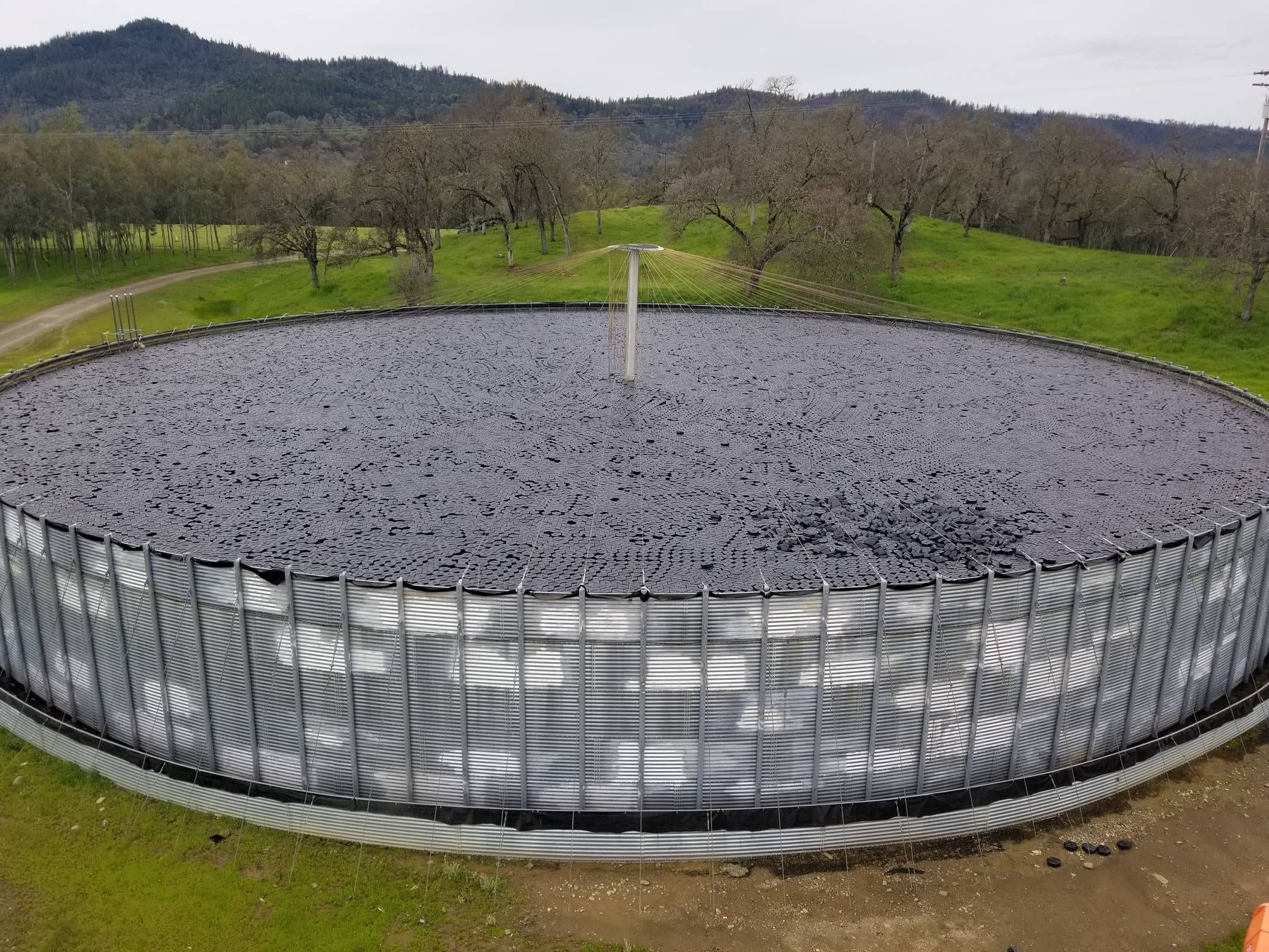
Coverage: up to 99% | NSF/ANSI 61 certified resin option
Hexprotect® AQUA
The leading choice for algae prevention in drinking water reservoirs and water supply impoundments. Up to 99% coverage blocks the sunlight that drives algal growth — eliminating taste and odor events, cyanotoxin risk, and the treatment chemical costs associated with algal bloom events at surface water utilities.
Learn more →
Wind resistance: 75 MPH | Water-ballasted
Armor Ball® AQUA 275
For algae control at industrial cooling ponds and water supply reservoirs on exposed sites where sustained high winds would displace standard covers. The water-ballasted design anchors against 75 MPH winds — maintaining consistent algae-suppressing surface coverage on open industrial sites.
Learn more →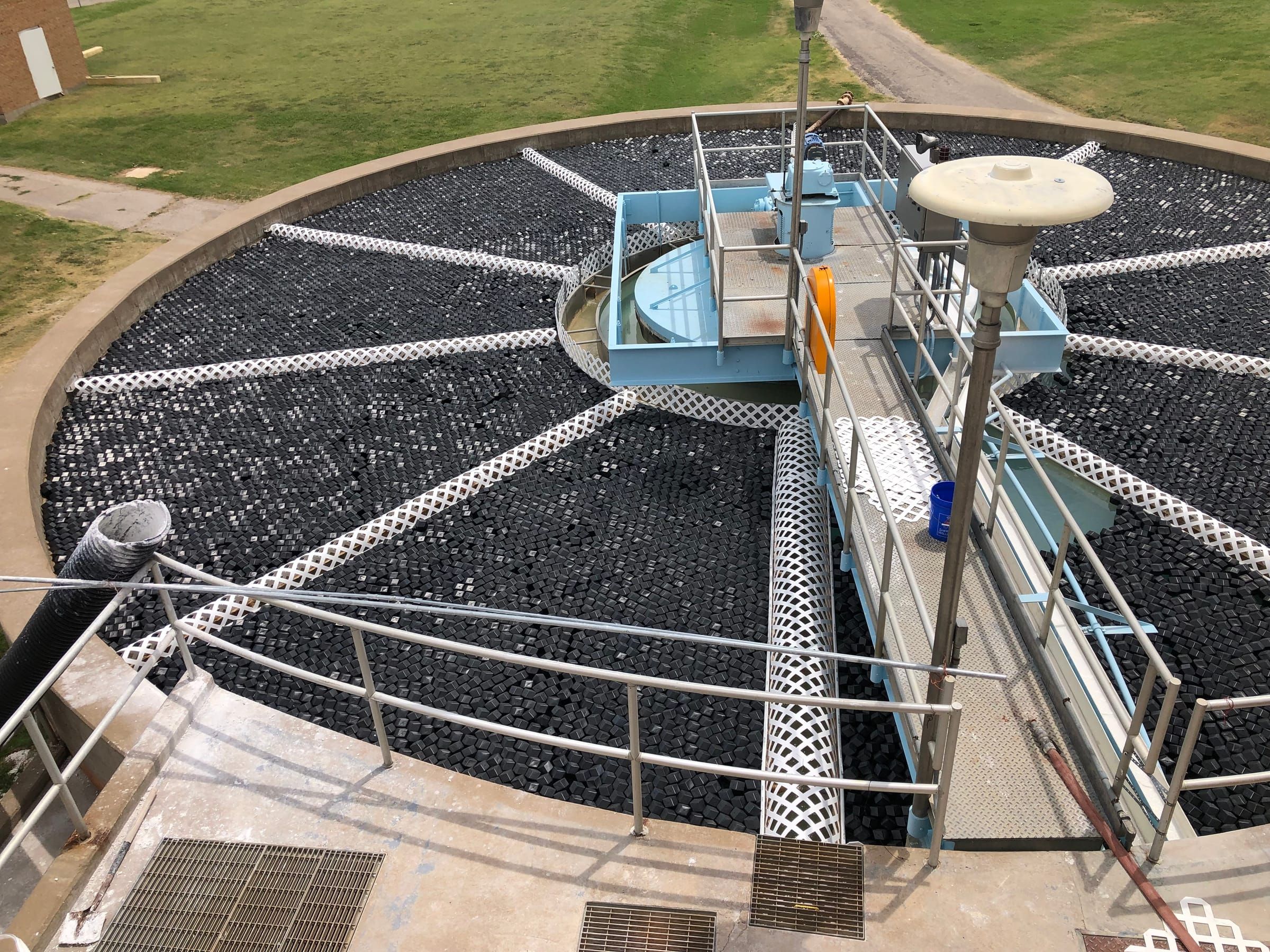
Evaporation reduction: up to 98%
Rhombo Hexoshield®
For water supply reservoirs and treatment ponds where both algae elimination and maximum evaporation conservation are required. The Rhombo Hexoshield® achieves up to 98% evaporation reduction — the highest in AWTT's product range — while providing complete sunlight blockage for algae suppression.
Learn more →Frequently Asked Questions — Algae Control
Common questions from engineers and operators evaluating AWTT floating covers for algae control.
How do floating covers prevent algae growth in open water storage ponds?
Can floating covers prevent cyanobacteria blooms and cyanotoxin contamination?
How much do floating covers reduce treatment chemical costs associated with algae?
Are AWTT floating covers safe for contact with drinking water in algae-prone reservoirs?
Ready to Solve Your Algae Control Challenge?
Contact AWTT for a custom floating cover recommendation — including site assessment, specification sheets, and ROI analysis.
Engineering Tools & Resources
Evaporation Rate Calculator
Estimate evaporation losses on your pond or reservoir and the ROI of a floating cover, using five FAO-56 / Harbeck methods with real-time weather.
Heat Loss & ROI Calculator
Model heat loss from a heated pond with the ASHRAE 5-component balance, then compare insulation savings and 20-year cost of ownership.
Not Sure Which Cover?
Answer a few questions about your site conditions and get a personalized product recommendation.
Technical Specifications
View full engineering specs, wind resistance data, R-values, and material compliance details.