Evaporation Control Floating Covers — Reduce Open Pond Water Loss by Up to 98%
Protect stored water supply from evaporation with AWTT's HDPE floating covers — up to 98% evaporation reduction for municipal, agricultural, and industrial liquid storage.
Floating covers reduce pond and reservoir evaporation by up to 98% by creating a physical barrier between the water surface and the atmosphere, blocking solar radiation and wind-driven moisture transfer. Evaporation is the largest uncontrolled water loss in open liquid storage systems — and in arid climates, it is existential. Surface water reservoirs in the US Southwest, Central Valley, Colorado River Basin, and similar arid regions lose 60–100 inches of stored water to evaporation annually — equal to a year's precipitation disappearing before water reaches end users. For industrial process water ponds, evaporation concentrates dissolved chemicals, destabilizes treatment chemistry, and amplifies disposal costs. AWTT's modular floating cover systems directly address evaporation at the liquid-air interface — where it originates. Use the AWTT pond evaporation rate calculator to quantify your specific site's daily and annual water loss before sizing a cover.
AWTT's Rhombo Hexoshield® floating cover achieves up to 98% evaporation reduction — the highest performance in the AWTT product range — by creating a near-complete physical barrier between stored liquid and the atmosphere. For municipal water supply, agricultural irrigation districts, and industrial water balance management, this translates to billions of gallons of stored water conserved annually from reservoirs that would otherwise lose that volume to open-surface evaporation. All AWTT covers are manufactured from UV-stabilized, frost-resistant HDPE, warranted for 10 years, and designed for a 25-year operational lifespan with zero maintenance requirements. Run the evaporation calculator with live weather for your site to see exactly how much water each AWTT cover would save.
The Problem — Why Open Ponds Fail
Uncovered liquid storage creates measurable operational, environmental, and regulatory risks that floating covers directly address.
Arid Regions Lose 60–100 Inches of Water Per Year
Open surface water ponds and reservoirs in the US Southwest, the Colorado River Basin, California's Central Valley, Chile's Atacama, the Middle East, and Australia's outback lose 60–100 inches of stored water annually to surface evaporation — equal to or exceeding the region's total annual precipitation. In a drought year, uncovered reservoir evaporation can remove the equivalent of months of supply before any water reaches end users.
Evaporation Concentrates Chemicals & Increases Treatment Costs
Evaporation removes water volume while leaving dissolved chemicals behind — concentrating dissolved solids, heavy metals, treatment chemicals, and contaminants in the remaining liquid. This concentration effect destabilizes treatment chemistry, pushes contaminant concentrations above discharge permit thresholds, and increases neutralization, precipitation, and disposal costs for industrial process water ponds.
Agricultural Water Loss Threatens Irrigation Supply Reliability
Irrigation districts and agricultural operations in the US Southwest, San Joaquin Valley, and Great Plains rely on surface reservoirs and storage ponds as their primary water supply buffer between seasonal rain and crop irrigation demand. Open reservoir evaporation in these regions removes hundreds of acre-feet of stored water annually — directly reducing the irrigation water available for crop production and driving raw water cost increases.
Chemical Treatment Losses Increase Operating Costs
Industrial process water ponds, mine tailings ponds, and wastewater treatment lagoons that use dissolved chemical treatment agents lose a portion of those chemicals through evaporation and volatilization. Open pond evaporation increases the volume of makeup chemical additions required, elevates treatment residual concentrations in remaining water, and increases the frequency and cost of water quality testing and correction.
Evaporation Drives Supplemental Heating Costs
Evaporation is the dominant heat loss mechanism from open liquid surfaces — each kilogram of water evaporated removes approximately 2,450 kJ (at typical pond temperatures) of latent heat from the liquid. For heated process water systems, anaerobic digesters, biogas lagoons, and warm-water aquaculture ponds, evaporative cooling forces supplemental heating systems to compensate — consuming significant energy to maintain required operating temperatures.
Climate Variability Increases Evaporation Risk
Evaporation rates from open water surfaces are projected to increase under climate change scenarios affecting arid regions — driven by rising temperatures, reduced relative humidity, and increased solar radiation at the liquid surface. Water utilities and industrial operators in drought-prone regions face increasing evaporation exposure over the next decades, making capital investment in evaporation control more economically justified than at any point historically.
The AWTT Solution
Modular, maintenance-free floating covers engineered to directly solve evaporation control challenges in industrial liquid containment.
Up to 95% Evaporation Reduction
AWTT floating covers create a physical barrier at the liquid-air interface that blocks solar radiation, reduces wind-driven evaporation, and eliminates the direct liquid-to-vapor pathway that accounts for the majority of open pond evaporation loss. Independent field measurements document evaporation reductions of up to 95% on covered ponds versus matched uncovered controls — directly protecting stored water volume for municipal, agricultural, and industrial use.
Rhombo Hexoshield® — Up to 98% Evaporation Reduction
For applications where maximum evaporation control is the primary design driver, AWTT's Rhombo Hexoshield® achieves up to 98% evaporation reduction — the highest performance in the AWTT product range. For a 100-acre arid-region reservoir losing 80 inches of water annually, the Rhombo Hexoshield® can save over 2 billion gallons of stored water per year that would otherwise be lost to evaporation.
ROI Measured in Years in High-Evaporation Regions
In regions where raw water costs $500–$2,000 per acre-foot and annual evaporation exceeds 80 inches, the water value saved by floating cover installation frequently exceeds the installed cover cost within 2–5 years. A 50-acre reservoir saving 180 million gallons annually at $1,000/acre-foot raw water cost generates approximately $550,000 in annual water savings — providing straightforward ROI justification for floating cover capital investment.
Chemical Concentration Stability for Process Ponds
By reducing evaporation from industrial process water ponds by up to 95%, AWTT floating covers maintain consistent dissolved solids concentrations, stable treatment chemistry, and predictable effluent quality — reducing chemical addition requirements, treatment variability, and the risk of permit exceedance caused by evaporative concentration of regulated compounds.
Heating Cost Reduction for Warm Process Systems
For biogas digesters, aquaculture systems, and heated process water ponds where evaporative cooling forces supplemental heating, AWTT floating covers reduce evaporative heat loss by up to 95% — directly reducing the heating energy required to maintain operating temperatures. Hexprotect® MAX R adds R-17+ closed-cell foam insulation for maximum thermal retention in cold climates.
Scales to Any Pond or Reservoir Size
AWTT evaporation control covers scale modularly from small agricultural storage tanks to large municipal surface water reservoirs covering hundreds of acres. No structural modification of the pond basin is required. Covers can be installed in phases across multiple cells as capital allows — making them practical for both small rural water districts and large regional water authorities.
Technical Specifications — Evaporation Control Floating Covers
Recommended Products for Evaporation Control
AWTT engineers recommend these floating cover systems for evaporation control applications.
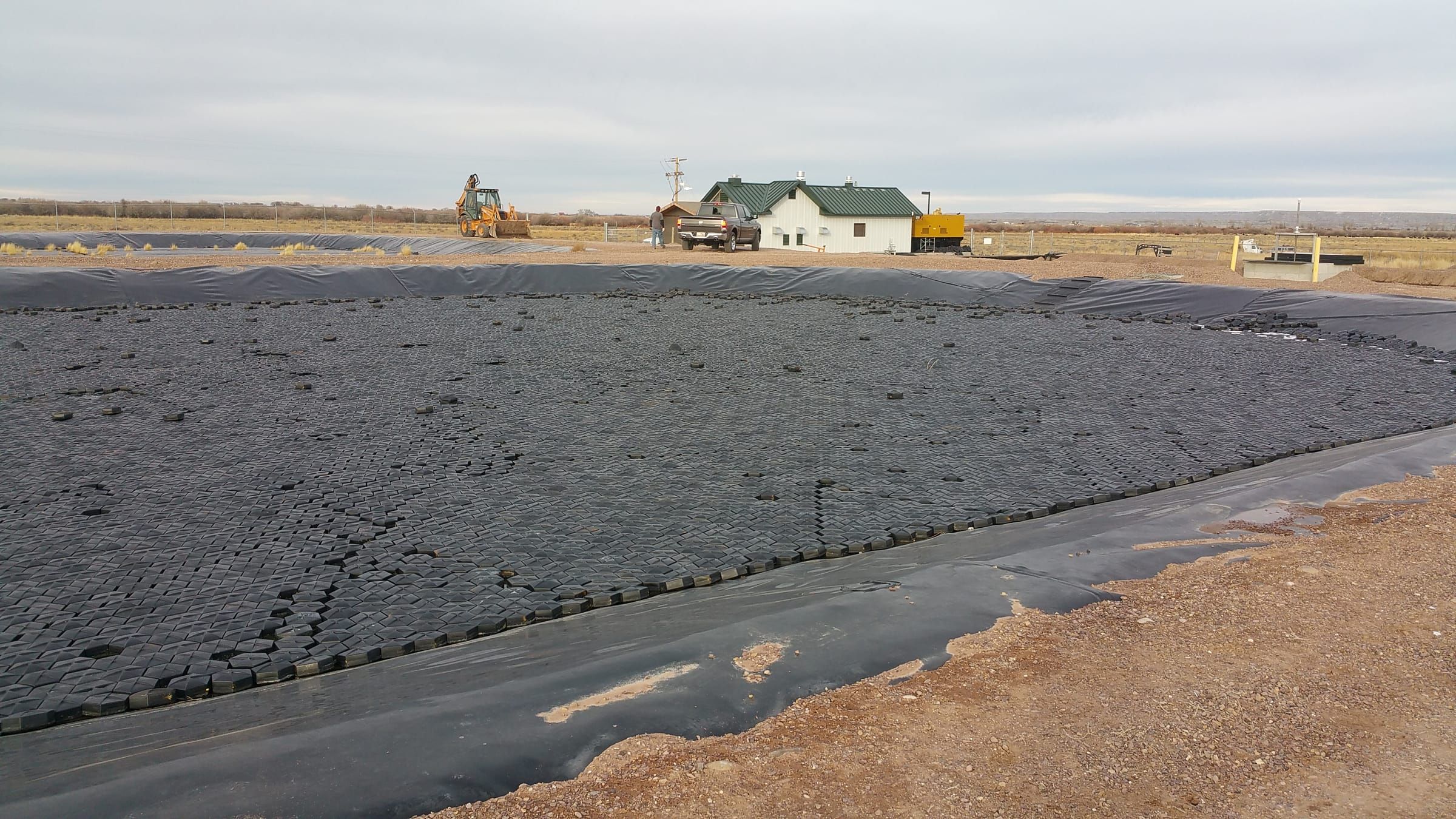
Evaporation reduction: up to 98% | Maximum water conservation
Rhombo Hexoshield®
AWTT's highest-performance evaporation control solution. The Rhombo Hexoshield® achieves up to 98% evaporation reduction — the highest in the AWTT product range — directly protecting stored water volume for municipal supply, agricultural irrigation, and industrial process water balance in drought-threatened arid regions.
Learn more →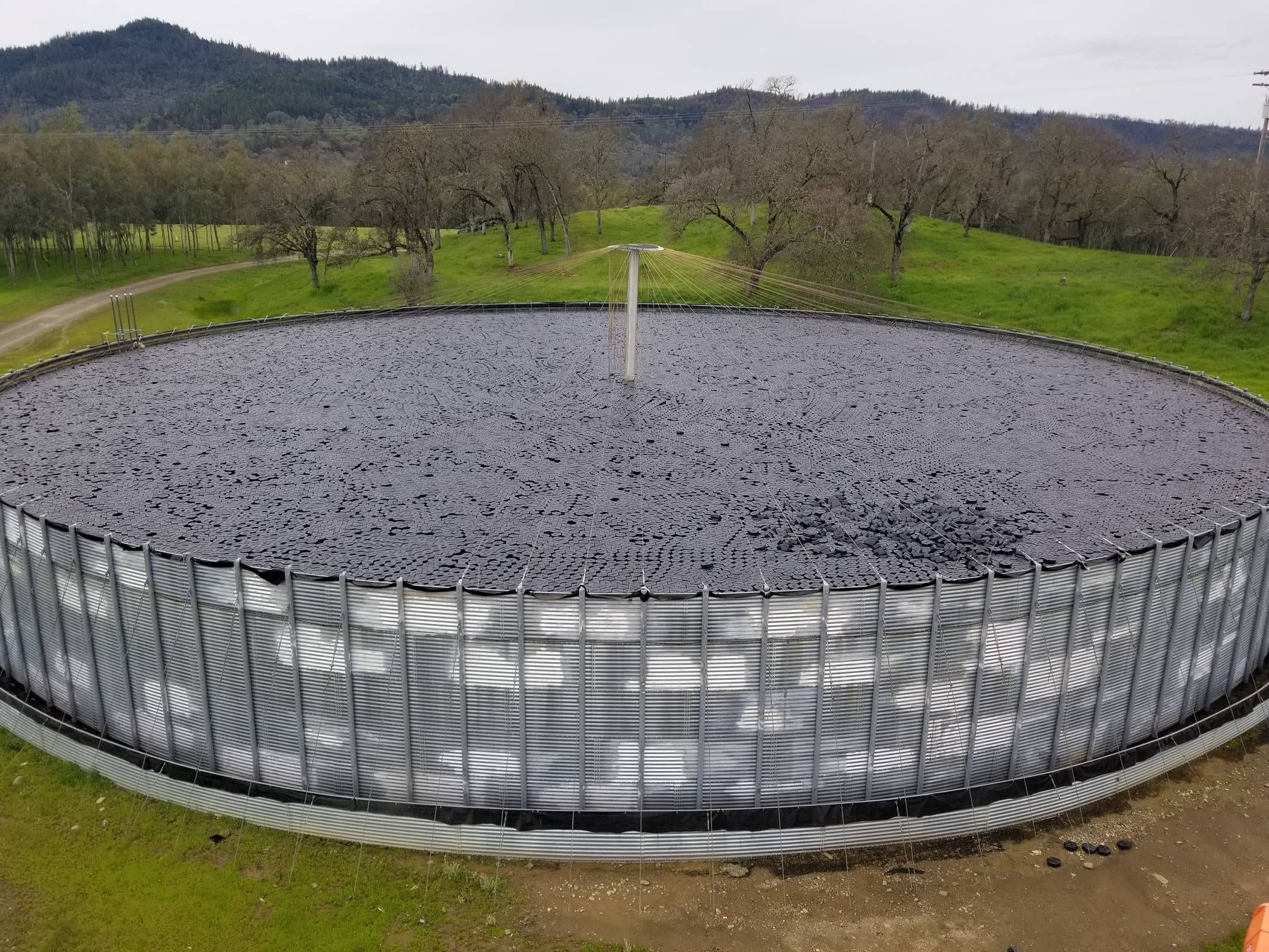
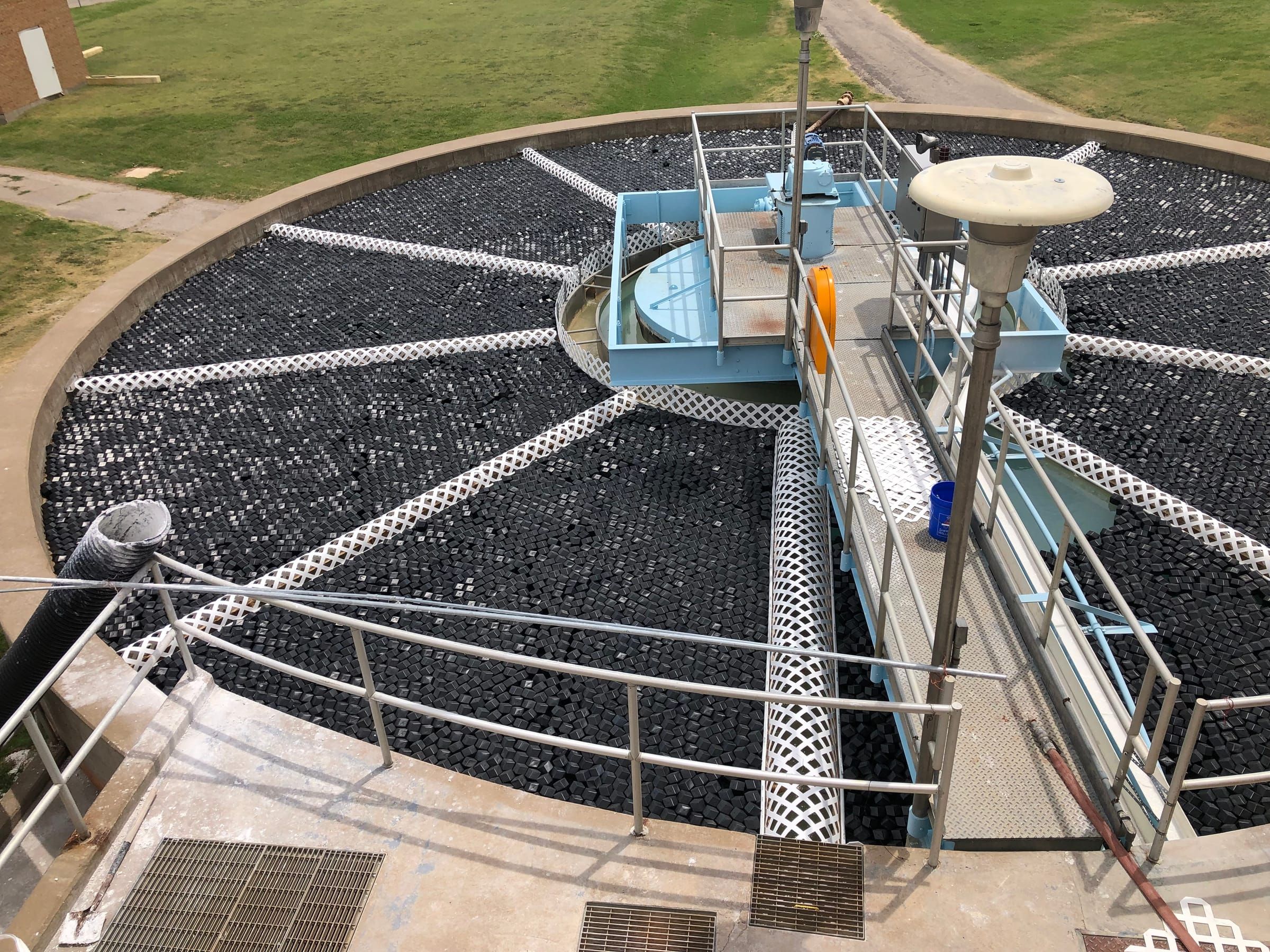
Coverage: up to 99% | Evaporation reduction: up to 95%
Hexprotect® AQUA
The best all-around choice for municipal and agricultural water supply ponds. Up to 99% surface coverage delivers up to 95% evaporation reduction while simultaneously eliminating algae, excluding waterfowl, and preventing contaminated stormwater runoff from entering stored supply.
Learn more →
Wind resistance: 75 MPH | Water-ballasted
Armor Ball® AQUA 275
For high-evaporation reservoirs in exposed locations where high winds are a consistent challenge. The water-ballasted design anchors against 75 MPH winds without mechanical fasteners — providing reliable evaporation control on open high-plains, arid valley, and coastal sites.
Learn more →Frequently Asked Questions — Evaporation Control
Common questions from engineers and operators evaluating AWTT floating covers for evaporation control.
How much water can floating covers save on a large arid-region reservoir?
What is the return on investment for floating covers in water-scarce regions?
How do floating covers reduce evaporation from open ponds?
Can floating covers work in freezing climates where ice forms on ponds?
Ready to Solve Your Evaporation Control Challenge?
Contact AWTT for a custom floating cover recommendation — including site assessment, specification sheets, and ROI analysis.
Engineering Tools & Resources
Evaporation Rate Calculator
Estimate evaporation losses on your pond or reservoir and the ROI of a floating cover, using five FAO-56 / Harbeck methods with real-time weather.
Heat Loss & ROI Calculator
Model heat loss from a heated pond with the ASHRAE 5-component balance, then compare insulation savings and 20-year cost of ownership.
Not Sure Which Cover?
Answer a few questions about your site conditions and get a personalized product recommendation.
Technical Specifications
View full engineering specs, wind resistance data, R-values, and material compliance details.