Ammonia Floating Covers — Reduce NH₃ Emissions from Manure Lagoons, Slurry Tanks & Industrial Wastewater
Suppress ammonia off-gassing by up to 90% and retain nitrogen fertilizer value with AWTT's passive HDPE floating covers — no chemicals, no energy, no maintenance.
Floating covers reduce ammonia volatilization from lagoons and storage ponds by up to 90% by sealing the water surface and preventing the air-liquid contact that drives ammonia gas release. Ammonia (NH₃) is among the most challenging emissions to manage at open liquid storage facilities. At livestock operations — dairies, swine farms, poultry facilities — manure lagoons off-gas ammonia continuously, generating inhalation hazards for farm workers, community odor complaints from neighboring properties, and growing regulatory pressure from EPA and state air quality programs. At industrial facilities — chemical plants, fertilizer manufacturers, food processors — open process water ponds with elevated ammonia concentrations create HAP air permit compliance obligations and OSHA worker safety exposure risk. AWTT's modular floating cover systems address ammonia emissions at the source: the liquid-air interface where volatilization occurs.
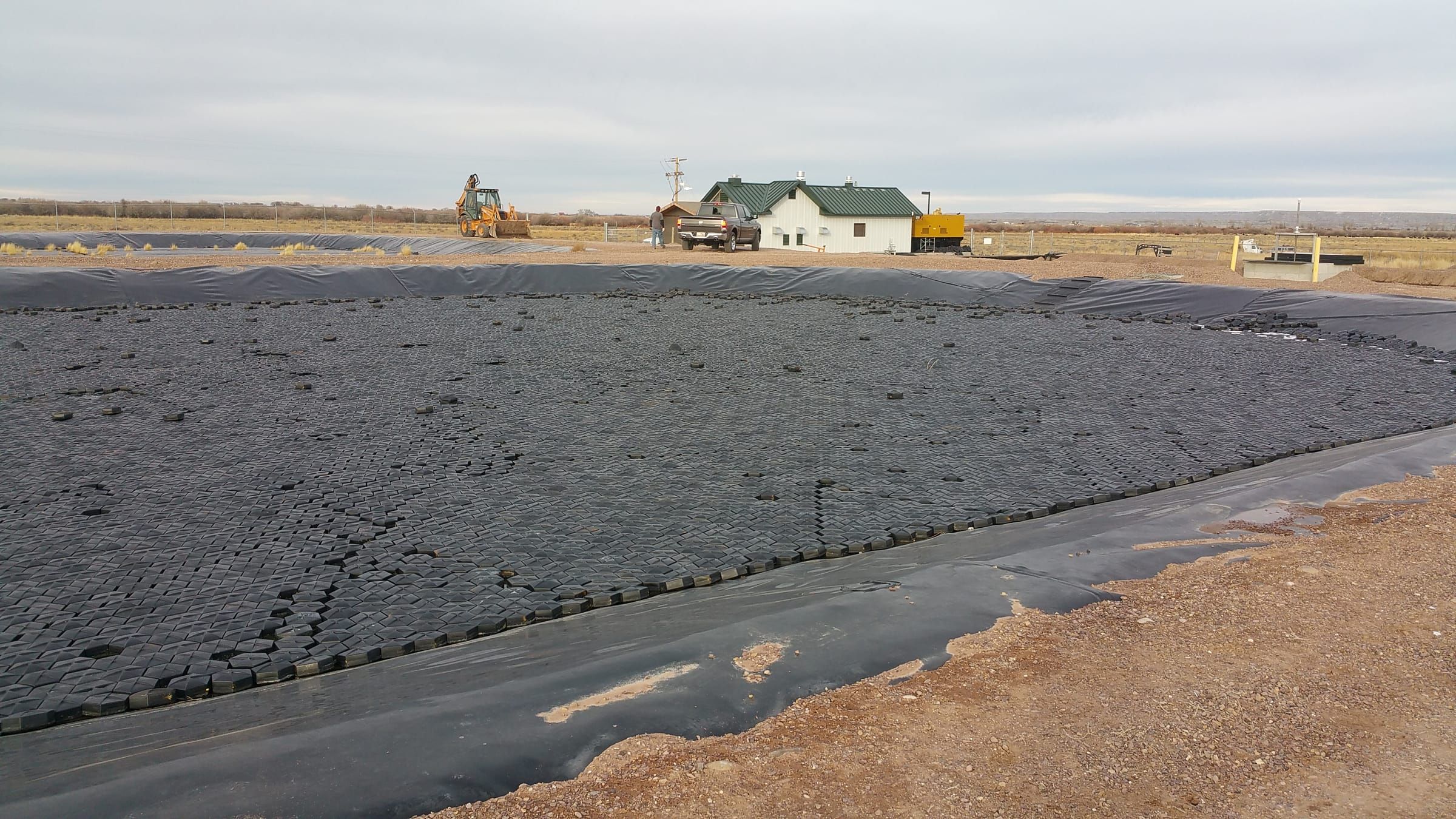
AWTT's Hexprotect® AQUA floating cover achieves up to 99% surface coverage, reducing ammonia emissions from covered liquid surfaces by up to 90% — retaining nitrogen in the liquid phase as ammonium (NH₄⁺) for fertilizer value recovery, reducing site-perimeter air monitoring concentrations, and lowering OSHA inhalation exposure for pond perimeter workers. Independent field studies document ammonia losses of only 5–15% from ball-covered slurry tanks versus 100% from uncovered controls. All AWTT covers are manufactured from HDPE rated for pH 2–13 — resistant to the alkaline, ammonia-rich chemistry of agricultural and industrial wastewater — with a 10-year warranty and 25-year design lifespan.
For wastewater lagoon procurement language and public proof assets, see the specifier guide and anonymized application notes.
The Problem — Why Open Ponds Fail
Uncovered liquid storage creates measurable operational, environmental, and regulatory risks that floating covers directly address.
Ammonia Off-Gassing Creates Inhalation Hazards
Ammonia (NH₃) volatilizes continuously from open manure lagoons, dairy waste pits, slurry tanks, industrial wastewater ponds, and chemical process water basins. At concentrations above 25 ppm, ammonia causes immediate eye, nose, and throat irritation. Above 300 ppm, it causes pulmonary edema and can be fatal. OSHA's permissible exposure limit (PEL) for ammonia is 50 ppm — a threshold routinely exceeded at open agricultural and industrial pond perimeters.
Ammonia Emissions Drive Regulatory Compliance Risk
Ammonia is regulated as a hazardous air pollutant (HAP) under the Clean Air Act and as a CERCLA extremely hazardous substance. Large livestock facilities and industrial operators exceeding ammonia emission thresholds face EPA and state air permit compliance obligations, EPCRA Tier II reporting requirements, and community right-to-know notification duties. Uncovered manure lagoons are consistently the largest single ammonia emission source at agricultural facilities.
Agricultural & Dairy Lagoons Off-Gas Nitrogen
Open manure storage lagoons, dairy flush water ponds, and poultry litter impoundments lose significant quantities of nitrogen to the atmosphere as ammonia gas. This nitrogen loss represents wasted fertilizer value — reducing the nutrient recovery potential from lagoon effluent applied as crop fertilizer and increasing the synthetic nitrogen purchase requirements for farm operations that rely on lagoon effluent as a nutrient source.
Community Odor Complaints from NH₃ Plumes
Ammonia from open agricultural lagoons and industrial wastewater ponds is detectable at concentrations as low as 5–7 ppm — well below OSHA's hazardous threshold but clearly perceptible as the characteristic sharp odor of livestock operations. Ammonia plumes from large dairy, swine, and poultry operations routinely extend miles downwind under stable atmospheric conditions, generating persistent community odor complaints and regulatory pressure.
Livestock Health Impacts from Pen Atmosphere Ammonia
Ammonia accumulation in enclosed livestock housing degrades animal respiratory health, reduces feed conversion efficiency, and increases susceptibility to respiratory disease. Open slurry pit and lagoon surfaces inside or adjacent to livestock housing are significant contributors to pen atmosphere ammonia concentrations — affecting both animal welfare outcomes and production economics at intensive livestock operations.
Industrial Ammonia Sources Require Tight Control
Ammonia is present in industrial wastewater from fertilizer manufacturing, chemical production, food processing, semiconductor fabrication, and refrigeration system maintenance. Industrial operators managing open process water ponds with elevated ammonia concentrations face NPDES permit nitrogen discharge limits, air permit HAP emission thresholds, and OSHA occupational exposure obligations that require reliable ammonia emission control strategies.
The AWTT Solution
Modular, maintenance-free floating covers engineered to directly solve ammonia control challenges in industrial liquid containment.
Physical Barrier Reduces NH₃ Emissions Up to 90%
AWTT floating covers create a continuous physical barrier at the liquid-air interface — directly suppressing ammonia volatilization from the liquid surface. The surface-to-air resistance imposed by the cover barrier dramatically increases the mass transfer resistance for ammonia diffusion from the liquid to the atmosphere. Independent studies document ammonia emission reductions of up to 90% from lagoons and ponds covered with high-coverage floating cover systems.
Nitrogen Conservation Recovers Fertilizer Value
By reducing ammonia volatilization from open manure lagoons by up to 90%, AWTT floating covers conserve nitrogen in the liquid phase — retaining it as ammonium (NH₄⁺) rather than allowing it to escape as NH₃ gas. This nitrogen remains available for land application as fertilizer, reducing synthetic nitrogen purchase requirements for farm operations that use lagoon effluent for crop nutrition. Studies on ball-covered cattle slurry tanks show only 15% ammonia losses versus 100% from uncovered tanks.
Up to 99% Surface Coverage for Maximum NH₃ Suppression
AWTT's Hexprotect® AQUA achieves up to 99% surface coverage — leaving less than 1% of the lagoon surface exposed to the atmosphere. The effectiveness of ammonia suppression is directly proportional to surface coverage: higher coverage means greater mass transfer resistance across the covered area, resulting in lower total ammonia emission rates from the lagoon surface.
Worker Safety at Lagoon Perimeters
By reducing ambient ammonia concentrations at lagoon margins, AWTT floating covers lower measured worker inhalation exposure during sampling, maintenance, and irrigation system operations — supporting OSHA General Duty Clause compliance for livestock facilities and industrial operators managing open ammonia-emitting liquid storage. Reduced ammonia exposure also lowers the frequency of required respiratory protection use.
Air Permit Compliance for HAP Emission Reduction
For industrial operators with ammonia in EPA Title V or state air permit conditions, AWTT floating covers provide a documented passive engineering control for NH₃ emission reduction. Covers reduce total facility ammonia HAP inventory for EPCRA Tier II and Section 313 reporting, lower site-perimeter air monitoring concentrations, and reduce the frequency of reportable quantity release events that trigger regulatory notification.
Chemical-Free, Zero-Maintenance Ammonia Control
AWTT floating covers require no chemicals, no energy, and no maintenance to achieve continuous ammonia emission suppression. Unlike chemical acidification systems (which add acid to lagoon contents to convert NH₃ to NH₄⁺), covers provide passive physical suppression without chemical procurement, handling risks, or operational complexity — lowering total ammonia control system lifecycle cost dramatically.
Technical Specifications — Ammonia Control Floating Covers
Recommended Products for Ammonia Control
AWTT engineers recommend these floating cover systems for ammonia control applications.
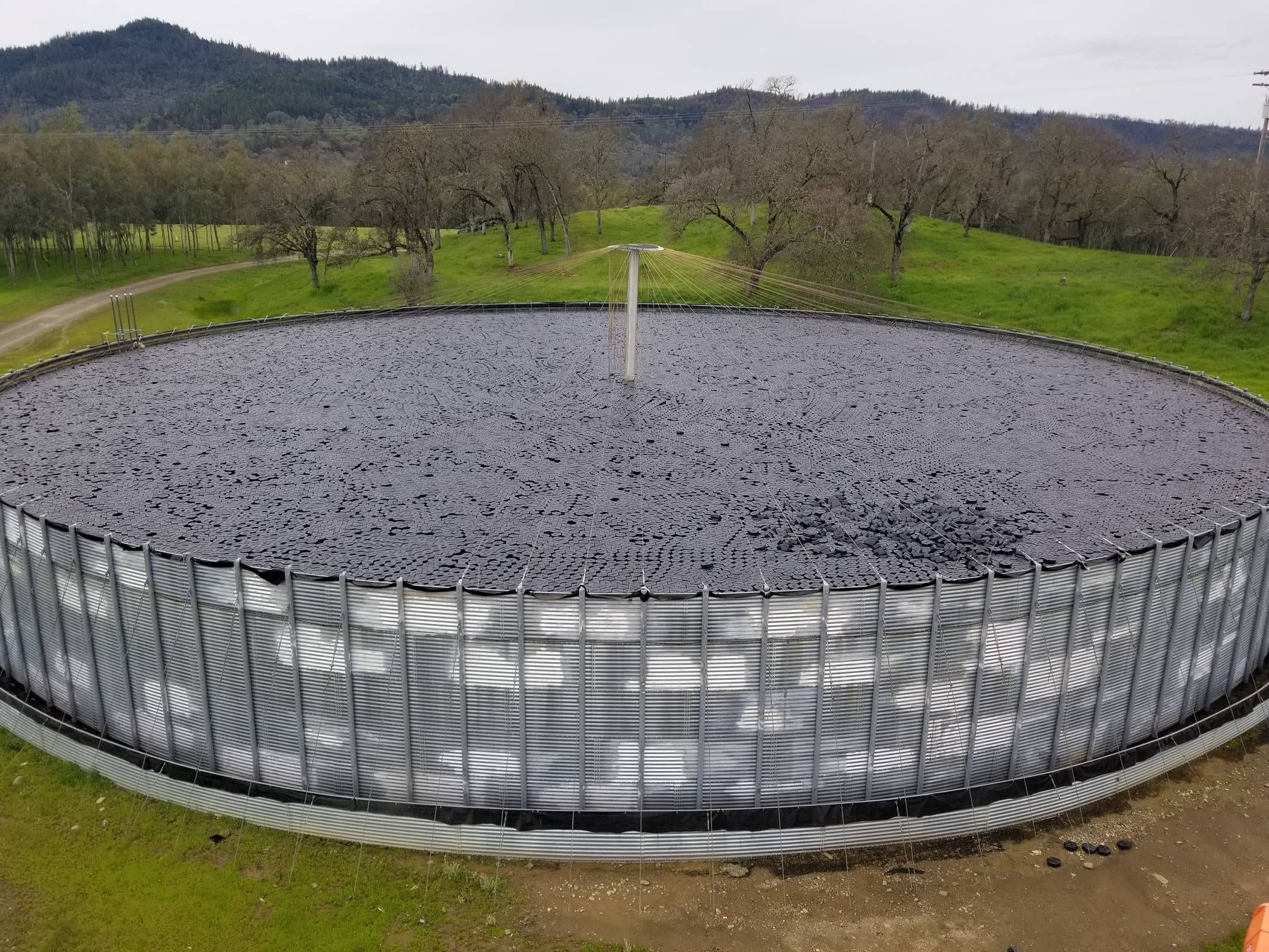
Coverage: up to 99% | NH₃ reduction: up to 90%
Hexprotect® AQUA
The leading choice for ammonia control at dairy lagoons, swine manure pits, and industrial wastewater ponds. Up to 99% surface coverage creates the most complete physical barrier available for NH₃ suppression — retaining nitrogen in the liquid for land application while reducing ammonia inhalation hazards and air permit emission rates.
Learn more →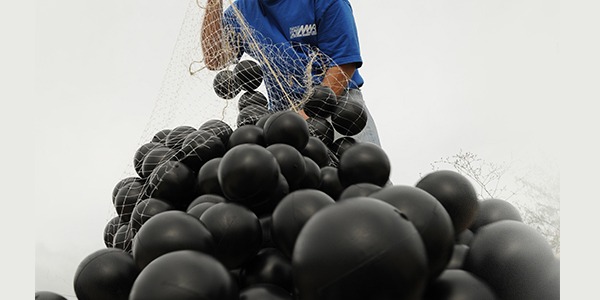
Wind resistance: 75 MPH | Water-ballasted
Armor Ball® AQUA 275
For ammonia control at exposed agricultural and industrial sites where sustained high winds would displace standard covers. The water-ballasted Armor Ball® AQUA 275 anchors against 75 MPH winds — maintaining consistent ammonia suppression coverage on open farm sites, feedlots, and industrial ponds in exposed terrain.
Learn more →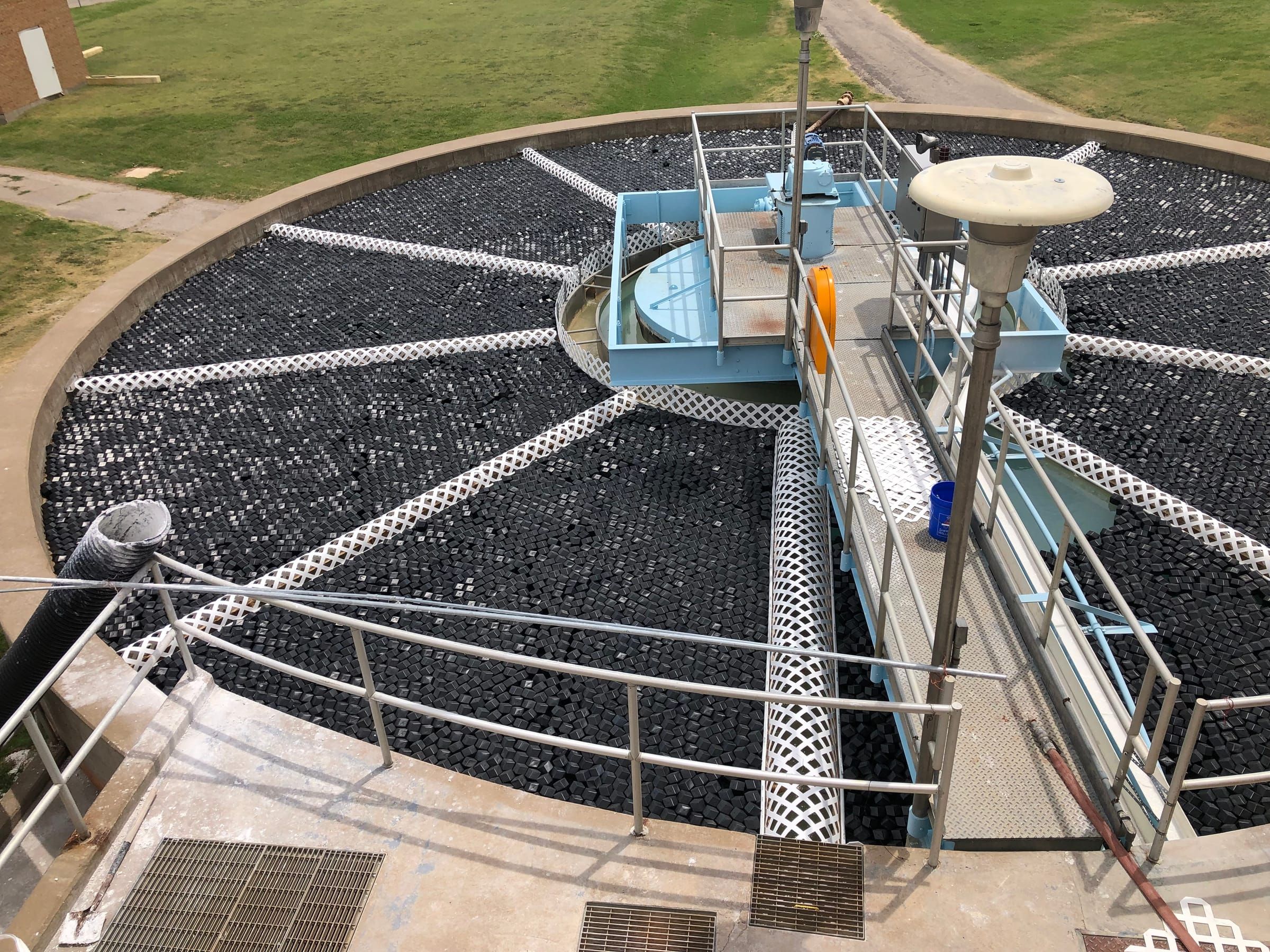
Evaporation reduction: up to 98% | High load rated
Rhombo Hexoshield®
For industrial ammonia-bearing process water ponds where maximum evaporation control and emission suppression are simultaneously required. The Rhombo Hexoshield® achieves up to 98% evaporation reduction — preventing the evaporative concentration that amplifies ammonia release from industrial wastewater ponds.
Learn more →Frequently Asked Questions — Ammonia Control
Common questions from engineers and operators evaluating AWTT floating covers for ammonia control.
How much do floating covers reduce ammonia emissions from manure lagoons?
Do floating covers help livestock facilities comply with ammonia air permit requirements?
Can floating covers conserve nitrogen fertilizer value in manure lagoons?
Are AWTT floating covers resistant to the chemistry of ammonia-bearing industrial wastewater?
Ready to Solve Your Ammonia Control Challenge?
Contact AWTT for a custom floating cover recommendation — including site assessment, specification sheets, and ROI analysis.
Engineering Tools & Resources
Evaporation Rate Calculator
Estimate evaporation losses on your pond or reservoir and the ROI of a floating cover, using five FAO-56 / Harbeck methods with real-time weather.
Heat Loss & ROI Calculator
Model heat loss from a heated pond with the ASHRAE 5-component balance, then compare insulation savings and 20-year cost of ownership.
Not Sure Which Cover?
Answer a few questions about your site conditions and get a personalized product recommendation.
Technical Specifications
View full engineering specs, wind resistance data, R-values, and material compliance details.