
Floating Covers for Chemical Plants — VOC Suppression, Process Water Evaporation Control & Chemical Resistance
Reduce chemical plant process water VOC emissions by up to 90%, cut evaporation by 95%, and protect treatment chemistry with AWTT's broad-spectrum HDPE floating covers.
Chemical plant process water ponds, cooling basins, and waste treatment lagoons use floating covers to reduce evaporation, contain volatile organic compound (VOC) emissions, and prevent chemical concentration drift. Chemical manufacturing, petrochemical processing, and industrial wastewater management facilities face a convergence of water management challenges that are unique in their severity and regulatory complexity. Open chemical process water ponds off-gas volatile organic compounds (VOCs) and hazardous air pollutants (HAPs) that create EPA air permit liability, worker inhalation hazards, and community exposure complaints. Evaporation concentrates dissolved chemicals above treatability thresholds, destabilizes downstream treatment chemistry, and compounds disposal costs. Standard cover materials degrade rapidly under the acidic, alkaline, and oxidizing chemistry of industrial effluent. AWTT's HDPE floating cover systems address all of these challenges simultaneously.
AWTT's Hexprotect® AQUA floating cover achieves up to 99% surface coverage on chemical plant process water ponds and effluent lagoons — reducing VOC and HAP emissions by up to 90%, cutting evaporation by up to 95%, stabilizing treatment chemistry by excluding rainfall, and denying wildlife access to contaminated impoundments. All covers are manufactured from HDPE rated for pH 2–13 — fully resistant to the acidic, alkaline, and solvent-contaminated chemistry of chemical process water. No mechanical systems, no maintenance, and no tools required for deployment or operation.
Where the basin is in hydrocarbon service — petrochemical wastewater, produced water, API separator ponds — the measurement and permitting picture is set out in more depth on VOC control for oil and gas, including the site-specific emission factor protocol and where the NSPS OOOOb 95% standard actually applies.
Common Chemical Plant Industry Challenges
Uncovered water storage creates measurable operational, environmental, and compliance risks specific to chemical plant facilities.
Hazardous Vapor & VOC Emissions
Open chemical process water ponds and effluent lagoons off-gas volatile organic compounds (VOCs), hazardous air pollutants (HAPs), and toxic vapors — creating inhalation hazards for site workers, community air quality impacts, and EPA Title V air permit violations that trigger enforcement action.
Evaporation Concentrates Chemical Contaminants
Evaporation from open chemical process water ponds removes water volume while leaving dissolved chemicals behind — concentrating contaminants above treatability thresholds, destabilizing treatment chemistry, and increasing neutralization and disposal costs before permitted discharge.
Corrosive Process Chemistry Destroys Standard Materials
Acidic and alkaline process water, solvent-contaminated effluent, oxidizing chemical waste streams, and high-TDS industrial wastewater degrade standard pond cover materials rapidly. Chemical-resistant HDPE construction is essential for longevity in chemical plant environments.
Rain Dilution Disrupts Treatment Chemistry
Rainfall addition to open chemical process ponds changes pH, dilutes reactant concentrations, increases pond volume, and upsets downstream treatment chemistry — expanding the scope, cost, and complexity of wastewater treatment before permitted discharge.
Worker Safety at Open Chemical Ponds
Open chemical waste and process water ponds create sustained inhalation hazards for personnel performing sampling, maintenance, and inspection operations near VOC-emitting surfaces — elevating OSHA exposure citation risk and long-term occupational health liability.
Wildlife Mortality & Environmental Liability
Open chemical process ponds attract birds and wildlife that suffer acute toxic exposure — generating Migratory Bird Treaty Act (MBTA) violations, potential CERCLA contamination liability, and reputational damage from wildlife mortality incidents at industrial facilities.
AWTT Floating Cover Solutions for Chemical Plants
Modular, maintenance-free floating covers engineered specifically to address the liquid containment challenges of chemical plant operations.
VOC & HAP Emission Reduction Up to 90%
AWTT floating covers create a physical barrier at the liquid-air interface, reducing VOC and hazardous air pollutant emissions from chemical process water ponds by up to 90%. This reduces air permit exceedance risk, lowers site-perimeter air monitoring readings, and reduces ambient vapor concentrations that create worker inhalation exposure.
Broad-Spectrum HDPE Chemical Resistance
AWTT floating covers are manufactured from HDPE — rated across pH 2–13 and compatible with a wide range of acid, alkaline, oxidizing, and solvent-contaminated chemical process water streams. HDPE maintains structural integrity in contact with sulfuric acid, sodium hydroxide, ammonia, hydrogen peroxide, and many chlorinated industrial solvents.
Evaporation Reduction Up to 95%
Covering chemical process water ponds with AWTT floating covers reduces evaporation losses by up to 95%, preventing the concentration increases that push dissolved chemicals above treatability thresholds and protecting treatment chemistry stability — directly reducing treatment cost and regulatory risk.
Rain Exclusion Maintains Treatment Chemistry
AWTT floating covers prevent rainfall from adding to chemical process pond volume — maintaining consistent pH, concentration, and chemistry for downstream treatment. Stable influent chemistry reduces treatment variability, lowers reagent costs, and reduces the total volume of effluent requiring permit-compliant disposal or discharge.
Worker Safety Improvement at Pond Perimeters
By physically blocking the liquid-air interface, AWTT floating covers reduce ambient VOC and vapor concentrations at pond margins — directly reducing inhalation risk for workers performing inspection, sampling, and maintenance operations near open chemical process water ponds.
Wildlife Exclusion Prevents Environmental Liability
AWTT floating covers deny bird and wildlife access to chemical process water ponds — eliminating the MBTA liability and cleanup obligations associated with wildlife mortality events at industrial chemical facilities. Up to 99% surface coverage removes the visual attractant that draws birds to contaminated impoundments.
Quick Facts — Chemical Plant Floating Cover Performance
Recommended Products for Chemical Plants
AWTT engineers recommend these floating cover systems for chemical plants applications.
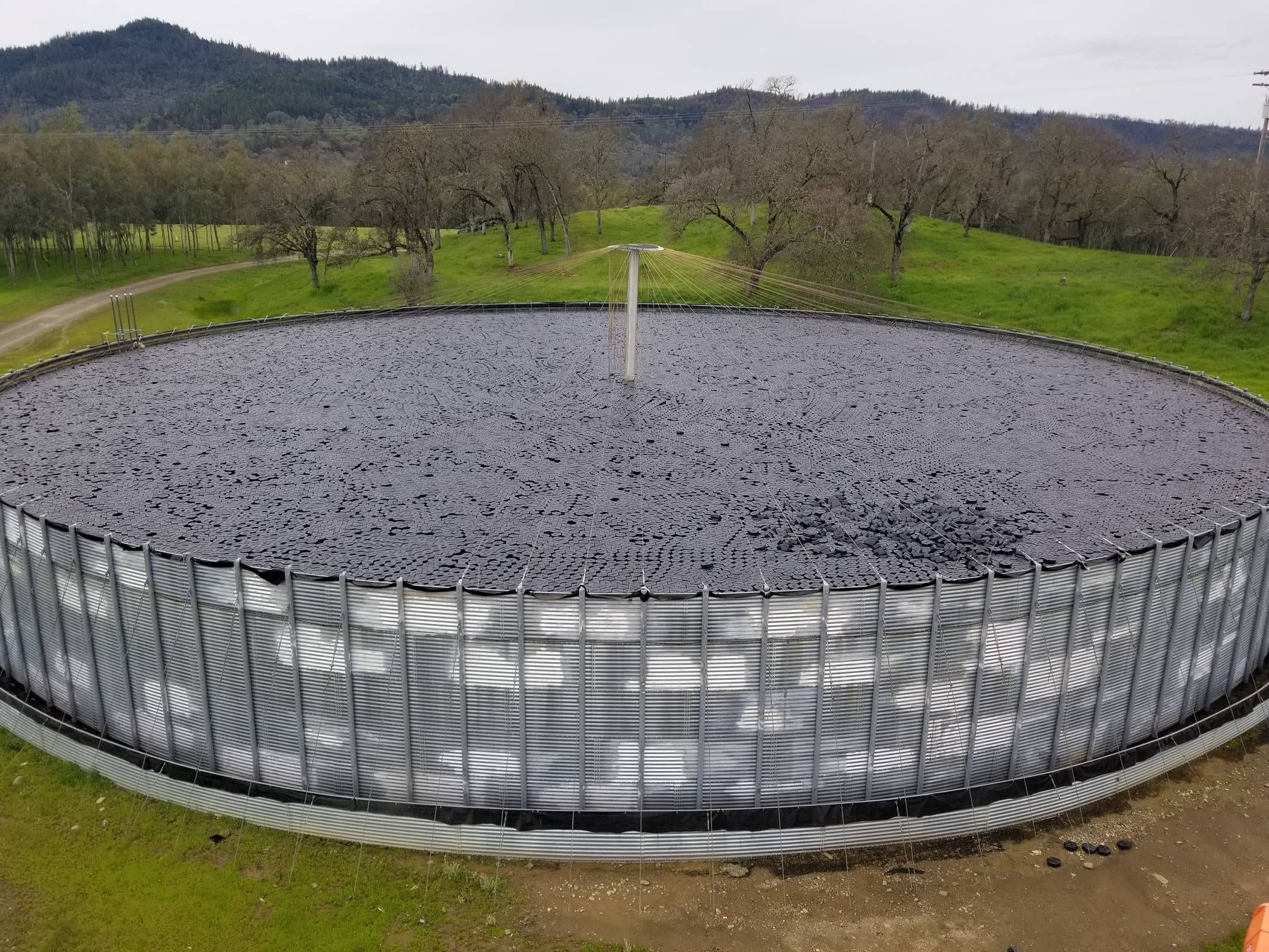
Coverage: up to 99% | pH 2–13 rated
Hexprotect® AQUA
The optimal choice for chemical plant process water and effluent ponds where maximum VOC suppression and evaporation control are required. Up to 99% surface coverage creates the most effective physical barrier at the liquid-air interface — minimizing vapor release, stabilizing treatment chemistry, and excluding wildlife from hazardous impoundments.
Learn more → Wind resistance: 75 MPH | Water-ballasted
Armor Ball® AQUA 275
For chemical plant sites in exposed locations where sustained high winds are a consistent challenge. The water-ballasted design anchors the cover against winds up to 75 MPH without mechanical fasteners or pond modification — providing reliable chemical pond protection even on open industrial sites.
Learn more →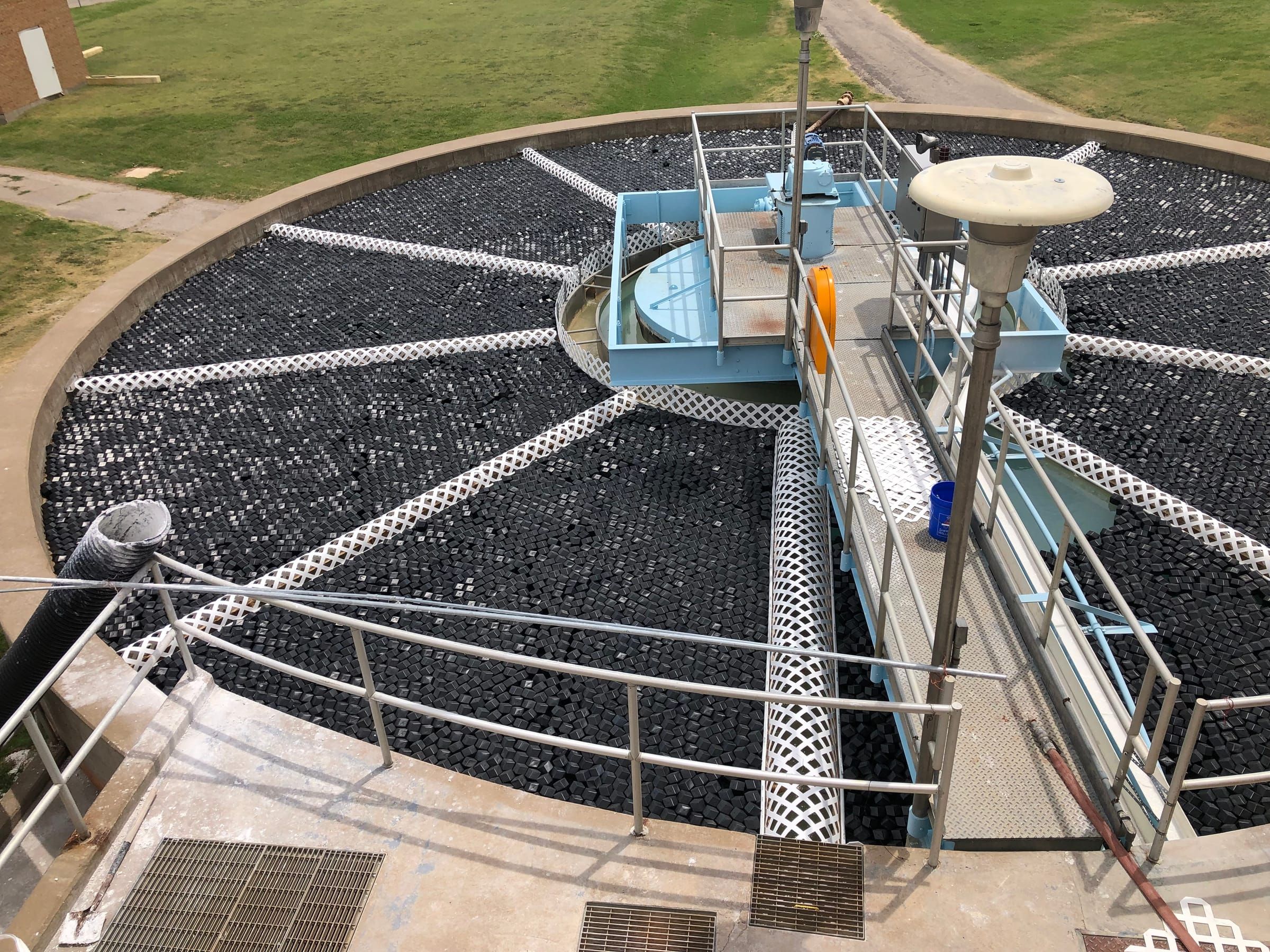
Evaporation reduction: up to 98%
Rhombo Hexoshield®
For chemical operations where minimizing evaporation concentration and volume management are the primary treatment drivers, the Rhombo Hexoshield® achieves up to 98% evaporation reduction — the highest performance in AWTT's product range — directly reducing treatment chemical requirements and disposal volumes.
Learn more →Frequently Asked Questions — Chemical Plants
Common questions from chemical plants operators and engineers evaluating AWTT floating cover systems.
Are AWTT floating covers chemically resistant to acidic and alkaline industrial process water?
How much do AWTT floating covers reduce VOC and hazardous air pollutant emissions from chemical process ponds?
Can floating covers help chemical plant operators comply with EPA air permit requirements?
How do floating covers improve worker safety near chemical process water ponds?
Ready to Solve Your Chemical Plant Water Storage Challenges?
Contact AWTT for a custom floating cover recommendation tailored to your chemical plants operation — including site assessment, specification sheets, and ROI analysis.
Engineering Tools & Resources
Evaporation Rate Calculator
Estimate evaporation losses on your pond or reservoir and the ROI of a floating cover, using five FAO-56 / Harbeck methods with real-time weather.
Heat Loss & ROI Calculator
Model heat loss from a heated pond with the ASHRAE 5-component balance, then compare insulation savings and 20-year cost of ownership.
Not Sure Which Cover?
Answer a few questions about your site conditions and get a personalized product recommendation.
Technical Specifications
View full engineering specs, wind resistance data, R-values, and material compliance details.