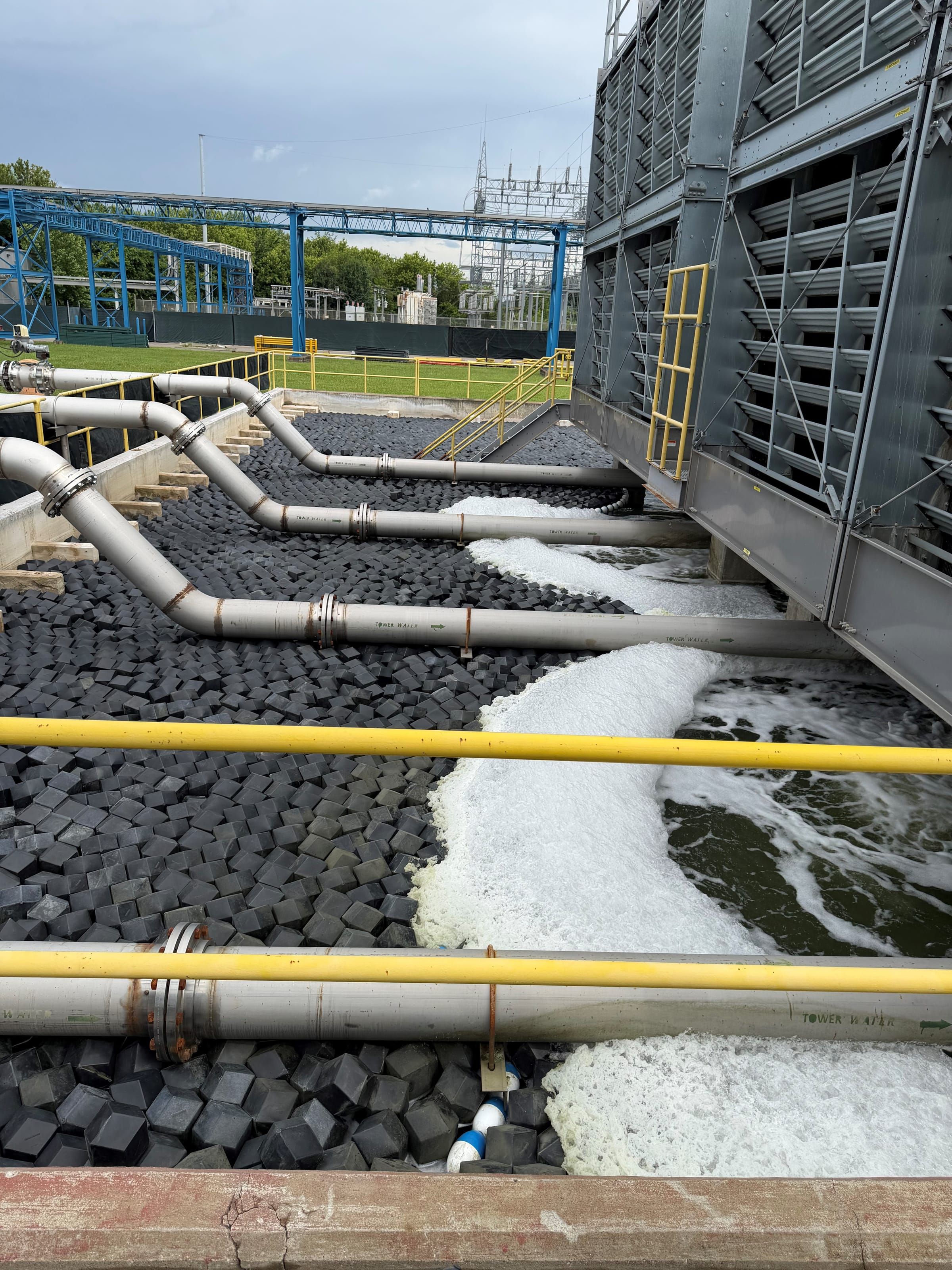
Floating Covers for Data Center Water Storage — Protect the Water Around the Cooling System
AWTT covers don't touch cooling-tower evaporation — they protect the raw, recycled, and stored water every data center relies on, cutting evaporative loss and algae on every open pond.
Data centers are under intensifying pressure over water. U.S. facilities directly consumed roughly 17.4 billion gallons in 2023, with projections rising toward 38–73 billion gallons by 2028. The industry's two fastest-growing responses — switching from potable to recycled water and holding large on-site water buffers — both create something AWTT was built for: open reservoirs, lagoons, and storage ponds that then lose water to evaporation and grow algae in the sun.
Here is the honest framing, because it makes the case stronger in front of a facilities engineer: AWTT floating covers do not reduce cooling-tower evaporation — inside the tower that evaporation is the cooling. What our covers protect is every open water body around the cooling system: raw and makeup storage, reclaimed-water reservoirs, stormwater capture, blowdown ponds, and thermal-storage buffers. On those surfaces, AWTT covers cut evaporation by up to 98%, block the sunlight that drives algae and biofouling, and keep thermal-storage water colder. Use the evaporation calculator to quantify the loss on a specific buffer pond.
Related Engineering Guides
Evaporation control floating covers
How AWTT covers cut open-pond and reservoir evaporation by up to 98% — the core mechanism behind the data-center storage savings.
Pond evaporation rate calculator
Quantify the exact annual water loss on a specific storage or reclaimed-water pond using live weather and five physical models.
Data center water storage — case study
The DOE Savannah River Site anchor (55M gallons/yr) plus a modeled hyperscale storage-pond scenario.
Reservoirs & large water bodies
The closest industrial analog to a hyperscale storage pond — modular covers for large open reservoirs.
The Problem — Why Open Ponds Fail
Uncovered liquid storage creates measurable operational, environmental, and regulatory risks that floating covers directly address.
Drinking-Water Withdrawals Are Under Public and Regulatory Scrutiny
Data centers in the U.S. directly consumed roughly 17.4 billion gallons of water in 2023, with projections rising toward 38–73 billion gallons by 2028 — much of it potable water drawn from the same municipal systems and aquifers communities rely on. As operators move to recycled and on-site stored water to relieve that pressure, they create large open reservoirs, lagoons, and ponds that then lose water back to evaporation.
Open Makeup & Storage Ponds Evaporate the Water You Just Bought
Raw-water buffers, reclaimed-water reservoirs, stormwater capture ponds, and blowdown holding ponds all sit open to the sky. In arid data-center markets — Arizona, Texas, Nevada, the Middle East — these surfaces lose 60–100 inches of depth per year. Every gallon evaporated off a buffer is a gallon you must withdraw again to refill it.
Reclaimed Water Grows Algae That Threatens Cooling Uptime
Reclaimed and recycled water is far more nutrient-rich and biofouling-prone than potable water. Left open to sunlight, storage reservoirs bloom algae and biofilm that carry downstream into cooling-tower fill and heat exchangers — fouling that degrades thermal performance and forces unplanned maintenance. For a data center, that is an uptime and treatment-chemical problem, not just a water problem.
Solar Heat Gain Warms Thermal-Storage and Free-Cooling Ponds
Sites that use ponds for thermal storage or "free cooling" need that stored water cold to be useful as cooling capacity. An uncovered pond absorbs solar radiation all day, raising water temperature and shrinking the available temperature differential — directly reducing the cooling value of the buffer.
Evaporation Concentrates Treatment Chemistry
As open ponds evaporate, dissolved solids and treatment chemicals concentrate in the remaining water — destabilizing chemistry, pushing blowdown ponds toward discharge-permit thresholds, and increasing makeup-chemical and disposal costs across the water-treatment loop.
Water Risk Scales With Every New Facility
Hyperscale operators are building thousands of facilities, and each one multiplies the open-water footprint that has to be sourced, stored, and replenished. In water-stressed regions, evaporative loss off stored buffers compounds the net-withdrawal problem the industry is under pressure to shrink.
The AWTT Solution
Modular, maintenance-free floating covers engineered to directly solve data centers challenges in industrial liquid containment.
Honest Scope — We Protect the Water Around the Cooling System
AWTT covers do not reduce cooling-tower evaporation — inside the tower, evaporation is the cooling mechanism and cannot be covered. What our covers do protect is every open water body the cooling system depends on: raw and makeup storage, reclaimed-water reservoirs, stormwater capture, blowdown holding, and thermal-storage ponds. That is a defensible, engineer-credible scope.
Up to 95–98% Evaporation Reduction on Open Buffers
Floating covers create a physical barrier at the liquid-air interface that blocks solar radiation and wind-driven moisture transfer. Hexprotect® AQUA delivers up to 95% evaporation reduction; Rhombo Hexoshield® reaches up to 98% — directly cutting the net withdrawals needed to keep on-site buffers full in arid climates.
UV & Algae Control That Protects Cooling Uptime
Up to 99% surface coverage blocks the sunlight algae needs to grow. Covering a reclaimed-water reservoir suppresses algae and biofilm at the source — before it can reach cooling-tower fill and heat exchangers — reducing fouling, treatment-chemical demand, and the unplanned maintenance that threatens uptime.
Keep Thermal-Storage Water Colder
By shading the surface, covers cut solar heat gain on thermal-storage and free-cooling ponds — preserving the temperature differential that makes stored water useful as cooling capacity. For maximum thermal retention, Hexprotect® MAX R adds R-17+ closed-cell foam insulation.
Stable Chemistry, Lower Treatment Cost
Reducing evaporation by up to 98% keeps dissolved-solids and chemical concentrations stable across raw, reclaimed, and blowdown ponds — reducing makeup-chemical additions, water-quality correction, and the risk of permit exceedance from evaporative concentration.
Modular, No Basin Modification, Phased Rollout
Covers scale modularly from small buffers to multi-acre reservoirs with no structural change to the basin and no heavy equipment to install. Operators can deploy across cells in phases as capital allows — and standardize the same system across a global fleet of facilities.
The closest validated analog to a hyperscale storage problem
AWTT's Rhombo Hexoshield® cover earned a 2017 U.S. Department of Energy Sustainability Award at the Savannah River Site, a large federal industrial water user. There the cover saved 55 million gallons of water per year on a single open water body — a third-party-validated result, not a marketing claim, and the closest real-world analog to a data center's open storage-pond problem.
Where covers fit at a data center
A modeled hyperscale site relies on several open water bodies. The cooling tower itself stays uncovered — every buffer around it is a candidate for an AWTT cover.
Makeup & Raw Storage
Large on-site buffers of makeup and backup water. Covering cuts evaporative loss so less net withdrawal is needed to keep them full.
Up to 98% less evaporationReclaimed-Water Reservoir
The most common sustainability move. Covers suppress the algae and biofilm reclaimed water breeds — protecting cooling-tower fill downstream.
Algae & biofouling controlStormwater Capture Pond
Captured rainwater treated for non-potable cooling use. Every gallon kept from evaporating offsets a fresh withdrawal.
Protects captured supplyThermal-Storage Pond
Used as a heat sink or for free cooling. Shade plus R-17+ insulation keeps the water cold and the cooling capacity intact.
Keeps stored water coldModel the savings on your open water storage
Estimate the evaporation a cover protects on a data center's makeup, reclaimed, stormwater, or thermal-storage pond — not the cooling tower itself. Adjust the inputs to see live annual and 25-year savings.
High plains · inland valleys · ~55″ evaporation/yr
Annual evaporation — uncovered vs Hexprotect® AQUA
Cumulative water-cost savings
Modeled over the 25-year cover life
Modeled estimate for illustration. Annual loss = surface area × climate evaporation depth × 27,154 gal/acre-inch; savings apply the published cover reduction (95% Hexprotect® AQUA, 98% Rhombo Hexoshield®) over a 25-year service life. Actual results depend on site weather, water chemistry, and operations. Run the live evaporation calculator with real weather for a site-specific figure, or contact AWTT for an engineered savings and ROI analysis.
Technical Specifications — Data Center Floating Covers
Recommended Products for Data Centers
AWTT engineers recommend these floating cover systems for data centers applications.
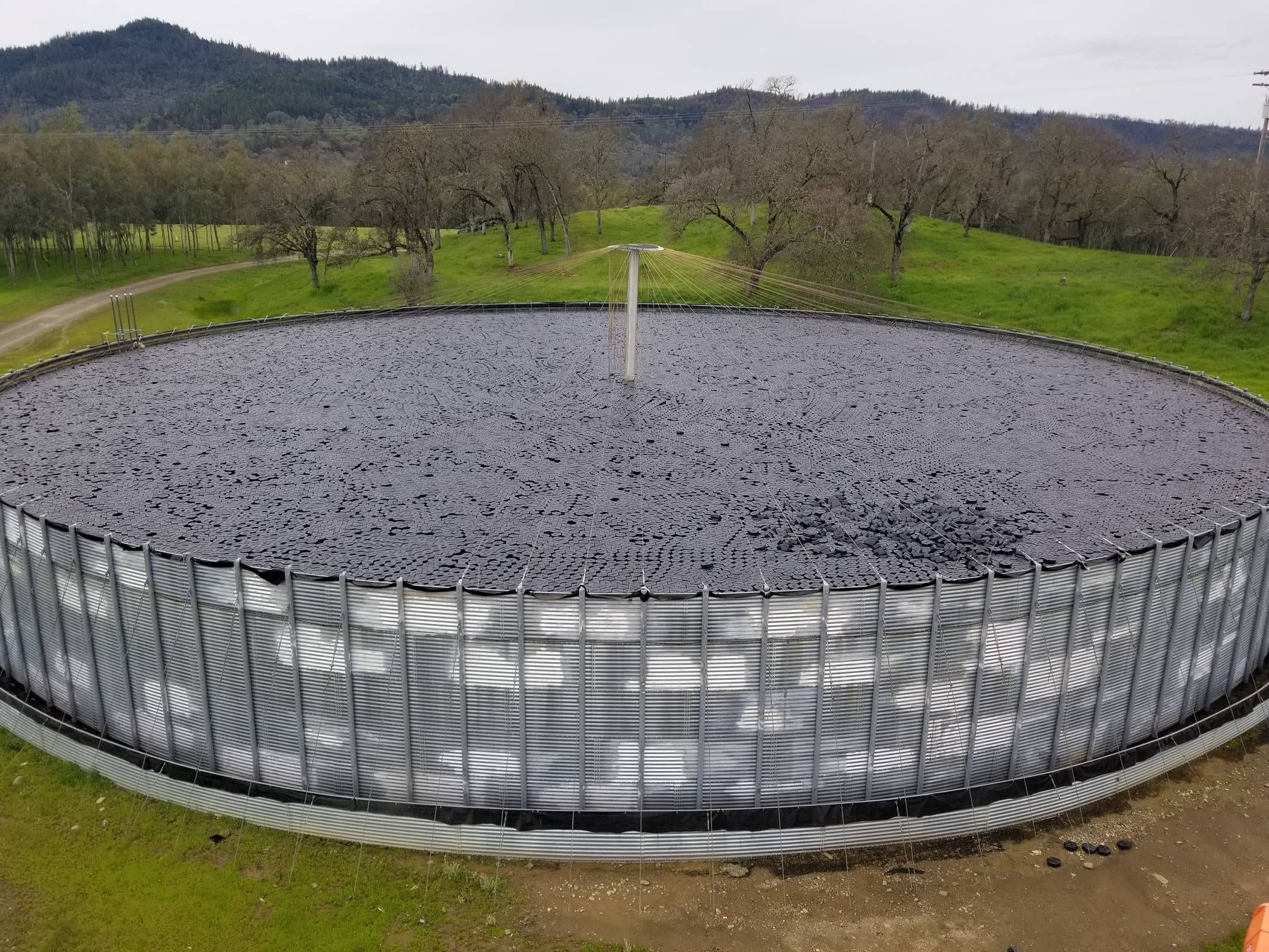
Coverage: up to 99% | Evaporation reduction: up to 95%
Hexprotect® AQUA
The best all-around choice for data-center reclaimed-water reservoirs and makeup-storage ponds. Up to 99% coverage delivers up to 95% evaporation reduction while blocking the sunlight that drives algae — protecting both stored water volume and downstream cooling equipment from biofouling.
Learn more →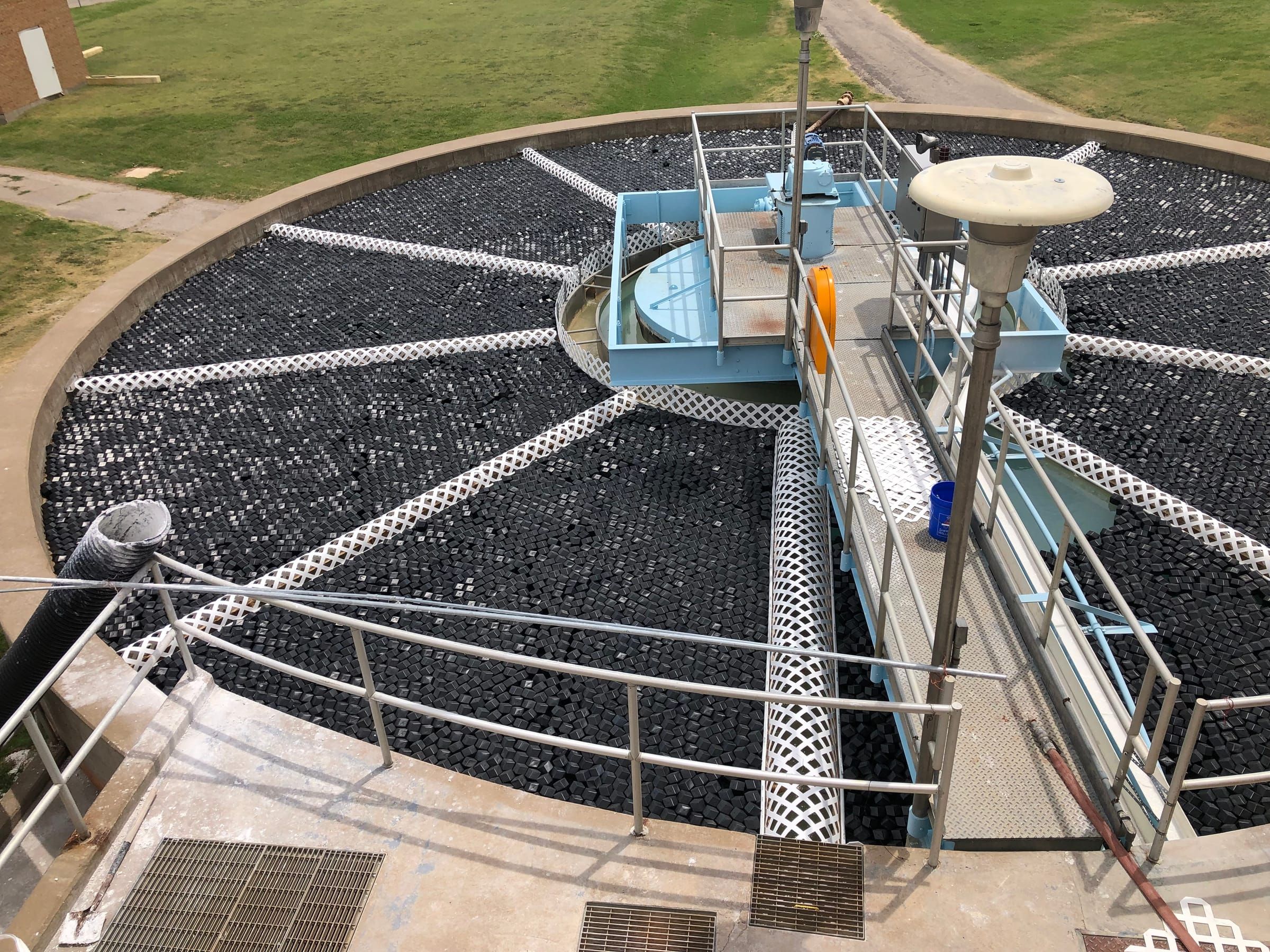
Evaporation reduction: up to 98% | DOE Award winner
Rhombo Hexoshield®
AWTT’s highest-performance evaporation control. The Rhombo Hexoshield® reaches up to 98% evaporation reduction and earned a 2017 U.S. Department of Energy Sustainability Award at the Savannah River Site, where it saved 55 million gallons of water per year — the closest validated analog to a hyperscale storage-pond problem.
Learn more →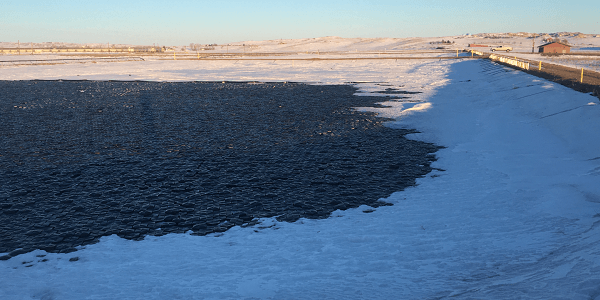
Insulation: R-17+ | Frost resistance: –70°F
Hexprotect® MAX R
For thermal-storage and free-cooling ponds where keeping stored water cold is the goal. R-17+ closed-cell foam insulation plus full surface shading cut solar heat gain — preserving the temperature differential that makes a buffer pond useful as cooling capacity year-round.
Learn more →Frequently Asked Questions — Data Centers
Common questions from engineers and operators evaluating AWTT floating covers for data centers.
Can AWTT floating covers reduce my data center’s cooling-tower water use?
Why do covers matter most on reclaimed and recycled water?
How much water can a cover actually save on a storage pond?
Can covers help thermal-storage or free-cooling ponds?
Are the covers chemically compatible with treated and reclaimed water?
Can the same system be standardized across a fleet of data centers?
Ready to Solve Your Data Center Challenge?
Contact AWTT for a custom floating cover recommendation — including site assessment, specification sheets, and ROI analysis.
Engineering Tools & Resources
Evaporation Rate Calculator
Estimate evaporation losses on your pond or reservoir and the ROI of a floating cover, using five FAO-56 / Harbeck methods with real-time weather.
Heat Loss & ROI Calculator
Model heat loss from a heated pond with the ASHRAE 5-component balance, then compare insulation savings and 20-year cost of ownership.
Not Sure Which Cover?
Answer a few questions about your site conditions and get a personalized product recommendation.
Technical Specifications
View full engineering specs, wind resistance data, R-values, and material compliance details.