Floating Covers for Reservoirs — Evaporation, Algae & Drinking Water Source Protection
Protect stored drinking water supply from evaporation, algae, and pathogen contamination with AWTT's food-grade HDPE floating covers — available in NSF/ANSI 61 certified resin for reservoirs.
Floating covers for reservoirs are the proven engineered defense against the four threats that shrink stored water supply: evaporative loss (60–100 inches per year in arid regions), algae and cyanobacteria growth, waterfowl-borne pathogen contamination, and windborne debris. Municipal and agricultural reservoirs across the US Southwest, the Colorado River Basin, California's Central Valley, the Australian outback, and the Middle East deploy AWTT modular floating covers to reduce evaporation losses up to 95%, block algae growth, and protect stored water quality for drinking water and irrigation supply.
Municipal and agricultural reservoirs use floating covers to reduce evaporation losses of up to 60–100 inches per year, block algae growth, and protect stored water quality for drinking water and irrigation supply. Surface water reservoirs are the foundation of drinking water supply for millions of municipal and agricultural water users across the US Southwest, California's Central Valley, the Colorado River Basin, the Australian outback, and arid regions worldwide. Yet open reservoirs are extraordinarily vulnerable: evaporation removes 60–100 inches of stored water annually in the driest regions, algae blooms degrade raw water quality and increase treatment costs, and waterfowl introduce Cryptosporidium and Giardia directly into source water. AWTT's modular floating cover systems are engineered to address all of these threats simultaneously — while meeting the stringent potable water contact material requirements of municipal drinking water systems. Use the AWTT reservoir evaporation calculator with live weather data to quantify the loss on your specific site.
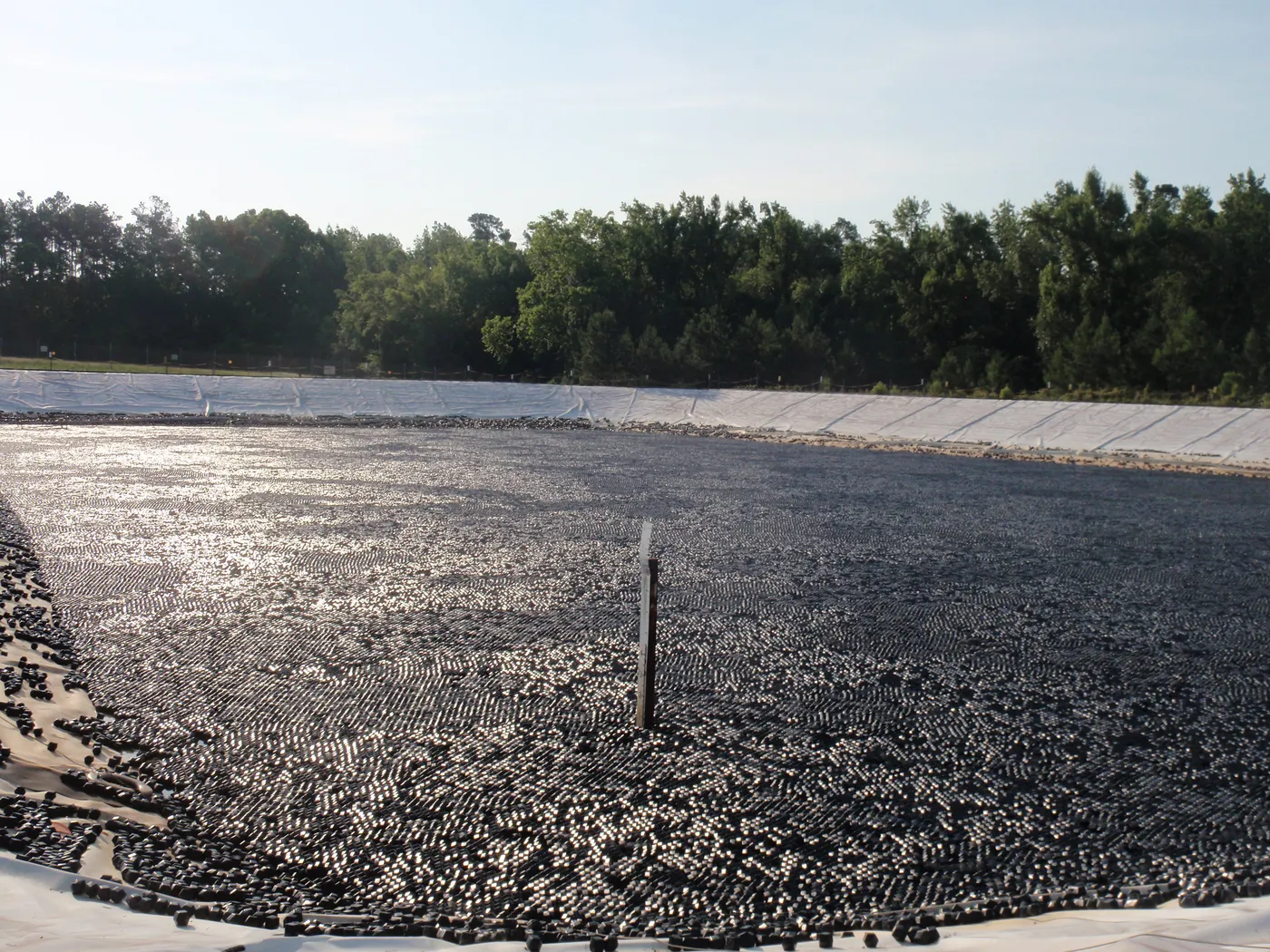
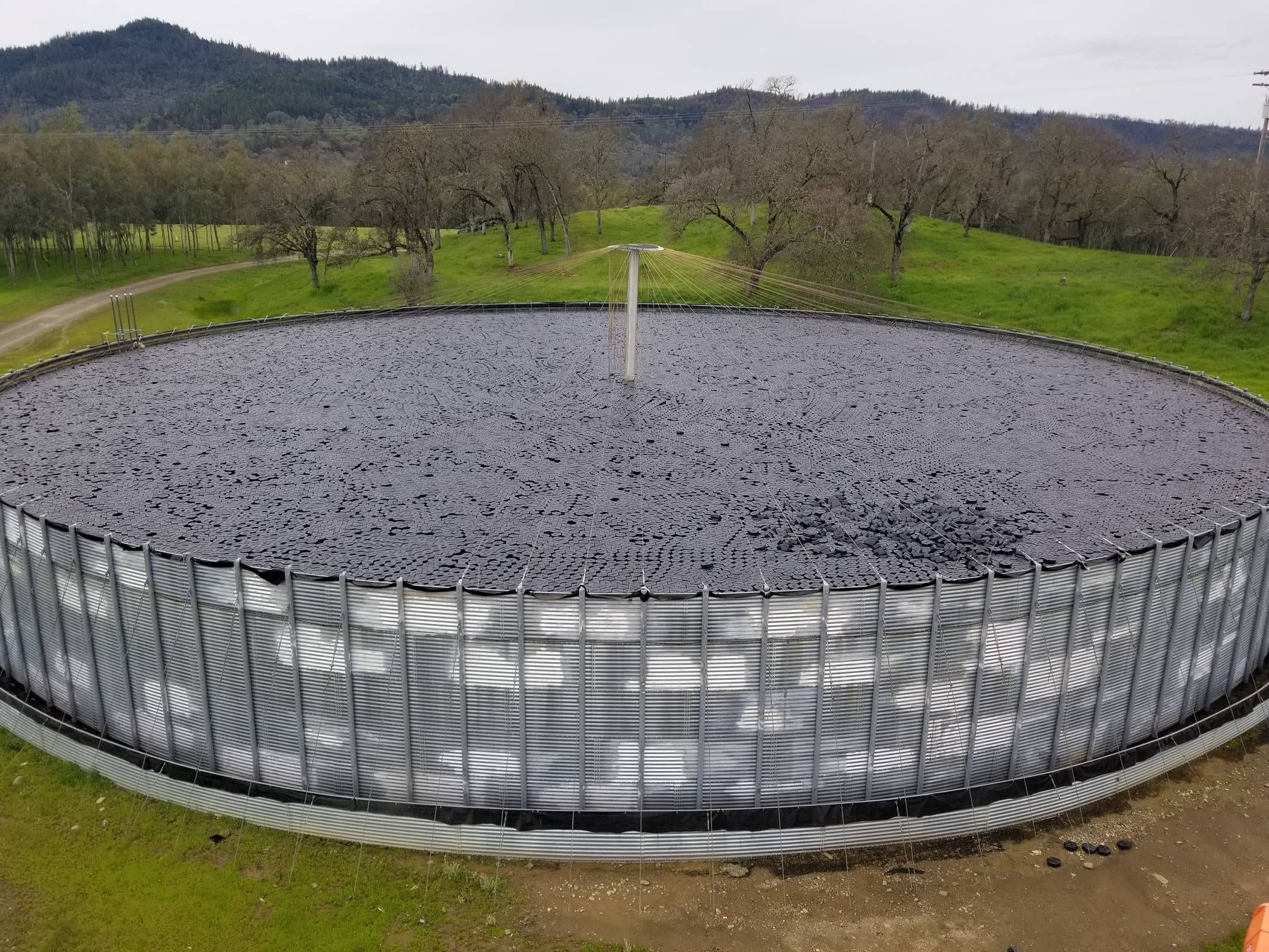
AWTT's Hexprotect® AQUA floating cover achieves up to 99% surface coverage on drinking water reservoirs and water supply impoundments — reducing evaporation by up to 95%, eliminating algal growth by blocking sunlight, excluding waterfowl from source water, and preventing windborne debris and stormwater contamination from entering stored supply. AWTT floating covers are manufactured from food-grade HDPE, available in NSF/ANSI 61 certified, FDA-compliant resin (21 CFR 177.1520) for potable water contact — inert under disinfectant exposure, and warranted for 10 years with a 25-year design lifespan. The certification is held by the resin; the finished cover assembly is not itself NSF-certified. For exposed reservoir sites with high wind, the Armor Ball® AQUA 275 provides 75 MPH wind resistance without anchoring or pond modification.
Related Engineering Guides
Floating Covers — Complete Overview
The three families of modular floating cover (ball, hexagonal, hybrid Rhombo), how they compare, and how to specify the right system for a reservoir.
Shade Balls — Industrial Spec
AWTT industrial shade balls for reservoirs — engineered equivalent of the LADWP 96-million-ball deployment.
What Is a Floating Cover?
The complete engineering guide to modular pond and reservoir floating covers — definitions, materials, mechanisms.
Hexprotect® AQUA — Flagship Cover
99% coverage and 130+ MPH wind resistance — the top AWTT product for drinking water reservoirs and water supply impoundments.
Common Reservoir Industry Challenges
Uncovered water storage creates measurable operational, environmental, and compliance risks specific to reservoir facilities.
Evaporation Depletes Stored Water Supply
Open municipal and agricultural reservoirs in arid regions of the US Southwest, Chile, Australia, and the Middle East lose 60–100 inches of stored water annually to surface evaporation — equal to the entire year's precipitation evaporating before water reaches end users. In drought years, uncovered reservoir evaporation is an existential threat to supply reliability.
Algae Blooms Threaten Drinking Water Quality
Sunlight exposure on open reservoir surfaces drives algal growth — including cyanobacteria (blue-green algae) that produce taste and odor compounds (geosmin, MIB), increase Total Suspended Solids (TSS), raise disinfection byproduct formation potential, and release cyanotoxins — increasing treatment costs and threatening Safe Drinking Water Act compliance.
Waterfowl Deposit Pathogens in Source Water
Open drinking water reservoirs attract Canada geese, mallard ducks, and migratory waterfowl that deposit Cryptosporidium, Giardia, E. coli, Campylobacter, and Salmonella directly into potable water source — triggering EPA Surface Water Treatment Rule compliance obligations and source water protection program requirements.
Windborne Debris & Stormwater Contamination
Open reservoirs collect windborne debris, airborne particulate, leaves, sediment, and contaminated stormwater runoff that increases raw water turbidity, chemical oxygen demand, and filter loading at downstream drinking water treatment plants — raising treatment costs and occasionally triggering treatment plant capacity constraints.
UV Degradation of Stored Water Quality
Direct solar radiation on uncovered reservoir surfaces promotes photochemical reactions that degrade stored water quality — accelerating disinfection byproduct precursor formation, increasing THM (trihalomethane) and HAA5 formation potential during chlorination, and promoting photolytic breakdown of treatment residuals.
Drought Vulnerability & Supply Reliability Risk
In drought conditions, uncovered reservoir evaporation accelerates water loss precisely when supply scarcity is most acute — compounding the supply reliability risk for municipal water utilities and agricultural irrigation districts that depend on surface reservoir storage to meet seasonal demand.
AWTT Floating Cover Solutions for Reservoirs
Modular, maintenance-free floating covers engineered specifically to address the liquid containment challenges of reservoir operations.
Evaporation Reduction Up to 95%
AWTT floating covers reduce reservoir evaporation by up to 95% — directly protecting stored water volume for municipal supply and agricultural use. In arid-region reservoirs where annual evaporation reaches 80–100 inches, covering a 100-acre reservoir with AWTT floating covers can save billions of gallons of water annually that would otherwise be lost before reaching treatment.
Algae & Cyanobacteria Suppression
Up to 99% surface coverage blocks the sunlight that drives algal growth in drinking water reservoirs — eliminating taste and odor events caused by geosmin and MIB, reducing TSS and turbidity, lowering disinfection byproduct formation potential, and directly reducing treatment chemical consumption at downstream water treatment plants.
Pathogen Source Control for SDWA Compliance
AWTT floating covers eliminate the open water surface that attracts waterfowl to drinking water reservoirs, providing the most effective available source control for avian pathogen introduction — directly supporting EPA Surface Water Treatment Rule compliance and reducing Cryptosporidium and Giardia loading in source water.
Debris & Stormwater Exclusion
Covered reservoir surfaces prevent windborne debris, leaves, and contaminated stormwater runoff from entering stored drinking water — reducing raw water turbidity, chemical oxygen demand, and filter loading at drinking water treatment plants. Cleaner source water means lower treatment chemical costs and reduced risk of treatment plant capacity exceedance events.
Food-Grade HDPE Safe for Potable Water
AWTT floating covers are manufactured from food-grade HDPE. For potable water contact, Hexprotect® AQUA is available in NSF/ANSI 61 certified, FDA-compliant resin (21 CFR 177.1520) — the certification is held by the resin, not the finished cover assembly. No plasticizers, BPA, or chemical additives leach into stored water. The inert HDPE surface does not react with disinfectant residuals, treatment chemicals, or the range of organic and inorganic compounds present in natural source water.
Modular Scaling for Any Reservoir Size
AWTT floating cover systems scale modularly to any reservoir geometry — from compact rural water district storage tanks to large municipal surface water reservoirs covering hundreds of acres. No structural modifications to the reservoir basin are required, and covers can be phased in over multiple reservoir cells as capital allows.
Quick Facts — Reservoir Floating Cover Performance
Recommended Products for Reservoirs
AWTT engineers recommend these floating cover systems for reservoirs applications.
Coverage: up to 99% | NSF/ANSI 61 certified resin option
Hexprotect® AQUA
The leading choice for municipal drinking water reservoirs and agricultural water supply impoundments. Up to 99% surface coverage maximizes evaporation reduction, eliminates algae-stimulating sunlight, and excludes waterfowl from source water — supporting Safe Drinking Water Act compliance and reducing treatment costs at downstream water treatment plants.
Learn more →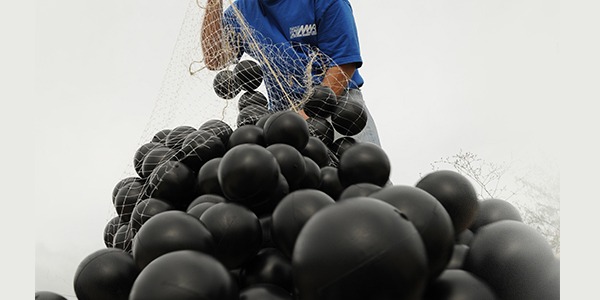
Wind resistance: 75 MPH | Water-ballasted
Armor Ball® AQUA 275
For water supply reservoirs on exposed high-plains, arid valley, or coastal sites where sustained high winds would displace standard floating covers. The water-ballasted design anchors against 75 MPH winds without mechanical fasteners — providing reliable reservoir protection on exposed sites where standard covers fail.
Learn more →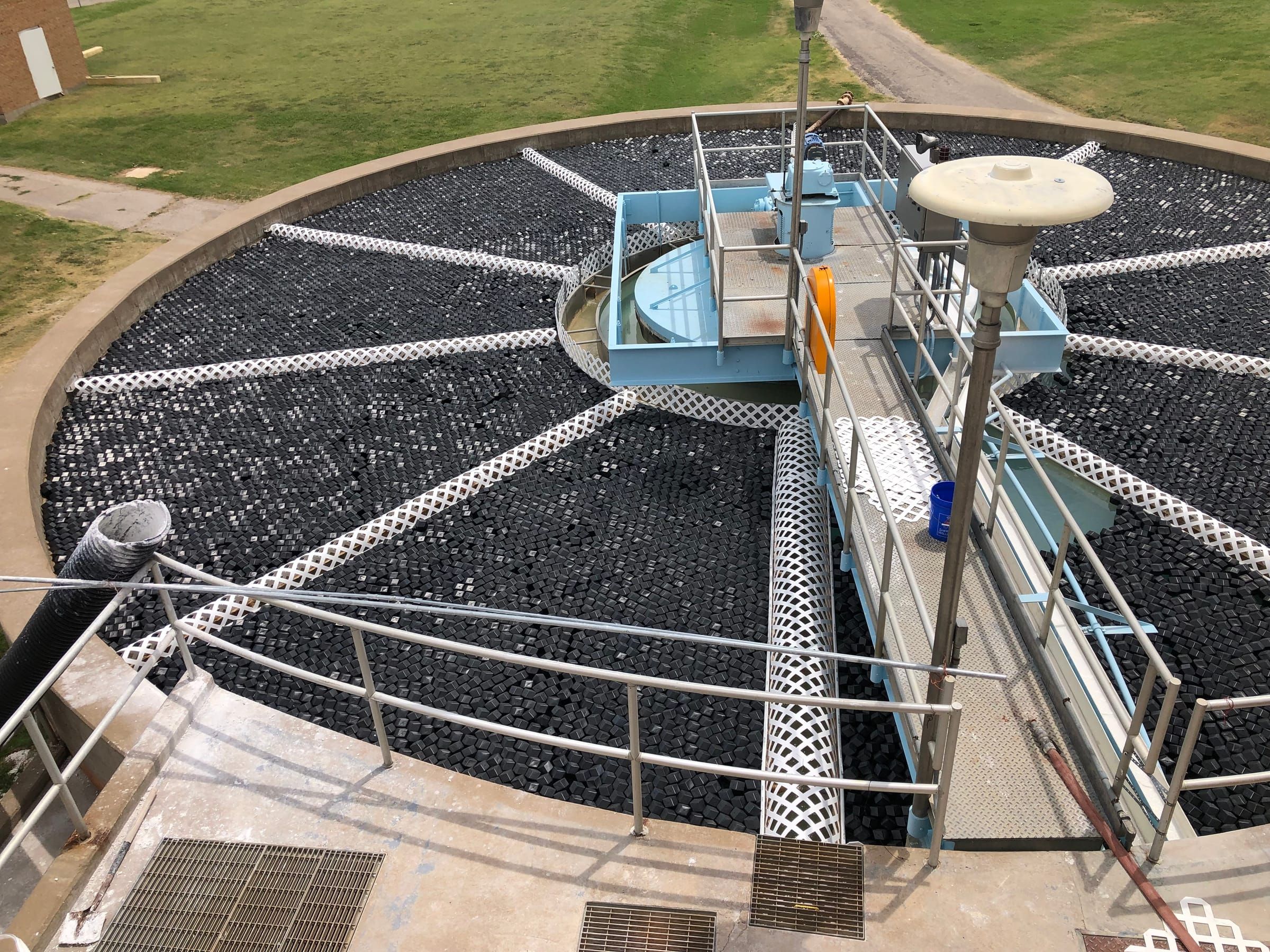
Evaporation reduction: up to 98%
Rhombo Hexoshield®
For water utilities and irrigation districts in drought-threatened arid regions where maximizing stored water conservation is the primary driver, the Rhombo Hexoshield® achieves up to 98% evaporation reduction — the highest performance in AWTT's product range — directly protecting water supply reliability.
Learn more →Frequently Asked Questions — Reservoirs
Common questions from reservoirs operators and engineers evaluating AWTT floating cover systems.
Are AWTT floating covers safe for contact with drinking water in municipal reservoirs?
How do floating covers reduce algae and cyanobacteria in open drinking water reservoirs?
How much water can floating covers save for a municipal reservoir in an arid region?
How do floating covers help water utilities meet EPA Surface Water Treatment Rule requirements?
Ready to Solve Your Reservoir Water Storage Challenges?
Contact AWTT for a custom floating cover recommendation tailored to your reservoirs operation — including site assessment, specification sheets, and ROI analysis.
Engineering Tools & Resources
Evaporation Rate Calculator
Estimate evaporation losses on your pond or reservoir and the ROI of a floating cover, using five FAO-56 / Harbeck methods with real-time weather.
Heat Loss & ROI Calculator
Model heat loss from a heated pond with the ASHRAE 5-component balance, then compare insulation savings and 20-year cost of ownership.
Not Sure Which Cover?
Answer a few questions about your site conditions and get a personalized product recommendation.
Technical Specifications
View full engineering specs, wind resistance data, R-values, and material compliance details.