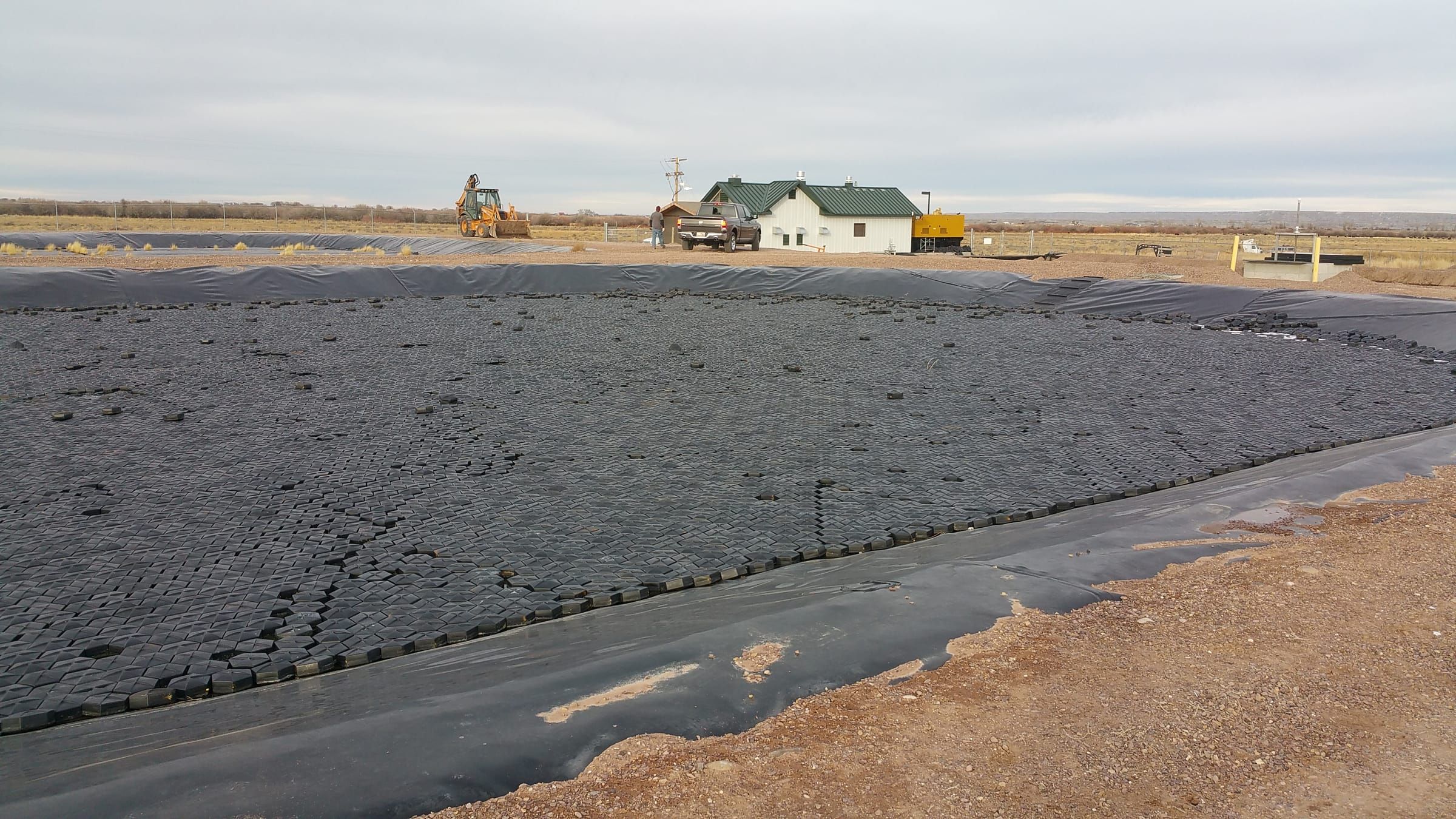
Dam Floating Covers — Evaporation Control, Algae Prevention & Source Water Protection for Large Reservoirs
Modular HDPE floating covers that scale to any dam or reservoir size — up to 98% evaporation reduction, self-adjusting to water level change, available in NSF/ANSI 61 certified resin.
Floating covers for dams and large reservoirs reduce evaporation losses that can exceed 60-100 inches per year in arid regions, protecting stored water supply for municipal, agricultural, and industrial use. Dam reservoirs and large water supply impoundments face water management challenges at a scale that dwarfs smaller industrial ponds. A single large open reservoir in an arid climate can lose millions of acre-feet of water to evaporation annually — water that cannot be recovered, purchased, or replaced from alternative sources at any reasonable cost. For municipal water authorities, irrigation districts, and hydroelectric operators in drought-prone regions, open reservoir evaporation has moved from an accepted operational reality to an existential supply reliability threat. AWTT's modular floating cover systems are engineered to address this challenge at any scale.
AWTT's Rhombo Hexoshield® floating cover achieves up to 98% evaporation reduction and scales modularly to any reservoir geometry — without structural support, without fixed anchoring, and without basin modification. Individual cover modules self-adjust to any reservoir water level change, floating passively as the impoundment fills and draws down through its seasonal cycle. For drinking water supply reservoirs, the Hexprotect® AQUA adds up to 99% surface coverage for simultaneous algae prevention, waterfowl exclusion, and source water protection — all from a single NSF/ANSI food-grade HDPE installation warranted for 10 years.
The Problem — Why Open Ponds Fail
Uncovered liquid storage creates measurable operational, environmental, and regulatory risks that floating covers directly address.
Massive Evaporation from Large Open Water Bodies
Dams, reservoirs, and large impoundments in arid regions face extreme evaporation exposure. Lake Mead alone loses an estimated 800,000 acre-feet of water annually to evaporation — more than Nevada's entire annual water allotment from the Colorado River. For smaller irrigation dams and municipal supply reservoirs in the US Southwest, Chile, Australia, and the Middle East, annual evaporation losses of 60–100 inches represent a chronic supply deficit that conventional water management cannot fully offset.
Algae Blooms in Large Open Reservoir Bodies
The large, warm, sunlit surface area of open dam reservoirs provides ideal conditions for algal bloom development. Cyanobacterial blooms in municipal water supply reservoirs generate taste and odor compounds (geosmin, MIB), release cyanotoxins, and increase treatment chemical requirements at downstream water treatment plants — threatening Safe Drinking Water Act compliance and public health.
Waterfowl Pathogen Loading in Supply Reservoirs
Dam reservoirs used for municipal water supply attract Canada geese, migratory ducks, and other waterfowl that deposit Cryptosporidium, Giardia, and fecal coliforms directly into potable water source impoundments. Elevated source water pathogen concentrations increase required treatment intensity under the EPA Surface Water Treatment Rule and raise treatment chemical and energy costs.
Stormwater & Debris Contamination
Open dam reservoirs collect windborne debris, airborne particulate, and contaminated stormwater runoff from surrounding watershed — increasing raw water turbidity, chemical oxygen demand, and filter loading at water treatment plants. Watershed contamination events can temporarily exceed treatment plant capacity and force supply interruptions during storm events.
Solar Heating Degrades Water Quality
Direct solar radiation on open reservoir surfaces promotes thermal stratification, photochemical reactions, and accelerated disinfection byproduct precursor formation. UV exposure degrades treatment chemical residuals and accelerates THM and HAA5 formation potential during chlorination — increasing treatment chemical requirements and DBP compliance risk.
Scale Challenges for Large Impoundment Coverage
Covering a large dam reservoir presents significant scale and engineering challenges. Fixed roof systems are impractical over large water bodies with variable water levels. Flexible geomembrane covers require structural support that cannot accommodate large reservoir footprints. Modular floating covers that self-adjust to water level change are the only practical approach for large open-water impoundments.
The AWTT Solution
Modular, maintenance-free floating covers engineered to directly solve dam floating cover challenges in industrial liquid containment.
Modular Scalability to Any Reservoir Size
AWTT floating covers scale modularly to any dam or reservoir geometry — from small irrigation impoundments of 1–5 acres to large municipal supply reservoirs covering hundreds of acres. Individual floating cover modules interlock or self-align on the water surface without requiring structural support, fixed anchoring, or pond modification. For very large reservoirs, covers can be deployed in phases across individual bays, arms, or cells as capital allows.
Up to 98% Evaporation Reduction at Any Scale
The Rhombo Hexoshield® achieves up to 98% evaporation reduction regardless of reservoir scale — making it practical for dam operators seeking maximum water conservation on large impoundments. For a 500-acre arid-region reservoir losing 80 inches per year, Rhombo Hexoshield® coverage can save over 10 billion gallons of stored water annually that would otherwise be lost to evaporation.
Self-Adjusting to Reservoir Water Level Change
Dam and reservoir water levels fluctuate seasonally by feet or tens of feet as storage volume changes with precipitation and drawdown. AWTT floating covers self-adjust to any water level change without modification, re-anchoring, or re-tensioning — floating passively on the surface regardless of reservoir elevation. This is the fundamental advantage of floating covers over fixed-roof or tensioned membrane systems for large impoundments.
Source Water Protection for SWTR Compliance
AWTT floating covers deployed on drinking water supply reservoirs simultaneously eliminate algae growth, exclude waterfowl, prevent debris contamination, and reduce stormwater runoff entry — providing comprehensive source water protection that directly supports EPA Surface Water Treatment Rule compliance, reduces treatment intensity requirements, and lowers treatment chemical costs at downstream water treatment plants.
75 MPH Wind Resistance for Exposed Reservoir Sites
Dam reservoirs are frequently located in exposed topographic settings — canyon mouths, valley floors, elevated terrain — where sustained high winds are routine. AWTT's Armor Ball® AQUA 275 water-ballasted design resists winds up to 75 MPH without mechanical anchoring or pond modification — providing reliable coverage on exposed reservoir sites where standard floating covers would be displaced.
NSF/ANSI Food-Grade HDPE for Potable Water Safety
AWTT floating covers are manufactured from food-grade HDPE. For drinking water supply reservoirs, Hexprotect® AQUA is available in NSF/ANSI 61 certified, FDA-compliant resin (21 CFR 177.1520); the certification is held by the resin, not the finished cover assembly. HDPE is inert and does not leach plasticizers, BPA, or chemical additives into stored potable water, and does not react with chlorine residuals or other treatment chemicals.
Technical Specifications — Dam Floating Cover Floating Covers
Recommended Products for Dam Floating Cover
AWTT engineers recommend these floating cover systems for dam floating cover applications.
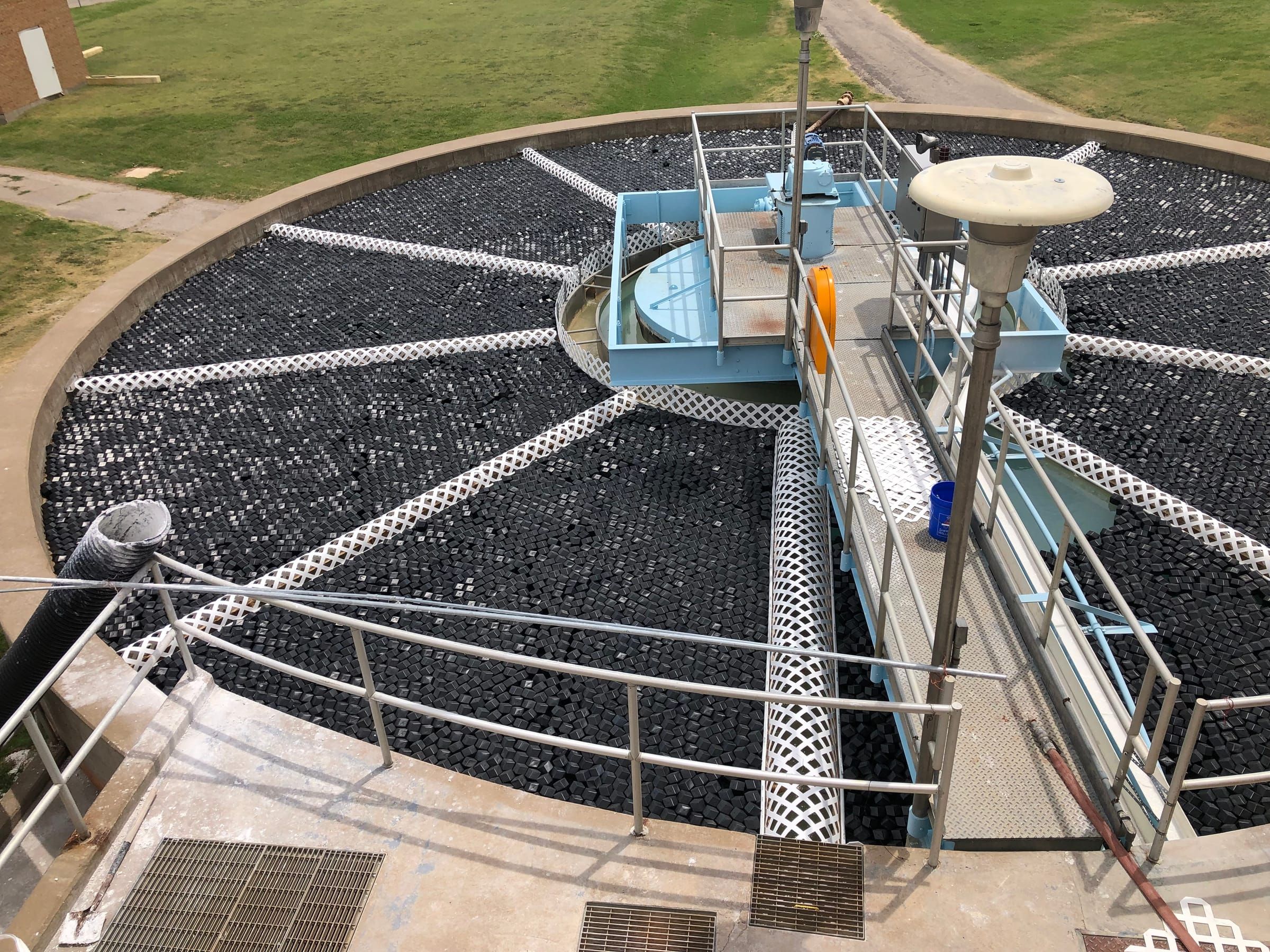
Evaporation reduction: up to 98% | Maximum water conservation
Rhombo Hexoshield®
AWTT's highest-performance evaporation control solution for large dam and reservoir applications. Rhombo Hexoshield® achieves up to 98% evaporation reduction and scales modularly to any reservoir size — protecting stored water volume for municipal supply and agricultural irrigation districts in drought-threatened arid regions.
Learn more →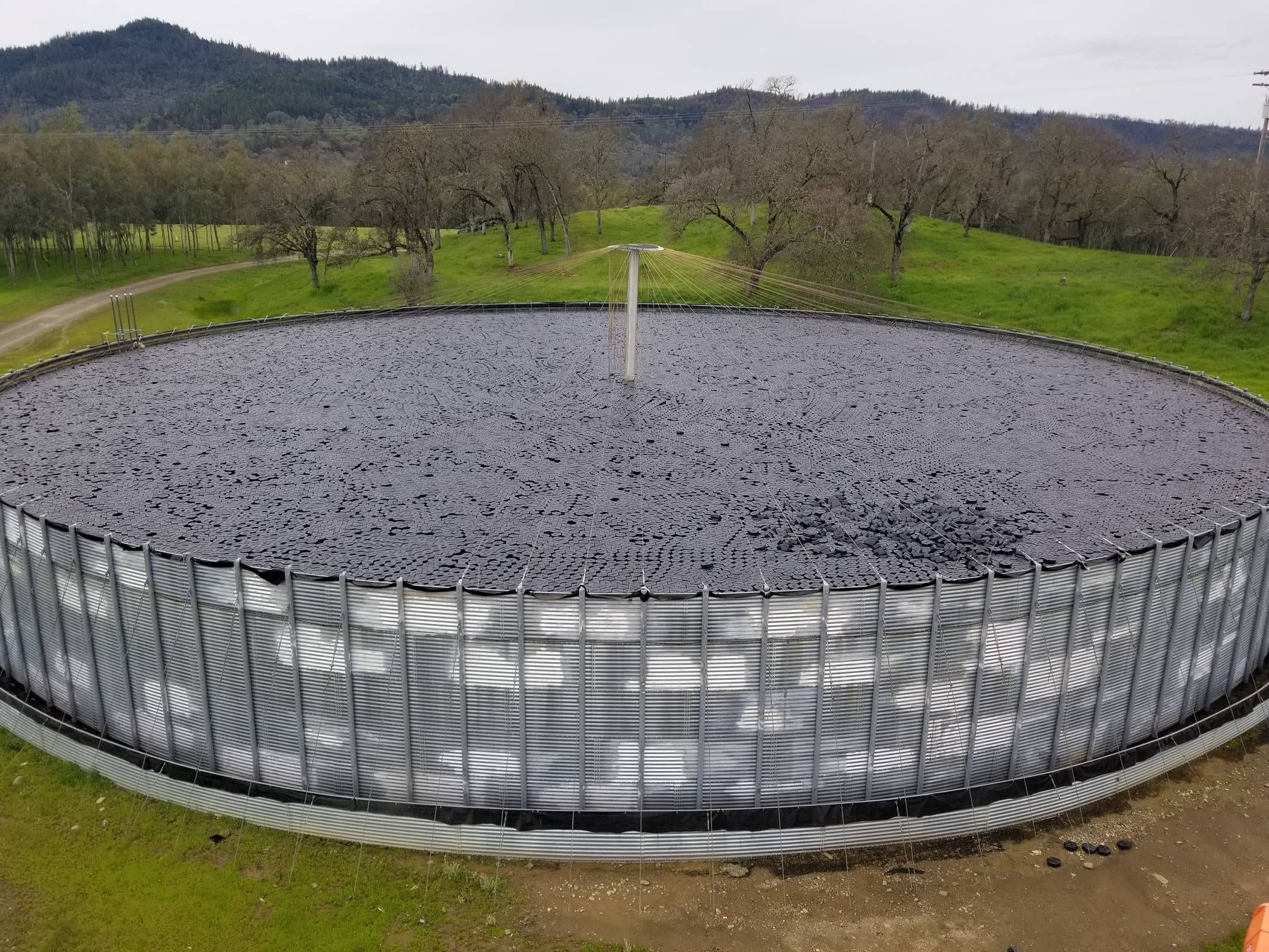
Coverage: up to 99% | NSF/ANSI 61 certified resin option
Hexprotect® AQUA
The leading choice for drinking water supply reservoirs where comprehensive source water protection is required. Up to 99% surface coverage maximizes evaporation reduction, eliminates algae, excludes waterfowl, and prevents debris contamination — all simultaneously from a single NSF/ANSI potable-water-safe cover installation.
Learn more →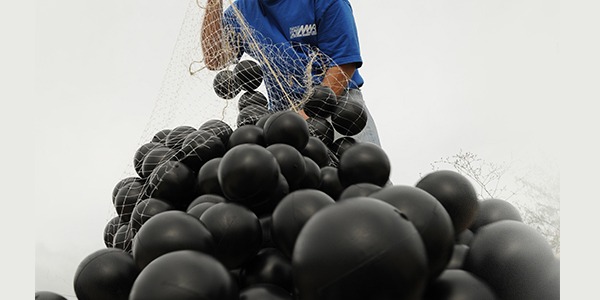
Wind resistance: 75 MPH | Water-ballasted
Armor Ball® AQUA 275
For dam reservoirs in exposed canyon, valley, or high-altitude locations where sustained high winds are a consistent design challenge. The water-ballasted Armor Ball® AQUA 275 anchors against winds up to 75 MPH without mechanical fasteners — providing reliable coverage on topographically exposed reservoir sites.
Learn more →Frequently Asked Questions — Dam Floating Cover
Common questions from engineers and operators evaluating AWTT floating covers for dam floating cover.
How do floating covers scale to cover large dam reservoirs?
How much water can a dam floating cover save annually?
Are AWTT floating covers safe for drinking water supply reservoirs?
Do floating covers interfere with reservoir operation, spillway function, or water intake structures?
Ready to Solve Your Dam Floating Cover Challenge?
Contact AWTT for a custom floating cover recommendation — including site assessment, specification sheets, and ROI analysis.
Engineering Tools & Resources
Evaporation Rate Calculator
Estimate evaporation losses on your pond or reservoir and the ROI of a floating cover, using five FAO-56 / Harbeck methods with real-time weather.
Heat Loss & ROI Calculator
Model heat loss from a heated pond with the ASHRAE 5-component balance, then compare insulation savings and 20-year cost of ownership.
Not Sure Which Cover?
Answer a few questions about your site conditions and get a personalized product recommendation.
Technical Specifications
View full engineering specs, wind resistance data, R-values, and material compliance details.