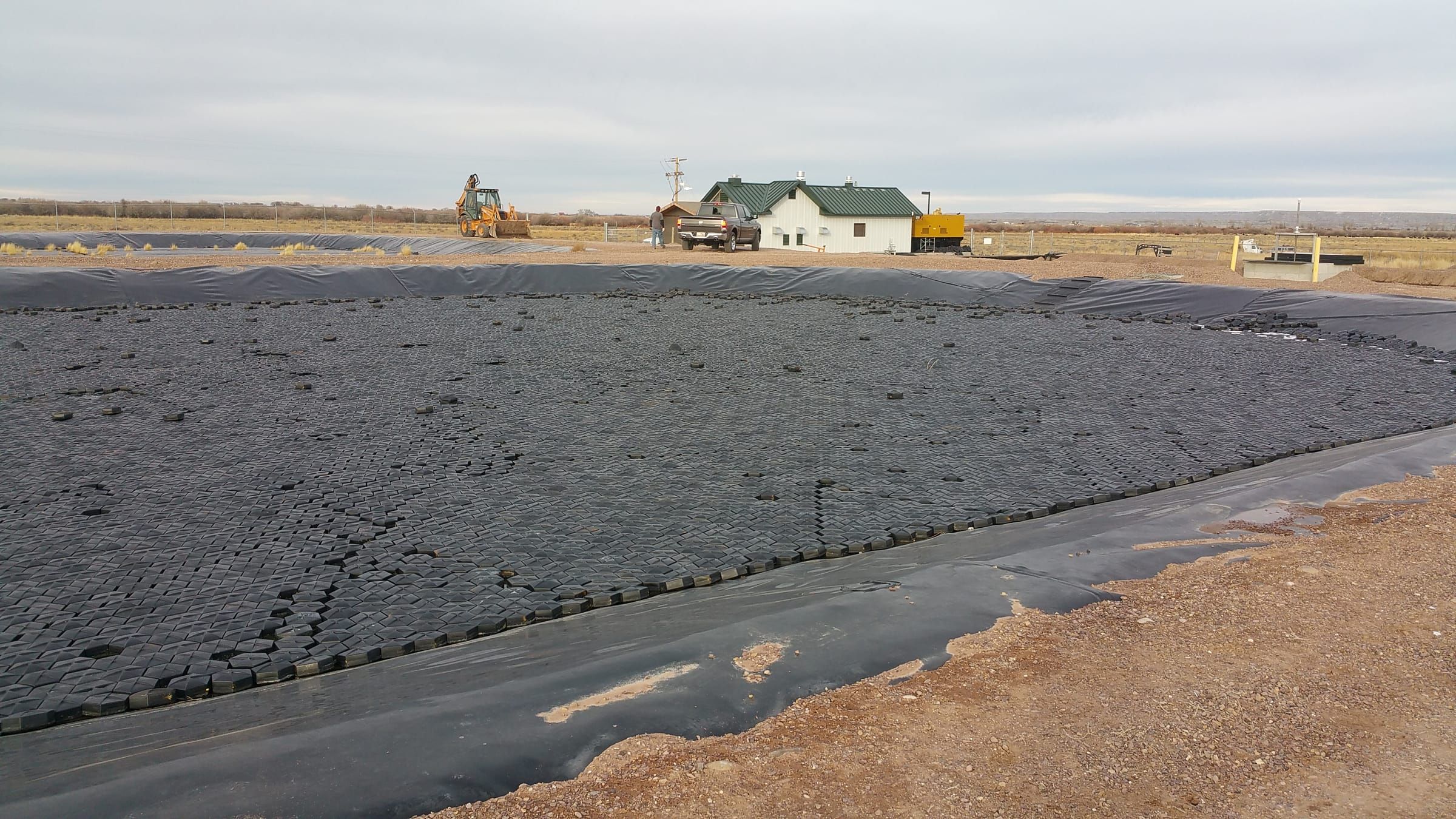
Odor Control Floating Covers — Suppress H₂S, Ammonia & VOC Emissions from Open Liquid Storage
Reduce odorous emissions from open wastewater ponds and industrial lagoons by up to 90% with AWTT's passive, chemical-free HDPE floating cover systems.
Floating covers suppress odor emissions from industrial ponds and wastewater lagoons by creating a physical barrier that traps hydrogen sulfide (H2S), ammonia, and volatile organic compounds (VOCs) at the water surface. Open wastewater ponds, manure lagoons, dairy waste impoundments, and industrial effluent basins are among the largest area-source emitters of hydrogen sulfide (H₂S), ammonia (NH₃), mercaptans, and volatile organic compounds (VOCs) in industrial and agricultural settings. These compounds do not remain at the liquid surface — they volatilize continuously into the surrounding air, creating inhalation hazards for site workers, odor plumes that impact neighboring communities, and air permit violations that trigger regulatory enforcement. AWTT's modular floating cover systems address the odor problem at its source: the liquid-air interface.
AWTT's Hexprotect® AQUA floating cover achieves up to 99% surface coverage on open ponds and lagoons — creating a near-complete physical barrier at the liquid-air interface that reduces odorous emissions including H₂S, ammonia, and VOCs by up to 90%. Unlike chemical odor treatments that address emissions after they occur, AWTT floating covers prevent volatilization before it happens — a passive, chemical-free, maintenance-free solution with a 25-year design lifespan and 10-year product warranty. All covers are manufactured from HDPE rated for pH 2–13, providing full chemical resistance to the corrosive chemistry of industrial wastewater and anaerobic digestion environments.
For wastewater-specific procurement support, see the floating cover specification guide and AWTT's anonymized application notes.
The Problem — Why Open Ponds Fail
Uncovered liquid storage creates measurable operational, environmental, and regulatory risks that floating covers directly address.
H₂S & Ammonia Emissions Create Health Hazards
Open wastewater ponds, manure lagoons, and anaerobic digesters off-gas hydrogen sulfide (H₂S) and ammonia (NH₃) continuously. H₂S is acutely toxic above 10 ppm — causing headache and nausea at low concentrations and loss of consciousness at high concentrations. Ammonia is corrosive to airways and causes chronic respiratory damage with long-term occupational exposure.
Neighbor Complaints & Community Relations Damage
Odor plumes from uncovered wastewater lagoons, dairy manure pits, and industrial effluent ponds extend hundreds to thousands of feet downwind. Chronic odor complaints from neighboring properties trigger nuisance lawsuits, permit challenges, and operational restrictions — jeopardizing facility expansion approvals and operating permits.
Air Permit Violations & Regulatory Enforcement
Open liquid storage ponds are regulated emission sources under the Clean Air Act, NESHAP, and state air quality regulations. Uncovered wastewater lagoons routinely exceed VOC, H₂S, and ammonia emission thresholds defined in facility air permits — triggering EPA and state enforcement action, fines, and mandatory emission reduction orders.
OSHA Worker Exposure Citations
OSHA PEL for H₂S is 20 ppm (ceiling). Open ponds with active biological treatment, sulfate reduction, or anaerobic decomposition routinely generate surface concentrations well above this threshold — creating documented inhalation hazard zones for workers performing sampling, maintenance, and inspection operations at pond perimeters.
Evaporation Carries Odorous Compounds Offsite
Evaporation from open ponds does not simply remove water — it carries dissolved volatile compounds into the air as vapor. Hydrogen sulfide, mercaptans, indole, skatole, and short-chain fatty acids are all semi-volatile compounds that partition into evaporating water vapor, dramatically amplifying the odor impact of open pond evaporation compared to simple water loss.
Temperature Elevates Volatilization Rates
Henry's Law governs the partitioning of volatile compounds between liquid and gas phases — and volatilization rates increase exponentially with temperature. Open ponds in warm climates or during summer months off-gas odorous compounds at rates 2–5× higher than winter, creating seasonal odor compliance cycles that are difficult to manage without a permanent physical barrier.
The AWTT Solution
Modular, maintenance-free floating covers engineered to directly solve odor control challenges in industrial liquid containment.
Physical Barrier Reduces Odor Emissions Up to 90%
AWTT floating covers create a continuous physical barrier at the liquid-air interface — directly blocking the volatilization pathway that releases H₂S, ammonia, mercaptans, and VOCs to the atmosphere. Independent studies and field measurements document odor emission reductions of up to 90% with high-coverage floating cover systems, depending on compound volatility and surface coverage percentage.
Up to 99% Surface Coverage for Maximum Suppression
AWTT's Hexprotect® AQUA achieves up to 99% surface coverage — leaving less than 1% of the liquid surface exposed to the atmosphere. The effectiveness of odor suppression is directly proportional to surface coverage: 99% coverage eliminates 99% of the uncovered emission pathway, delivering maximum odor reduction for the most odor-sensitive sites adjacent to residential areas.
H₂S & Ammonia Reduction for Air Permit Compliance
By physically blocking the liquid-air interface, AWTT floating covers reduce H₂S and ammonia emission rates from open pond surfaces by up to 90% — helping facilities demonstrate emission reductions for Clean Air Act compliance, lower site-perimeter air monitoring readings, and reduce the frequency of permit exceedance events that trigger regulatory enforcement.
Lower Ambient Concentrations for Worker Safety
AWTT floating covers reduce ambient H₂S and VOC concentrations at pond margins — directly lowering measured worker inhalation exposure during inspection, sampling, and maintenance operations. This supports OSHA General Duty Clause compliance and reduces the frequency of required respiratory protection use, lowering PPE costs and administrative burden for EHS teams.
Passive, Chemical-Free Odor Management
Unlike chemical odor control systems (bioscrubbers, activated carbon, masking agents), AWTT floating covers require no chemicals, no energy, no maintenance, and no operating cost after installation. The passive physical barrier works continuously without operator intervention — delivering reliable odor suppression with zero consumable cost over a 25-year design lifespan.
Compatible with Aerobic & Anaerobic Treatment Systems
AWTT floating covers are compatible with aerobic and anaerobic treatment lagoons, primary and secondary clarifiers, equalization basins, sludge holding ponds, and industrial effluent ponds. The modular design does not interfere with aeration equipment, mixer installation, or process sampling — covers can be cut, shaped, or gapped to accommodate floating aeration equipment.
Technical Specifications — Odor Control Floating Covers
Recommended Products for Odor Control
AWTT engineers recommend these floating cover systems for odor control applications.
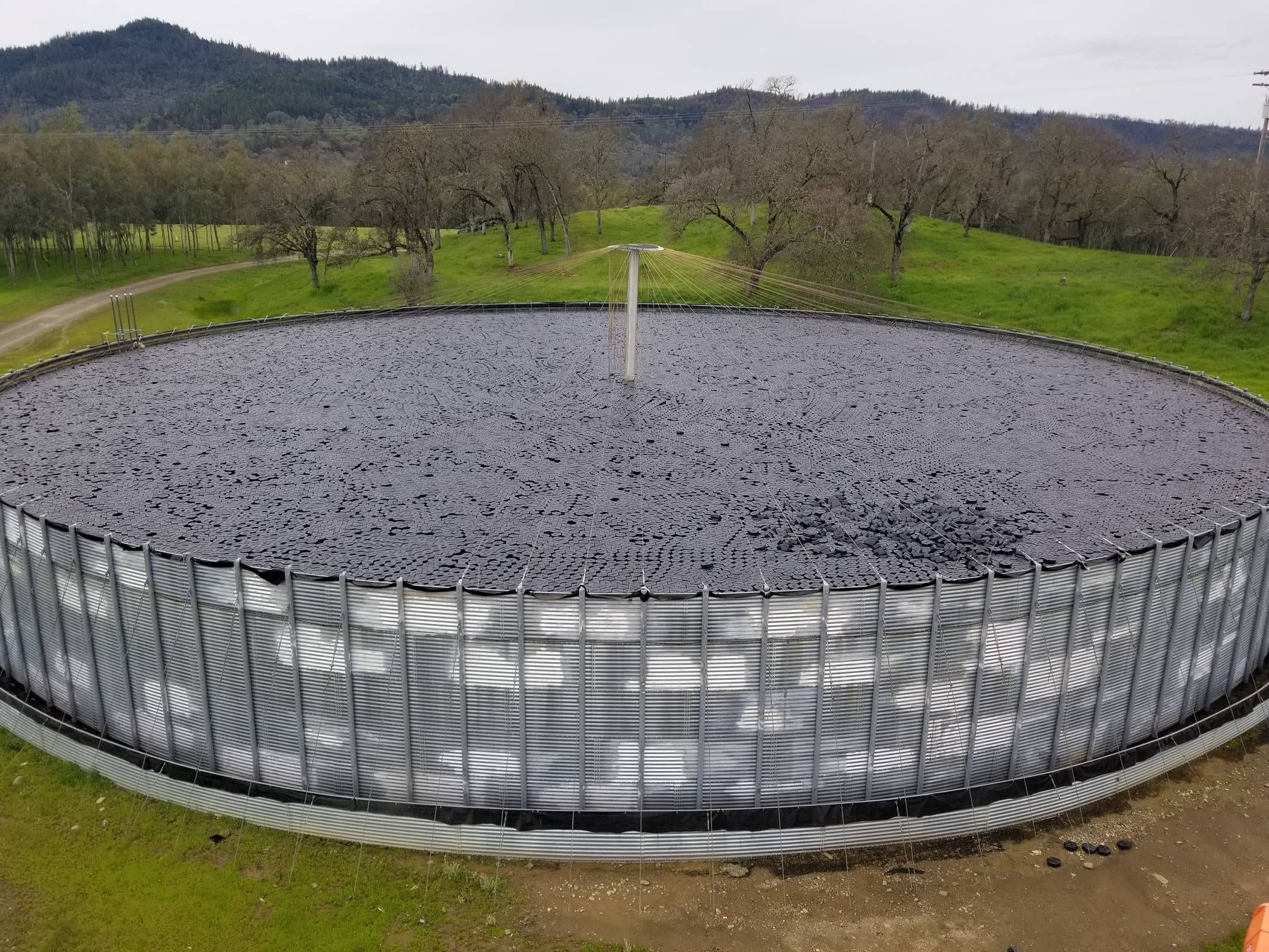
Coverage: up to 99% | pH 2–13 rated
Hexprotect® AQUA
The optimal choice for odor-sensitive sites requiring maximum surface coverage and emission suppression. Up to 99% coverage creates the most complete physical barrier available — minimizing H₂S, ammonia, and VOC release from open wastewater and industrial process ponds.
Learn more →
Wind resistance: 75 MPH | Water-ballasted
Armor Ball® AQUA 275
For exposed odor-control applications where sustained high winds would displace standard covers. The water-ballasted design anchors against 75 MPH winds — providing reliable odor suppression on open industrial sites, coastal facilities, and high-plains wastewater lagoons.
Learn more →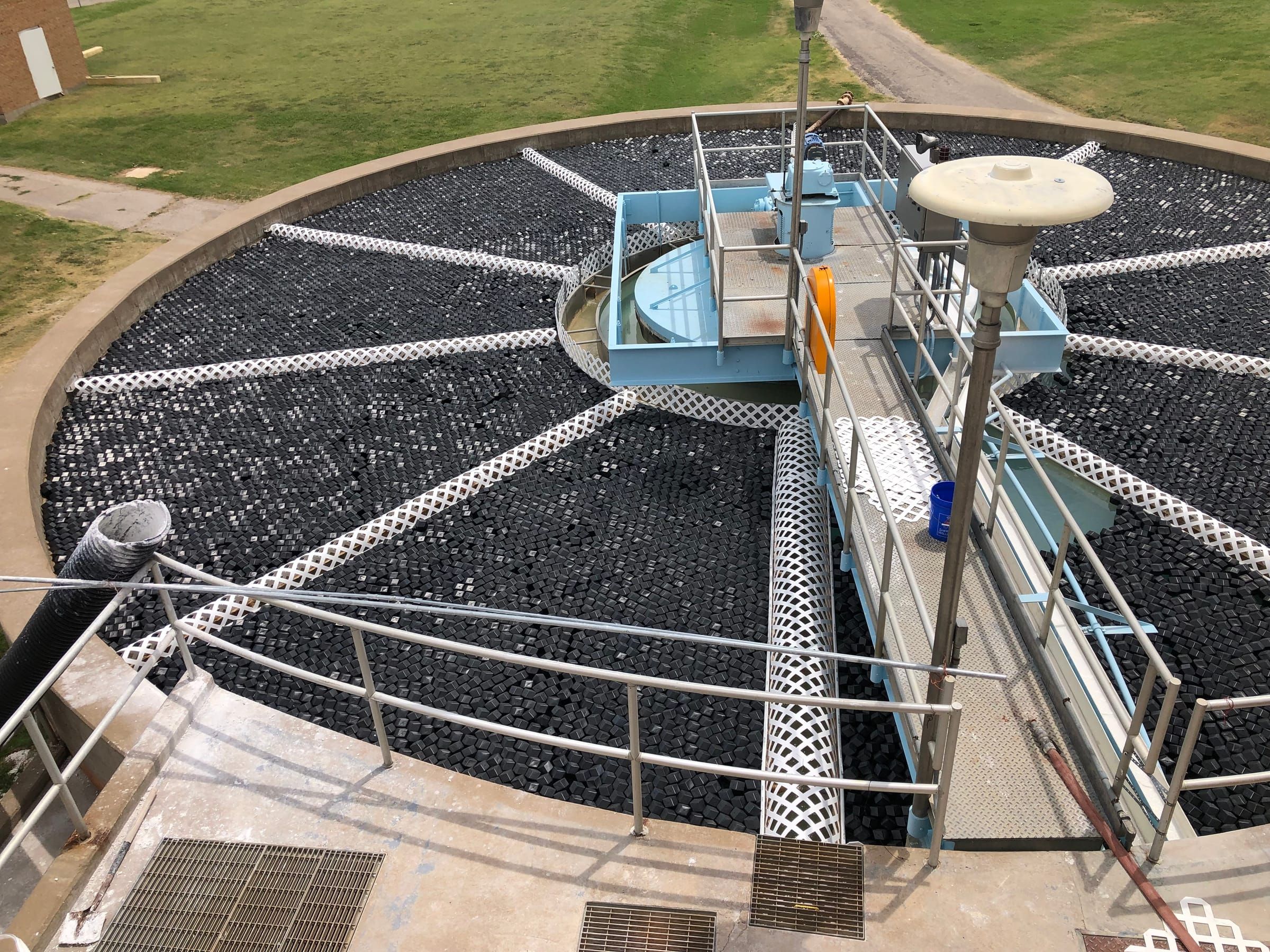
Evaporation reduction: up to 98%
Rhombo Hexoshield®
For applications where combined odor suppression and maximum evaporation control are required simultaneously. The Rhombo Hexoshield® achieves up to 98% evaporation reduction — reducing both water loss and the vapor-phase transport of odorous compounds from open liquid storage.
Learn more →Frequently Asked Questions — Odor Control
Common questions from engineers and operators evaluating AWTT floating covers for odor control.
How much do AWTT floating covers reduce odor emissions from wastewater ponds?
Do floating covers help facilities comply with air permit odor and H₂S emission limits?
Are AWTT floating covers suitable for odor control on anaerobic digestion lagoons?
What is the difference between floating cover odor control and chemical odor treatment?
Ready to Solve Your Odor Control Challenge?
Contact AWTT for a custom floating cover recommendation — including site assessment, specification sheets, and ROI analysis.
Engineering Tools & Resources
Evaporation Rate Calculator
Estimate evaporation losses on your pond or reservoir and the ROI of a floating cover, using five FAO-56 / Harbeck methods with real-time weather.
Heat Loss & ROI Calculator
Model heat loss from a heated pond with the ASHRAE 5-component balance, then compare insulation savings and 20-year cost of ownership.
Not Sure Which Cover?
Answer a few questions about your site conditions and get a personalized product recommendation.
Technical Specifications
View full engineering specs, wind resistance data, R-values, and material compliance details.