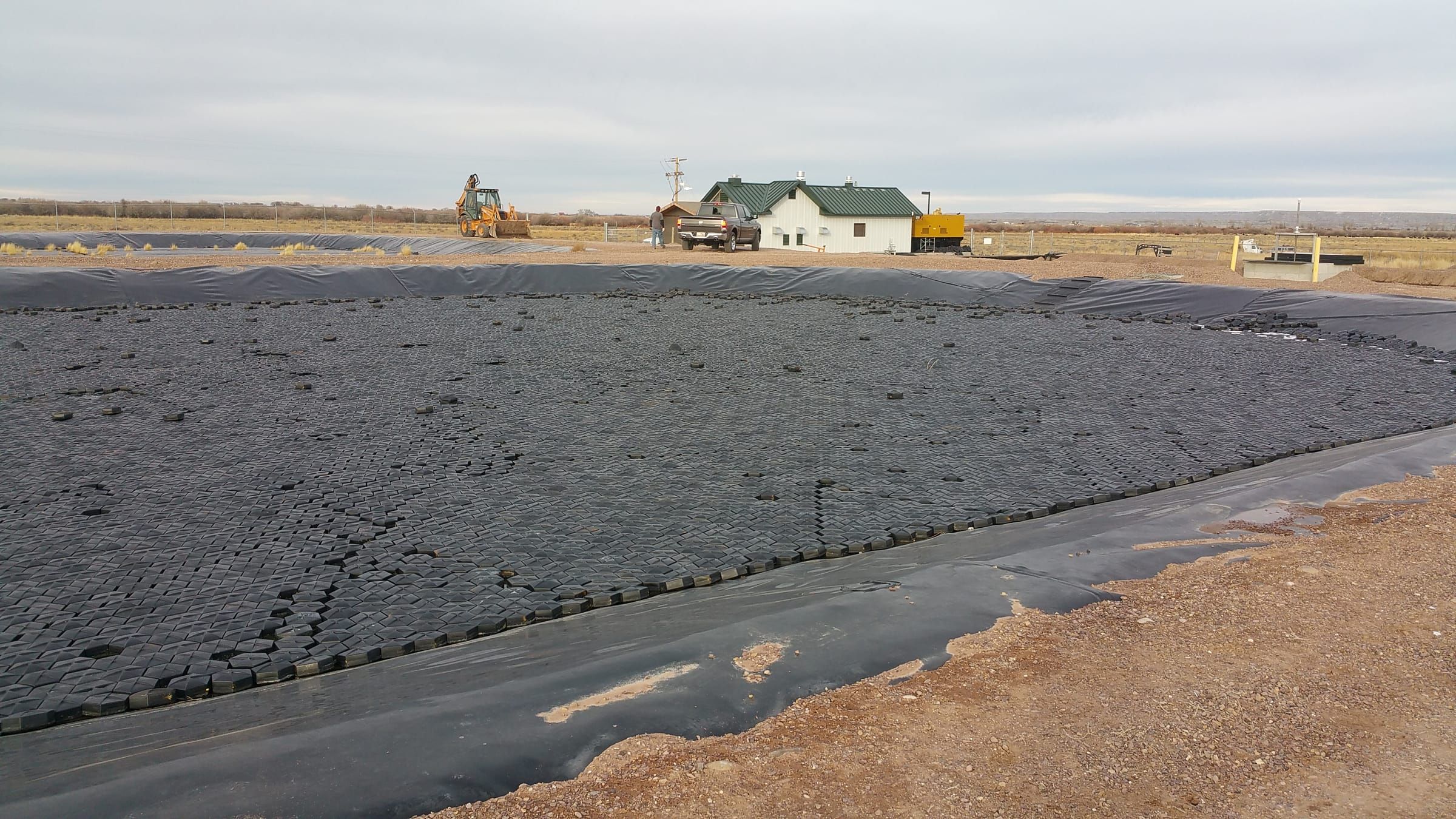
Bird Control Floating Covers — MBTA Compliance & Passive Wildlife Deterrence for Open Ponds
Eliminate waterfowl access to industrial and drinking water ponds with passive HDPE floating covers — up to 99% surface coverage, zero ongoing labor.
Floating covers deter birds and wildlife from landing on industrial ponds and reservoirs by covering the water surface with interlocking modules that eliminate the visual and physical cues waterfowl use to identify open water. Open industrial and municipal ponds present an unavoidable wildlife hazard: birds cannot distinguish safe natural water from toxic industrial lagoons by appearance alone. The reflective surface of an open pond — regardless of its chemistry — is visually indistinguishable from a natural lake or stream to waterfowl navigating overhead. This creates persistent Migratory Bird Treaty Act (MBTA) exposure for industrial operators and pathogen contamination risk for drinking water utilities. AWTT's modular floating cover systems solve both problems permanently through passive physical exclusion.
AWTT's Hexprotect® AQUA floating cover achieves up to 99% surface coverage on open ponds and reservoirs — physically eliminating the open water surface that attracts migratory birds. This preventive exclusion approach requires no ongoing labor, no consumables, no operational management, and no wildlife deterrence permits. Covers are manufactured from UV-stabilized, frost-resistant HDPE — rated to –70°F, warranted for 10 years, and designed for a 25-year operational lifespan. For exposed sites with high wind loading, the Armor Ball® AQUA 275 provides 75 MPH wind resistance without mechanical anchoring. For a deeper look at ball-based deterrence, see bird balls for airports and reservoirs.
The Problem — Why Open Ponds Fail
Uncovered liquid storage creates measurable operational, environmental, and regulatory risks that floating covers directly address.
Migratory Bird Treaty Act Liability
The Migratory Bird Treaty Act (MBTA) prohibits the take, possession, or killing of any migratory bird — including incidental mortality at industrial facilities. Open ponds that attract and kill migratory waterfowl expose operators to MBTA criminal penalties of up to $15,000 per bird and reputational consequences from wildlife mortality events documented at industrial sites.
Waterfowl Deposit Pathogens in Source Water
Canada geese, mallard ducks, and migratory waterfowl deposit Cryptosporidium, Giardia, E. coli O157:H7, Campylobacter, and Salmonella directly into drinking water source reservoirs and potable water storage ponds. A single Canada goose deposits up to 1.5 lbs of feces per day — representing a continuous pathogen loading source that increases treatment requirements and Source Water Treatment Rule compliance obligations.
Wildlife Mortality at Hazardous Industrial Ponds
Open ponds containing hydrocarbons, heavy metals, acidic mine drainage, alkaline process water, or chemical waste streams attract birds that mistake the reflective surface for safe water. Contact with toxic industrial liquids causes acute mortality — generating MBTA violations, potential CERCLA contamination liability, and community environmental incidents at industrial facilities.
Avian Influenza Risk at Open Water Storage
Open industrial and agricultural ponds attract migratory waterfowl that carry Highly Pathogenic Avian Influenza (HPAI). Dairy operations, agricultural water supply ponds, and poultry processing facilities face biosecurity threats when migratory birds access open water storage — a risk that physical exclusion through floating covers directly eliminates.
Bird Waste Elevates Nutrient & TSS Loading
Waterfowl congregation at open industrial and municipal ponds elevates nitrogen, phosphorus, biochemical oxygen demand (BOD), and total suspended solids (TSS) in treated and stored water — increasing treatment chemical consumption, nutrient loading in receiving water bodies, and the risk of permit exceedance at National Pollutant Discharge Elimination System (NPDES) permitted outfalls.
Reactive Deterrents Are Costly & Inconsistent
Reactive bird deterrent methods — propane cannons, falconry programs, hazing, netting, and chemical repellents — require continuous labor, ongoing consumable cost, and consistent operational execution. These approaches do not physically prevent bird access to open water surfaces; they only discourage it. When hazing operations lapse, birds return immediately — making reactive deterrence an ongoing cost with no permanent resolution.
The AWTT Solution
Modular, maintenance-free floating covers engineered to directly solve bird control challenges in industrial liquid containment.
Up to 99% Surface Coverage Eliminates Open Water Access
AWTT's Hexprotect® AQUA floating covers achieve up to 99% surface coverage — physically eliminating the open water visual attractant that draws migratory birds to industrial and agricultural ponds. With less than 1% of the surface exposed, waterfowl have no accessible water to land on, drink from, or bathe in. This preventive physical exclusion is the most reliable and legally defensible MBTA compliance strategy available.
MBTA Compliance Through Preventive Exclusion
MBTA enforcement is strict liability — intent is irrelevant. The most defensible compliance strategy is to prevent bird access to hazardous ponds before mortality occurs, rather than respond after wildlife incidents. AWTT floating covers provide permanent, passive physical exclusion that regulators and courts recognize as a proactive engineering control measure, significantly reducing MBTA enforcement exposure.
Source Water Pathogen Reduction for SWTR Compliance
For drinking water utilities and municipal water supply reservoirs, AWTT floating covers eliminate waterfowl access to source water — directly reducing Cryptosporidium, Giardia, and fecal coliform loading in raw water. Many utilities that have installed floating covers on source water reservoirs document measurable reductions in source water pathogen concentrations, lowering treatment intensity requirements under the EPA Surface Water Treatment Rule.
Passive, Maintenance-Free — No Ongoing Labor Cost
Unlike propane cannons, falconry programs, or hazing crews, AWTT floating covers require zero ongoing labor, zero consumable cost, and zero operational management after installation. The covers float passively, self-adjust to water level changes, and maintain physical exclusion 24 hours a day, 365 days a year — with no dependence on operational continuity or staff execution.
Effective in All Weather Conditions
AWTT floating covers maintain bird exclusion performance through freeze-thaw cycles, high winds, ice formation, and storm events. All AWTT cover systems are frost resistant to –70°F and the Armor Ball® AQUA 275 is wind-resistant to 75 MPH — providing reliable bird exclusion on exposed northern sites, high-altitude reservoirs, and coastal ponds where weather-dependent deterrents frequently fail.
Scales to Any Pond or Reservoir Geometry
AWTT floating covers scale modularly from small agricultural storage ponds to large municipal reservoirs covering hundreds of acres. No permanent structural modification of the pond basin is required. Covers can be installed in phases across multiple pond cells as capital allows — making them practical for water utilities and industrial operators managing large surface water impoundments.
Technical Specifications — Bird Control Floating Covers
Recommended Products for Bird Control
AWTT engineers recommend these floating cover systems for bird control applications.
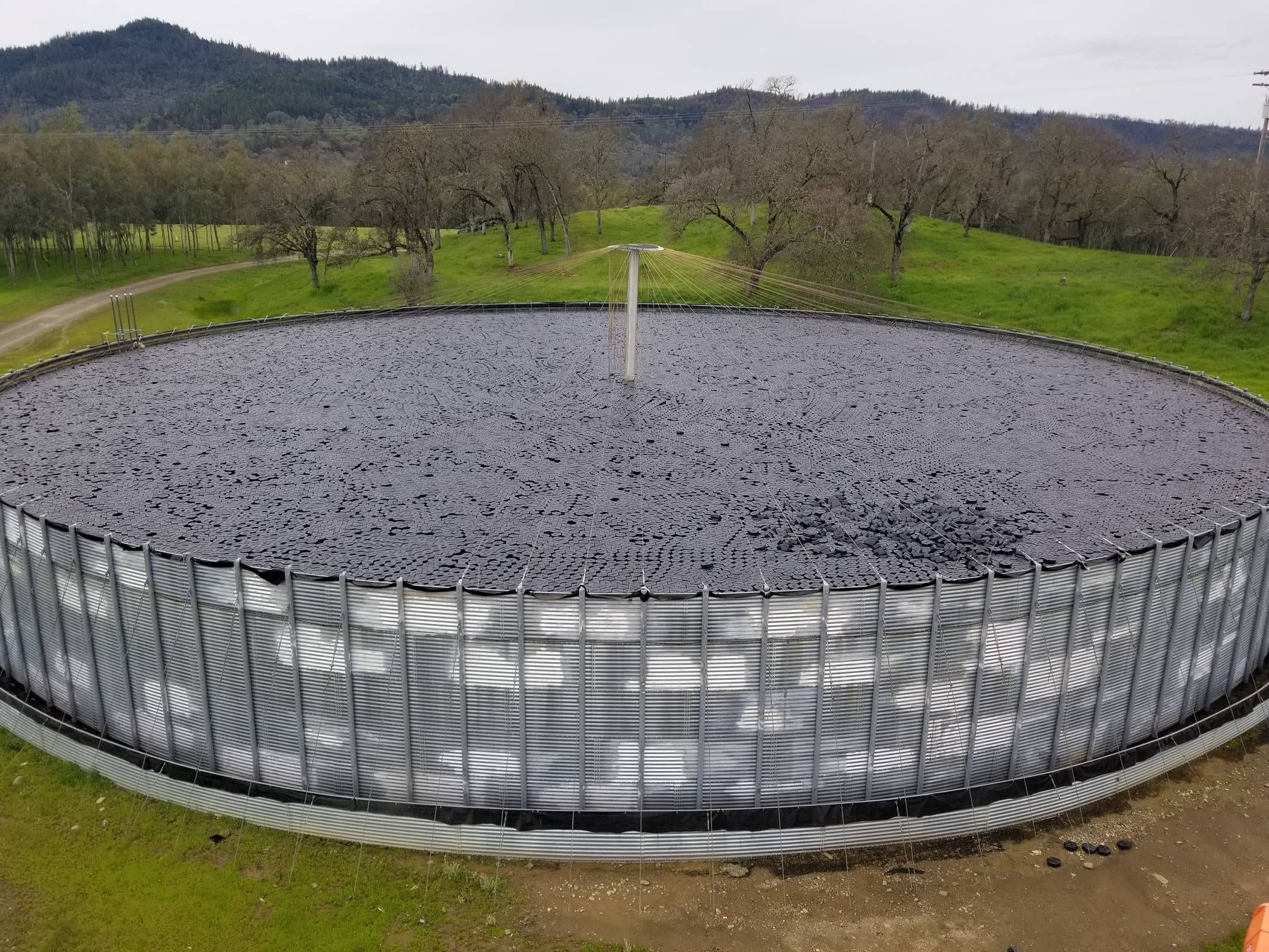
Coverage: up to 99% | MBTA-compliant exclusion
Hexprotect® AQUA
The leading choice for bird exclusion at drinking water reservoirs, municipal water supply ponds, and hazardous industrial impoundments. Up to 99% surface coverage physically eliminates the open water attractant — the most effective and legally defensible MBTA compliance strategy available.
Learn more →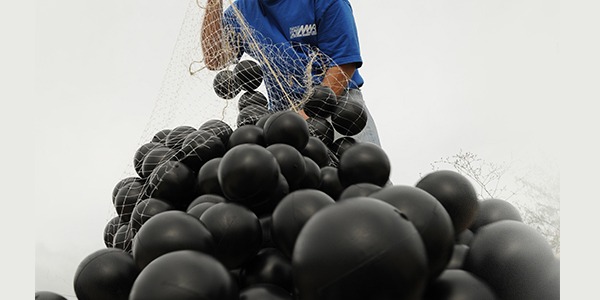
Wind resistance: 75 MPH | Water-ballasted
Armor Ball® AQUA 275
For bird control applications at exposed sites where sustained high winds would displace standard floating covers. The water-ballasted design anchors against 75 MPH winds — providing reliable year-round bird exclusion at coastal, high-altitude, and open-terrain industrial ponds.
Learn more →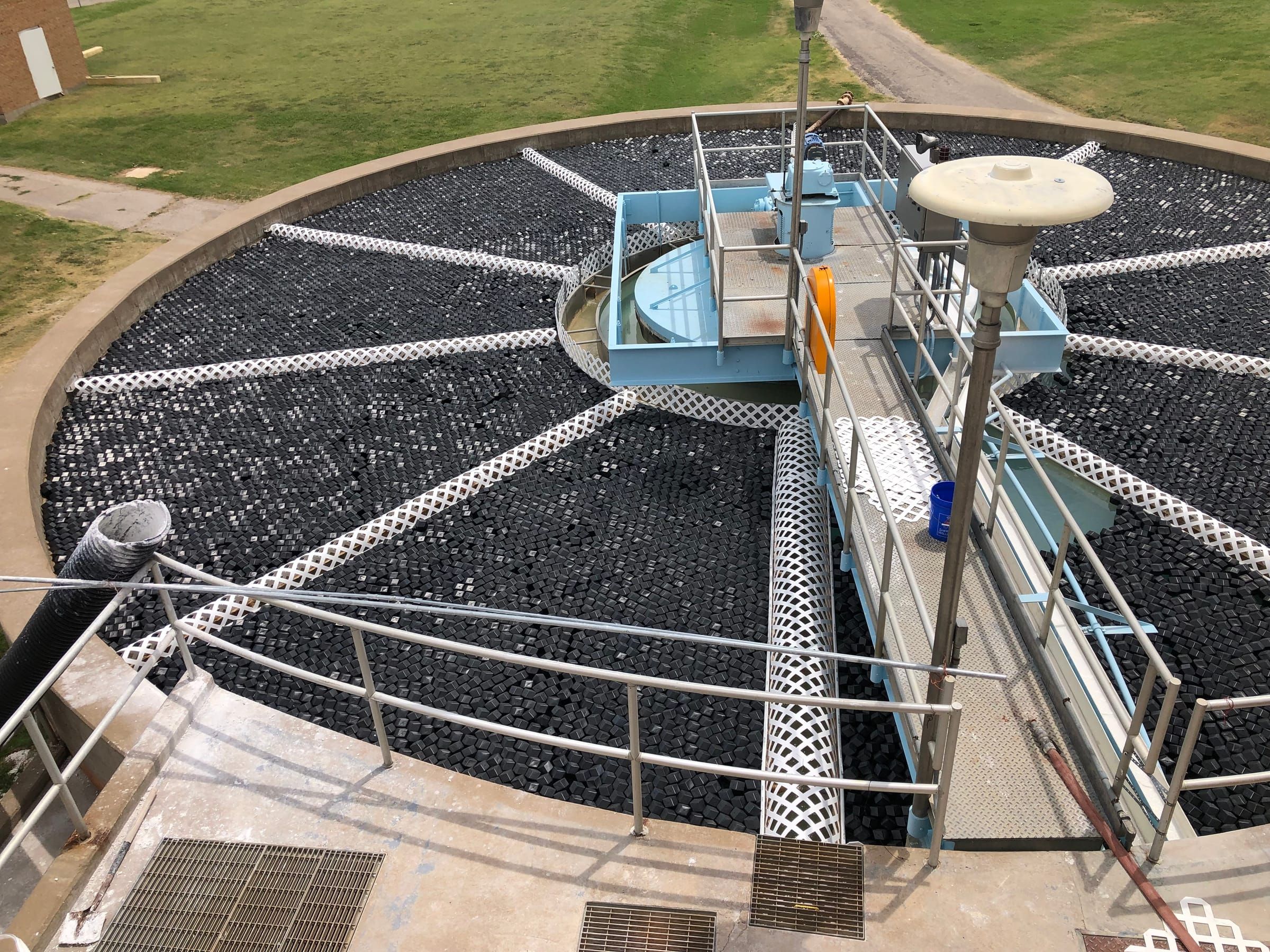
Coverage: 99% | Evaporation reduction: up to 98%
Rhombo Hexoshield®
For agricultural water supply ponds and irrigation reservoirs where bird control and evaporation reduction are both critical. The Rhombo Hexoshield® achieves up to 98% evaporation reduction while providing complete physical bird exclusion — protecting water supply reliability and biosecurity simultaneously.
Learn more →Frequently Asked Questions — Bird Control
Common questions from engineers and operators evaluating AWTT floating covers for bird control.
How do floating covers comply with the Migratory Bird Treaty Act (MBTA)?
Can floating covers prevent Cryptosporidium and Giardia contamination from waterfowl at drinking water reservoirs?
Do floating covers work for bird control at all seasons including winter and migration periods?
Are floating covers more effective than bird netting for large industrial ponds?
Ready to Solve Your Bird Control Challenge?
Contact AWTT for a custom floating cover recommendation — including site assessment, specification sheets, and ROI analysis.
Engineering Tools & Resources
Evaporation Rate Calculator
Estimate evaporation losses on your pond or reservoir and the ROI of a floating cover, using five FAO-56 / Harbeck methods with real-time weather.
Heat Loss & ROI Calculator
Model heat loss from a heated pond with the ASHRAE 5-component balance, then compare insulation savings and 20-year cost of ownership.
Not Sure Which Cover?
Answer a few questions about your site conditions and get a personalized product recommendation.
Technical Specifications
View full engineering specs, wind resistance data, R-values, and material compliance details.