Insulated Floating Covers — R-17+ Thermal Insulation for Biogas Digesters, Process Water & Aquaculture
Reduce digester and process water heating costs by up to 90% with AWTT's Hexprotect® MAX R — R-17+ insulated floating covers frost resistant to –70°F.
Floating insulation covers reduce heat loss from heated industrial ponds, anaerobic digesters, and process water tanks by providing R-values up to R-17, dramatically cutting supplemental heating costs in cold climates. Temperature is the most critical variable in biological wastewater treatment, biogas production, and warm-water industrial processes. Mesophilic anaerobic bacteria require sustained temperatures of 95–104°F; thermophilic systems demand 122–140°F. Open digestion lagoons, warm-water process ponds, and aquaculture systems lose heat continuously through the liquid surface — through evaporation, convection, and radiation — forcing supplemental heating systems to compensate at significant energy cost. AWTT's insulated floating cover systems solve this problem at the source: the liquid-air interface.
AWTT's Hexprotect® MAX R delivers an R-value of 17 or greater through a 2.5–3" closed-cell polyurethane foam insulation core, reducing digester and process water heating costs by up to 90% while simultaneously providing up to 97% evaporation reduction, up to 99% surface coverage for algae and odor suppression, and frost resistance to –70°F. No other floating cover product delivers this combination of thermal performance, environmental protection, and operational longevity. All AWTT covers carry a 10-year product warranty and are engineered for a 25-year operational lifespan.
Related Engineering Guides
Evaporation Control for Biogas Digesters
Application guidance for digesters, biogas lagoons, and heated process ponds where evaporation and heat loss overlap.
Insulated vs. Non-Insulated Floating Covers
Compare thermal performance, coverage, operating cost, and selection criteria for insulated and uninsulated systems.
The Problem — Why Open Ponds Fail
Uncovered liquid storage creates measurable operational, environmental, and regulatory risks that floating covers directly address.
Heat Loss Collapses Biogas Yield
Anaerobic digestion is temperature-sensitive: mesophilic bacteria require sustained lagoon temperatures of 95–104°F, while thermophilic systems demand 122–140°F. Open digestion lagoons lose heat continuously through the liquid surface — forcing supplemental heating systems to compensate and consuming energy that directly offsets biogas production economics. When winter temperatures cause lagoon temperatures to drop below the mesophilic threshold, methane production collapses and volatile solids destruction falls sharply.
Heating Energy Costs Erode Process Economics
Maintaining optimal digestion temperatures in uncovered lagoons during cold weather requires continuous supplemental heating — driving energy costs that significantly reduce the net energy value of biogas production. In cold climates where supplemental heating is required for 4–6 months per year, heating costs can represent 20–40% of total biogas plant operating expenses, fundamentally altering project economics.
Cold Weather Process Upsets & Recovery Costs
When anaerobic digestion temperatures fall below the optimal range during cold weather events, bacterial community composition shifts, VFA (volatile fatty acid) accumulation increases, pH drops, and methane production crashes. Recovery from temperature-induced process upsets requires weeks to months of careful management — during which biogas revenue is lost and supplemental heating costs continue to accumulate.
Open Aquaculture Ponds Lose Thermal Stability
Warm-water fish species (tilapia, catfish, shrimp) require sustained water temperatures above 60–70°F for optimal growth rates. Open aquaculture ponds in temperate climates experience rapid temperature fluctuations driven by solar radiation and nighttime radiative cooling — creating chronic thermal stress on fish populations, reducing feed conversion efficiency, and increasing disease susceptibility.
Industrial Process Water Requires Temperature Control
Many industrial process water systems — including textile dyeing, food processing, pharmaceutical manufacturing, and electroplating — require process water maintained at specific temperature ranges. Open process water ponds lose heat to the environment continuously through evaporation and convection — forcing energy-intensive supplemental heating to compensate, increasing operating costs, and risking temperature-sensitive process quality upsets.
Evaporation Amplifies Heat Loss
Evaporation is the dominant mechanism of heat loss from open liquid surfaces — each kilogram of evaporated water carries away 2,450 kJ of latent heat. This means that the same physical phenomenon driving water loss (evaporation) also drives temperature loss. An open 10-acre digestion lagoon evaporating 70 inches of water per year loses enough latent heat energy to supply a large commercial building's annual space heating demand.
The AWTT Solution
Modular, maintenance-free floating covers engineered to directly solve floating insulation challenges in industrial liquid containment.
Hexprotect® MAX R — R-Value of 17 or Greater
The Hexprotect® MAX R delivers an R-value of 17 or greater through a 2.5–3" layer of closed-cell polyurethane foam insulation encapsulated in UV-stabilized HDPE — providing thermal resistance equivalent to a well-insulated building wall at the liquid surface. This insulation layer dramatically reduces heat transfer between the stored liquid and the cold atmosphere above, maintaining digester and process water temperatures with minimal supplemental heating input.
Up to 90% Reduction in Heating Costs
By eliminating both evaporative heat loss and convective heat transfer at the liquid surface, Hexprotect® MAX R reduces digester and process water heating costs by up to 90% compared to uncovered operation. For a biogas plant spending $200,000 annually on supplemental lagoon heating, floating insulation cover installation can reduce this to $30,000 — generating $170,000 in annual energy savings with a payback period measured in months rather than years.
Year-Round Temperature Stability for Maximum Biogas Yield
Insulated floating covers maintain digester temperatures within the optimal mesophilic (95–104°F) or thermophilic (122–140°F) range throughout the year — including during winter cold snaps that would collapse bacterial activity in uncovered lagoons. Stable temperature translates directly to consistent biogas yield, reliable volatile solids destruction rates, and predictable energy production from anaerobic digestion facilities.
Frost Resistant to –70°F
All AWTT floating cover systems, including the insulated Hexprotect® MAX R, are frost resistant to –70°F. HDPE does not become brittle, crack, or lose structural integrity at sub-zero temperatures. The polyurethane insulation layer maintains its R-value in extreme cold — providing consistent thermal protection in the harshest operating environments from the Canadian prairies to Siberian biogas plants.
Simultaneous Evaporation Reduction Up to 95%
The insulating cover also provides up to 95% evaporation reduction — eliminating the primary heat loss mechanism (evaporation) while simultaneously conserving stored water volume and preventing the chemical concentration effects of open pond evaporation. This dual benefit means a single floating insulation cover installation delivers both thermal management and water conservation value simultaneously.
Odor & Algae Suppression Included
Beyond insulation and evaporation control, Hexprotect® MAX R also provides up to 99% surface coverage — blocking sunlight to prevent algae growth, suppressing H₂S and odor emissions from biogas lagoons, and excluding waterfowl from digestion pond surfaces. This comprehensive solution addresses thermal, water quality, odor, and wildlife management challenges simultaneously with a single product installation.
Technical Specifications — Floating Insulation Floating Covers
Recommended Products for Floating Insulation
AWTT engineers recommend these floating cover systems for floating insulation applications.
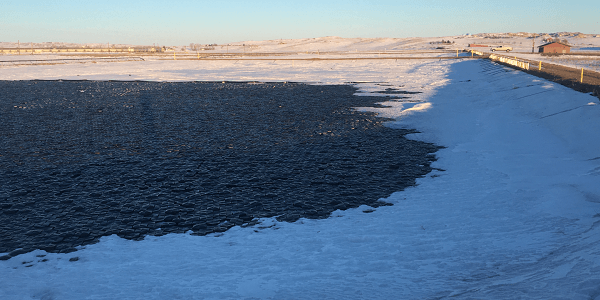
R-Value: 17+ | Heating cost reduction: up to 90%
Hexprotect® MAX R
AWTT's flagship insulated floating cover. The Hexprotect® MAX R delivers R-17+ thermal resistance through a 2.5–3" closed-cell polyurethane foam core — reducing digester and process water heating costs by up to 90%, maintaining optimal fermentation temperatures year-round, and providing simultaneous evaporation control, odor suppression, and algae prevention.
Learn more →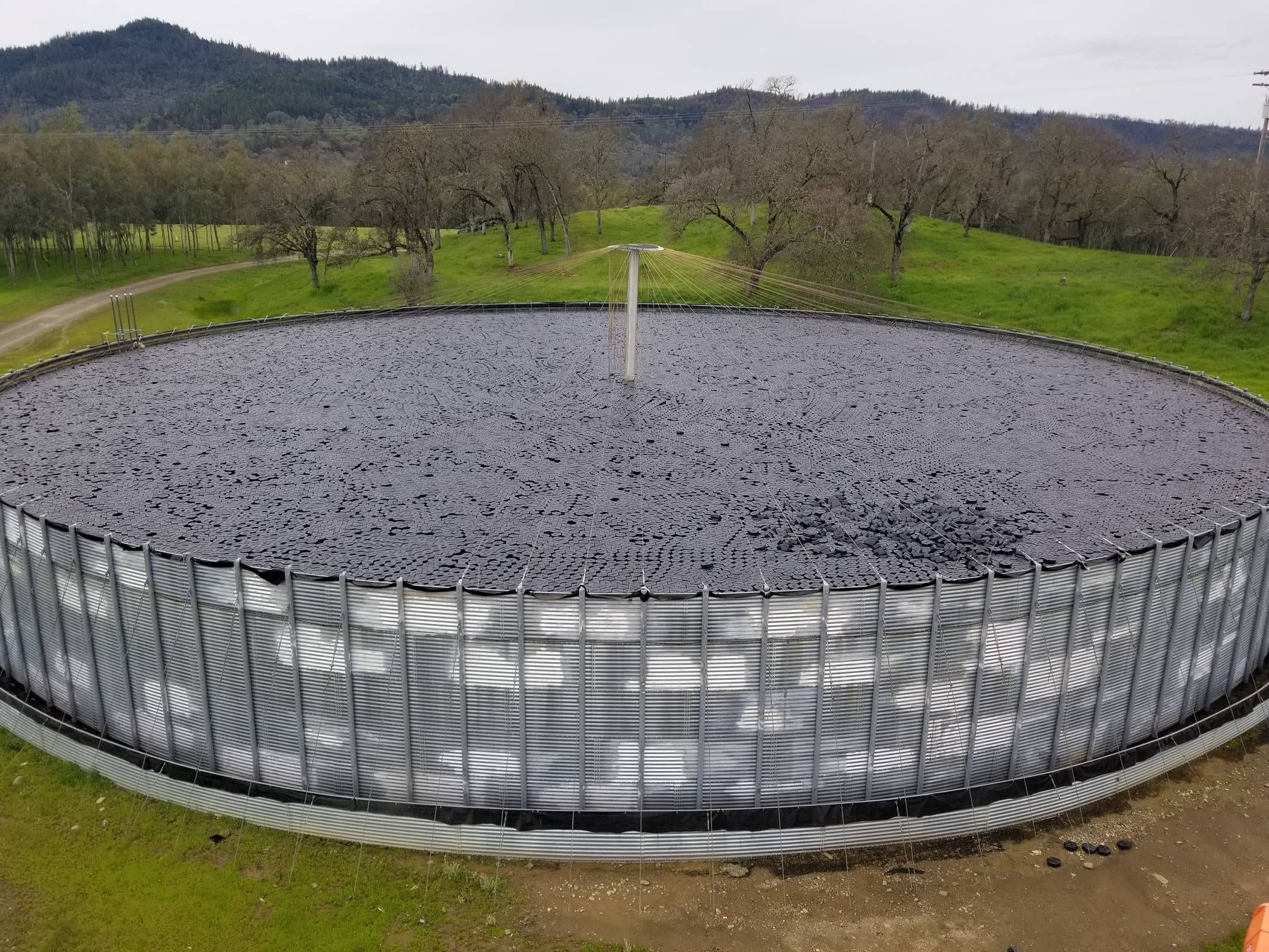
Coverage: up to 99% | Evaporation reduction: up to 95%
Hexprotect® AQUA
Where full closed-cell foam insulation is not required, Hexprotect® AQUA provides substantial heat loss reduction through evaporation elimination — which accounts for the majority of open pond heat loss. Up to 95% evaporation reduction translates directly to reduced supplemental heating requirements in warm process water systems.
Learn more →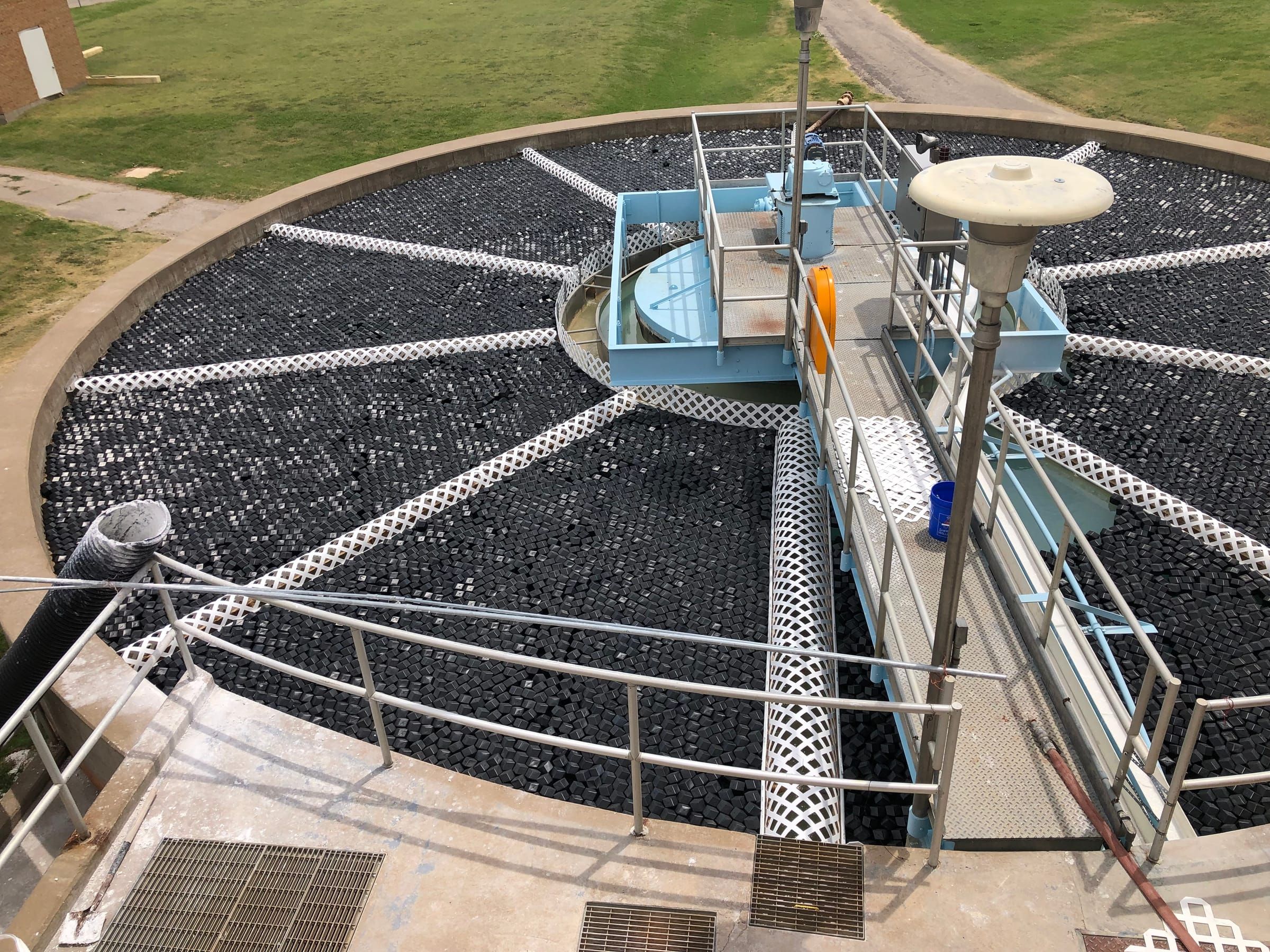
Evaporation reduction: up to 98% | Insulation: R-factor rated
Rhombo Hexoshield®
For aquaculture ponds, warm-water process ponds, and applications where maximum evaporation-driven heat loss reduction is the primary thermal management goal. The Rhombo Hexoshield® achieves up to 98% evaporation reduction — the highest in the AWTT product range — providing the greatest single-product reduction in evaporative heat loss.
Learn more →Frequently Asked Questions — Floating Insulation
Common questions from engineers and operators evaluating AWTT floating covers for floating insulation.
What R-value does the Hexprotect® MAX R insulated floating cover provide?
How much can floating insulation covers reduce biogas plant heating costs?
Do insulated floating covers work in extremely cold climates?
Can floating insulation covers maintain optimal digestion temperatures without supplemental heating?
Ready to Solve Your Floating Insulation Challenge?
Contact AWTT for a custom floating cover recommendation — including site assessment, specification sheets, and ROI analysis.
Engineering Tools & Resources
Evaporation Rate Calculator
Estimate evaporation losses on your pond or reservoir and the ROI of a floating cover, using five FAO-56 / Harbeck methods with real-time weather.
Heat Loss & ROI Calculator
Model heat loss from a heated pond with the ASHRAE 5-component balance, then compare insulation savings and 20-year cost of ownership.
Not Sure Which Cover?
Answer a few questions about your site conditions and get a personalized product recommendation.
Technical Specifications
View full engineering specs, wind resistance data, R-values, and material compliance details.