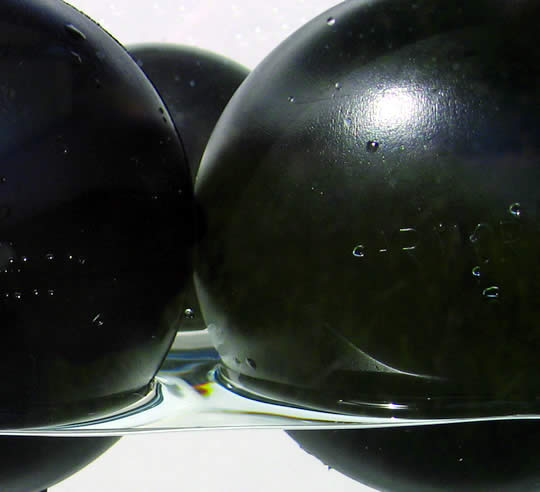
Floating Covers for Airport Water Retention Ponds — Bird Strike Prevention to FAA Guidance
Eliminate open-water bird hazards near runways with AWTT's modular floating covers, deployed under FAA AC 150/5200-33C wildlife-hazard guidance. No netting. No maintenance. Permanent protection.
Airport deicing ponds and stormwater retention basins require floating covers to prevent bird strikes by eliminating open water that attracts waterfowl near active runways. Airport water retention ponds, stormwater detention basins, and aircraft deicing fluid (ADF) collection facilities create unavoidable wildlife hazards when left uncovered. Open water within the FAA's 5-statute-mile airport hazard zone acts as a powerful attractant for Canada geese, mallard ducks, gulls, and other waterfowl species implicated in the majority of damaging bird strikes. The U.S. aviation industry reports an estimated $400 million in annual bird-strike-related damage — with global commercial aviation costs exceeding $1.2 billion per year.
AWTT's modular floating cover systems — including the Armor Ball®, Armor Ball® AQUA 275, and Hexprotect® AQUA — are deployed at FAA-regulated airfields — including Joint Base Pearl Harbor-Hickam — to eliminate open-water bird hazards in support of FAA Advisory Circular 150/5200-33 wildlife-hazard mitigation. Unlike netting, which deteriorates under UV and ice loading and still permits algae growth that attracts birds, floating covers permanently deny waterfowl access to the water surface. The result is a maintenance-free, 25-year solution that satisfies FAA Advisory Circular AC 150/5200-33C requirements at a fraction of the long-term cost of netting.
Common Airport Industry Challenges
Uncovered water storage creates measurable operational, environmental, and compliance risks specific to airport facilities.
Bird Strike Hazards
Birds attracted to open water ponds near runways create life-threatening strike risks. The U.S. aviation industry suffers an estimated $400 million in annual bird-strike damage — and global costs reach $1.2 billion per year to commercial aviation.
Algae & Vegetation Growth
Uncovered airfield retention and detention ponds develop algae blooms and emergent vegetation that attract additional waterfowl, compounding the bird hazard and creating maintenance obligations.
Evaporation Loss
Airport stormwater management ponds and deicing fluid collection basins lose significant water volume to evaporation in warm climates, reducing system capacity and increasing replenishment costs.
Deicing Pond Management
Glycol-based aircraft deicing fluid (ADF) collection ponds require containment integrity and chemical protection. Traditional netting allows chemical evaporation, odor, and contamination of surrounding groundwater.
Netting Maintenance Failures
Conventional anti-bird netting deteriorates under UV exposure, accumulates ice and snow damage, requires costly annual replacement, and still permits algae growth — providing an incomplete and expensive solution.
FAA Compliance Obligations
FAA Advisory Circular AC 150/5200-33C requires airports to manage wildlife hazards within the approach and departure zones. Open water within the 5-statute-mile perimeter requires documented hazard mitigation.
AWTT Floating Cover Solutions for Airports
Modular, maintenance-free floating covers engineered specifically to address the liquid containment challenges of airport operations.
Aligned with FAA Guidance (AC 150/5200-33C)
AWTT Armor Ball® floating covers support airport wildlife-hazard mitigation under FAA Advisory Circular AC 150/5200-33C. Floating ball covers deny waterfowl a landing surface by masking water and eliminating the visual cue that attracts birds.
Eliminates Bird Landing Surface
The Armor Ball® and Hexprotect® floating covers remove the open water surface entirely, making ponds uninviting and inaccessible to geese, ducks, and other waterfowl — the primary airport bird-strike species.
Blocks Algae & Vegetation
Up to 99% surface coverage blocks sunlight, stopping algae blooms and emergent plant growth that attract additional bird species. Covered ponds remain clear and biologically inert with no chemical inputs required.
Deicing Fluid Containment
Floating covers create a physical barrier over ADF collection ponds, reducing glycol evaporation, minimizing odors, preventing dilution from rain, and maintaining collection pond capacity between treatment cycles.
Snow & Ice Resistant
AWTT floating covers are engineered for cold climates — resisting snow and ice loading without structural failure. The modular design allows covers to flex under ice formation and self-restore when ice melts.
Self-Leveling & Maintenance-Free
As stormwater levels rise and fall, floating covers automatically adjust to maintain full surface coverage — with zero pumps, sensors, or mechanical systems requiring inspection or maintenance.
Quick Facts — Airport Floating Cover Performance
Recommended Products for Airports
AWTT engineers recommend these floating cover systems for airports applications.
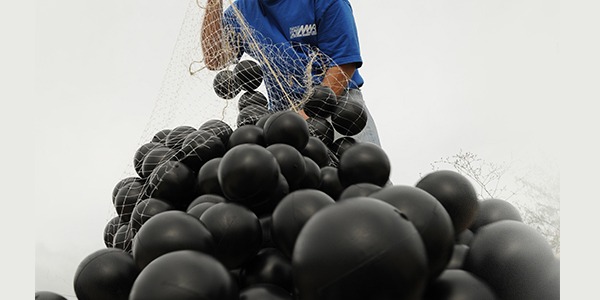
Wind resistance: rated 75 MPH (AQUA 275) | Supports FAA guidance
Armor Ball® AQUA 275
The preferred airport solution. Water-filled for ballast against wind, 91% surface coverage, deployed at airport water management sites. Resists snow, ice, and UV degradation for 25+ years.
Learn more →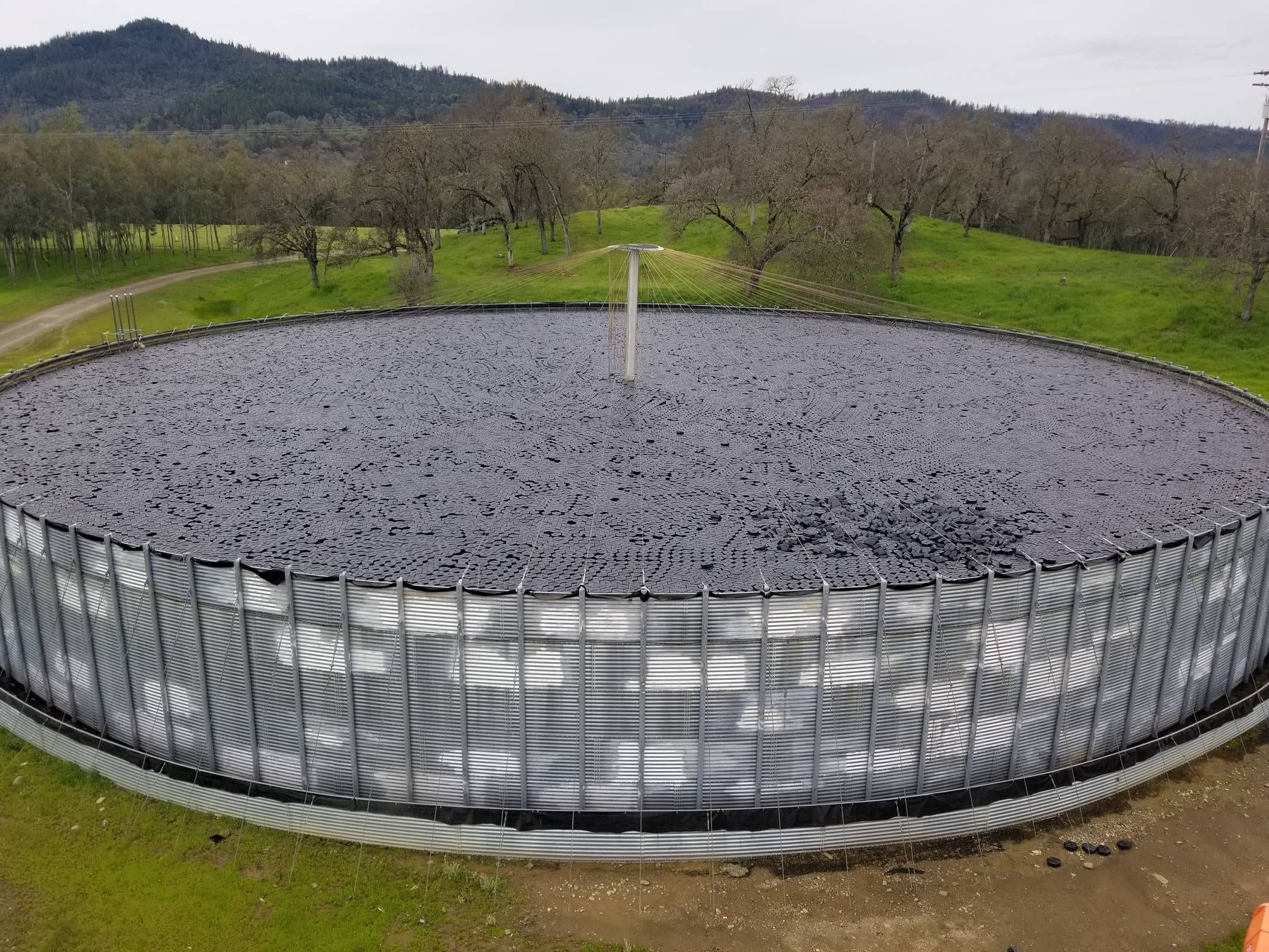
Coverage: up to 99% | Wind resistant
Hexprotect® AQUA
Achieves up to 99% surface coverage with interlocking hexagonal tiles — optimal for deicing fluid ponds where near-complete coverage is required to minimize evaporation and maximize chemical containment.
Learn more → Shell: 1/16″ – 1/8″ thick | Supports FAA guidance
Armor Ball®
The cost-effective choice for large stormwater detention basins on airport property. Easy to deploy across any pond geometry, requires no tools or anchoring, and provides immediate bird deterrence with 90% surface coverage.
Learn more →Frequently Asked Questions — Airports
Common questions from airports operators and engineers evaluating AWTT floating cover systems.
Do AWTT floating covers meet FAA guidance for airport bird hazard management?
How do floating covers prevent bird strikes near airport runways?
Can floating covers be used on deicing fluid (ADF) collection ponds?
How do AWTT floating covers perform in cold climates with ice and snow?
How quickly can floating covers be installed on an airport pond?
Ready to Solve Your Airport Water Storage Challenges?
Contact AWTT for a custom floating cover recommendation tailored to your airports operation — including site assessment, specification sheets, and ROI analysis.
Engineering Tools & Resources
Evaporation Rate Calculator
Estimate evaporation losses on your pond or reservoir and the ROI of a floating cover, using five FAO-56 / Harbeck methods with real-time weather.
Heat Loss & ROI Calculator
Model heat loss from a heated pond with the ASHRAE 5-component balance, then compare insulation savings and 20-year cost of ownership.
Not Sure Which Cover?
Answer a few questions about your site conditions and get a personalized product recommendation.
Technical Specifications
View full engineering specs, wind resistance data, R-values, and material compliance details.