Floating Covers for Wastewater Treatment Lagoons — Algae Control, Odor Containment & Permit Compliance
Protect effluent quality, contain odors, capture biogas, and maintain regulatory compliance with AWTT's modular floating cover systems for municipal and industrial wastewater.
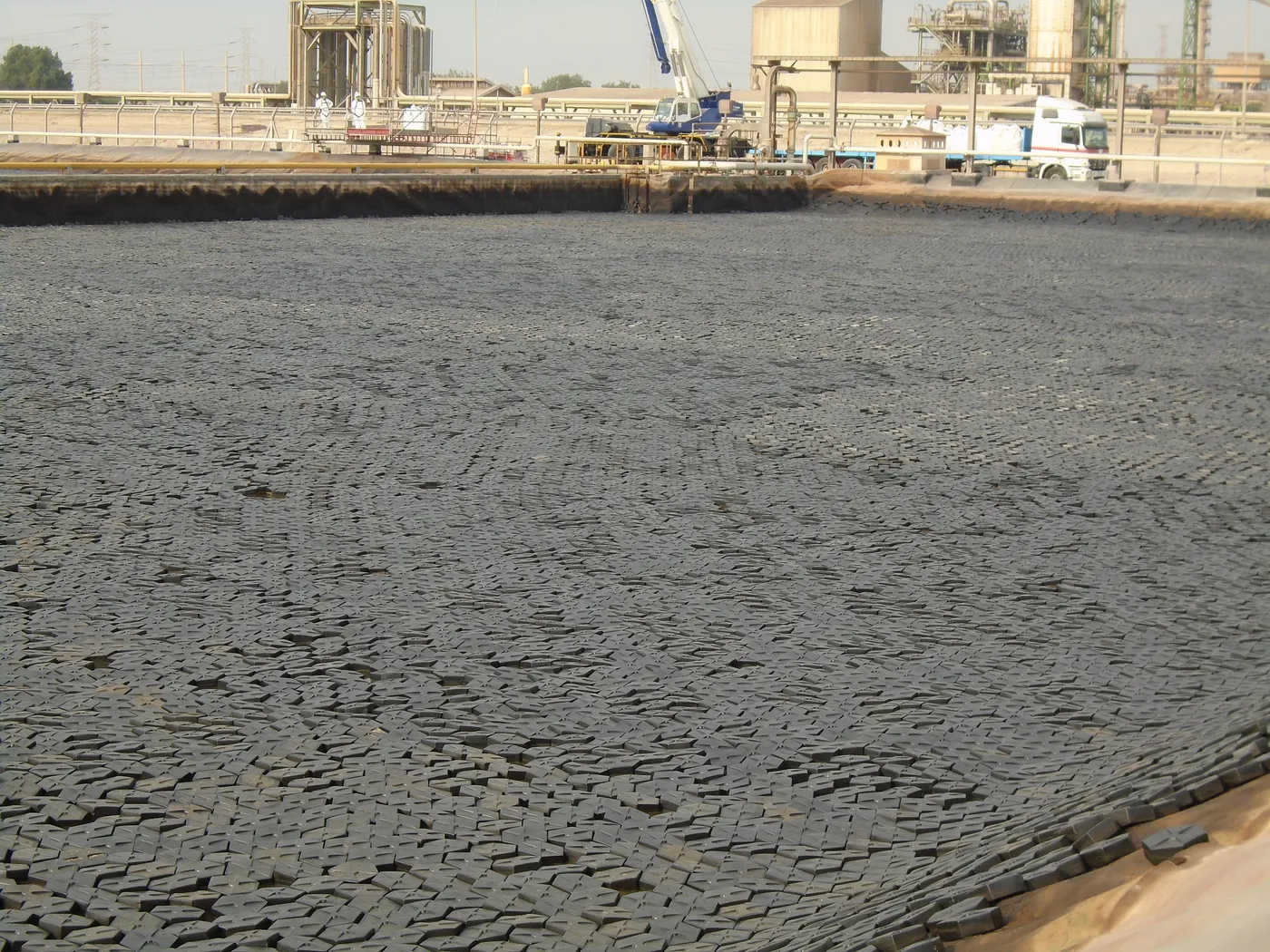
Municipal and industrial wastewater treatment lagoons use floating covers to prevent algae blooms that cause NPDES permit violations, contain hydrogen sulfide and ammonia odors, capture biogas, and stabilize biological treatment temperatures year-round. Wastewater treatment lagoons are among the most challenging water management environments — subject to strict NPDES discharge permits, air quality regulations, community odor complaints, and the constant threat of algae-driven permit violations. Uncovered lagoons allow sunlight to fuel explosive algae growth that spikes Total Suspended Solids (TSS) and Biochemical Oxygen Demand (BOD/COD), admit stormwater that disrupts hydraulic balance and retention time, and release hydrogen sulfide (H₂S), ammonia, and methane into the surrounding environment.
AWTT's modular floating cover systems — including Hexprotect® AQUA, Hexprotect® MAX R, and Rhombo Hexoshield® 189 — address every tier of wastewater lagoon challenges: from effluent quality and discharge permit compliance to air quality and odor control, operational cost reduction, and environmental protection. The covers block up to 99% of sunlight, divert 100% of stormwater, insulate biological treatment year-round, and capture biogas for flaring or energy recovery — delivering a single capital investment that solves multiple regulatory and operational problems simultaneously. Run the AWTT wastewater lagoon evaporation calculator to size cover-driven water-loss savings on your specific lagoon.
Engineers and editors can also reference AWTT's anonymized application notes and wastewater lagoon specification guide for public, citeable selection logic without named-customer claims.
Related Engineering Guides
Case Study: Municipal Wastewater Lagoon Odor & Algae Control
Anonymized application note for Hexprotect® AQUA deployment on a municipal wastewater lagoon — algae suppression, odor reduction, wind-resistant surface coverage.
Case Study: Industrial Wastewater High-Wind Cover Selection
Cover-selection logic for industrial wastewater lagoons in high-wind environments — wind-rating thresholds and ballast strategy.
Wastewater Lagoon Floating Cover Specification Guide
Public, citeable selection logic for wastewater lagoon floating covers — without named-customer claims.
Floating Covers — Complete Overview
The three families of modular floating cover, how they compare, and how to specify the right system.
Common Wastewater Industry Challenges
Uncovered water storage creates measurable operational, environmental, and compliance risks specific to wastewater facilities.
Algae Blooms & Permit Violations
Sunlight fuels rapid algae growth in uncovered lagoons, spiking Total Suspended Solids (TSS) and Biochemical Oxygen Demand (BOD/COD) — the leading cause of NPDES discharge permit exceedances at municipal and industrial wastewater facilities.
Stormwater Intrusion & Hydraulic Overloading
Rainwater entering uncovered treatment ponds dilutes the treatment process, increases effluent volume beyond permitted limits, and can reduce biological retention time or trigger unpermitted overflow events.
Temperature Swings & Biological Upset
Biological treatment relies on temperature-sensitive microorganisms. Harsh winters slow bacterial activity, while extreme summer heat can cause die-offs — leading to inconsistent effluent quality and seasonal permit challenges.
Odor Complaints & Air Quality Violations
Anaerobic lagoons release hydrogen sulfide (H₂S), volatile organic compounds (VOCs), and ammonia. Uncontrolled emissions generate community complaints and risk air quality permit violations — often the second-largest regulatory burden after water discharge.
Uncontrolled Methane Emissions
Anaerobic digestion produces methane — a greenhouse gas 80× more potent than CO₂ over 20 years. Uncaptured methane represents both an environmental liability and a wasted energy resource.
Wildlife Contamination & Environmental Fines
Uncovered wastewater lagoons attract waterfowl and other wildlife, leading to animal fatalities, disease transmission risk, and potential environmental enforcement actions under state and federal wildlife protection regulations.
AWTT Floating Cover Solutions for Wastewater
Modular, maintenance-free floating covers engineered specifically to address the liquid containment challenges of wastewater operations.
Complete Algae Elimination
Floating covers block 95–99% of sunlight, completely starving algae of the UV energy required for photosynthesis. TSS and BOD levels drop immediately, keeping your effluent within NPDES permit limits without chemical intervention.
Stormwater Diversion & Volume Control
Covers physically separate clean rainwater from contaminated wastewater, shedding precipitation to perimeter drainage. This prevents hydraulic overloading, maintains biological retention time, and eliminates rain-induced overflow events.
Year-Round Temperature Stabilization
The insulating blanket effect keeps lagoons warmer in winter and cooler in summer. Biological treatment operates at peak efficiency year-round — delivering consistent, permit-compliant effluent regardless of season.
Odor Containment & Gas Routing
Covers trap H₂S, VOCs, and ammonia at the water surface, allowing controlled routing through scrubbers or biofilters. Neighborhood odor complaints are eliminated and air quality compliance is maintained.
Biogas Capture & Energy Recovery
Anaerobic methane is captured under the cover and can be flared for regulatory compliance or repurposed through cogeneration to offset facility energy costs — turning an environmental liability into a revenue stream.
Reduced Chemical & Maintenance Costs
By preventing algae and excluding organic debris, floating covers dramatically reduce algaecide, chlorine, and flocculant usage. Downstream pumps, filters, and diffusers experience less fouling and longer service intervals.
Quick Facts — Wastewater Floating Cover Performance
Recommended Products for Wastewater
AWTT engineers recommend these floating cover systems for wastewater applications.
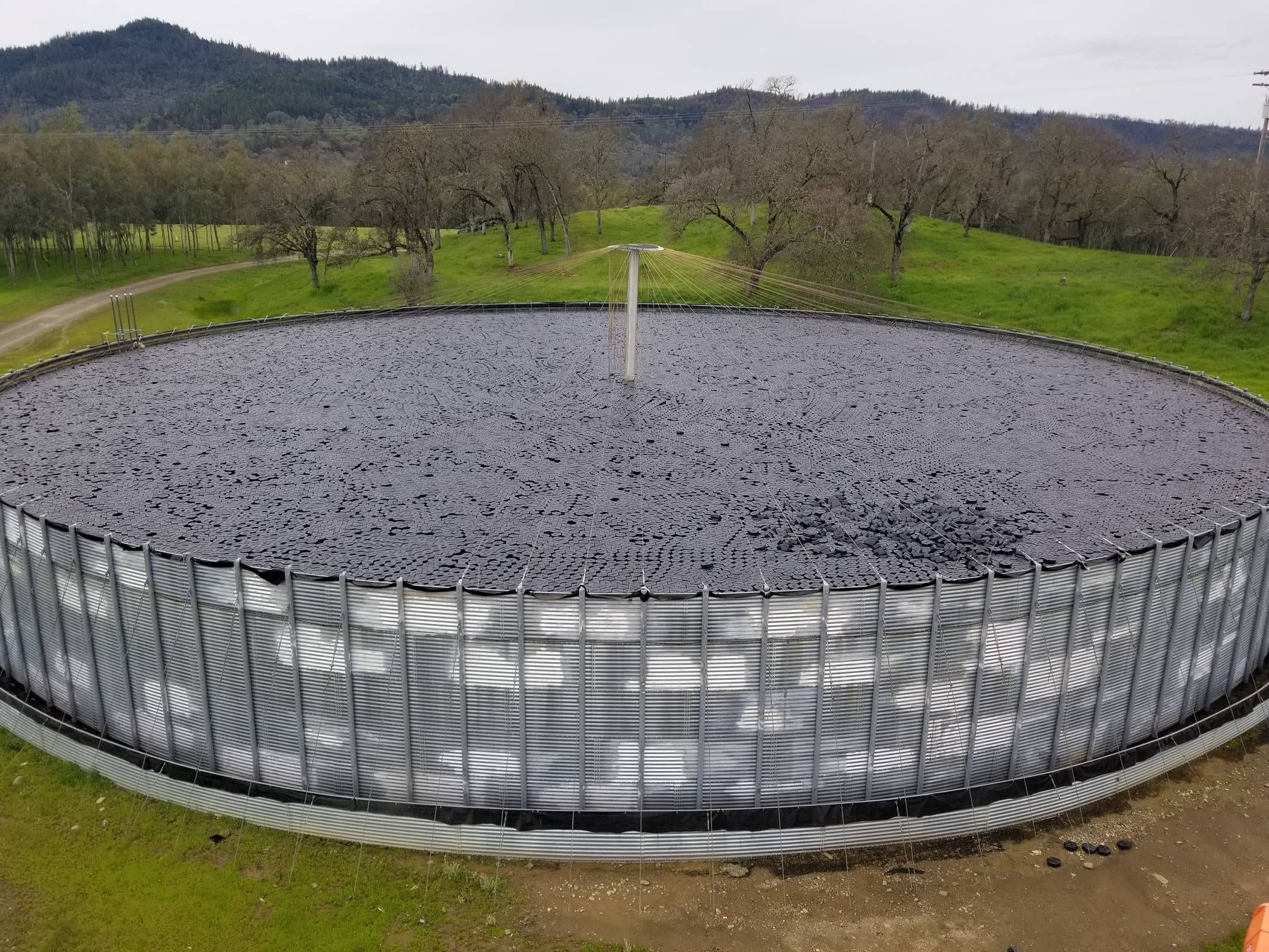
Coverage: up to 99% | Wind: 130+ MPH
Hexprotect® AQUA
The top choice for wastewater applications. Interlocking hexagonal tiles achieve up to 99% surface coverage — maximizing algae prevention, odor containment, and stormwater exclusion. Water-ballasted for superior wind resistance in exposed lagoon environments.
Learn more → R-Value: R-17+ | Insulated for cold climates
Hexprotect® MAX R
Engineered for cold-climate wastewater facilities where biological treatment depends on maintaining lagoon temperature. The R-17+ insulated design keeps microbial activity consistent through winter, preventing seasonal effluent quality drops.
Learn more →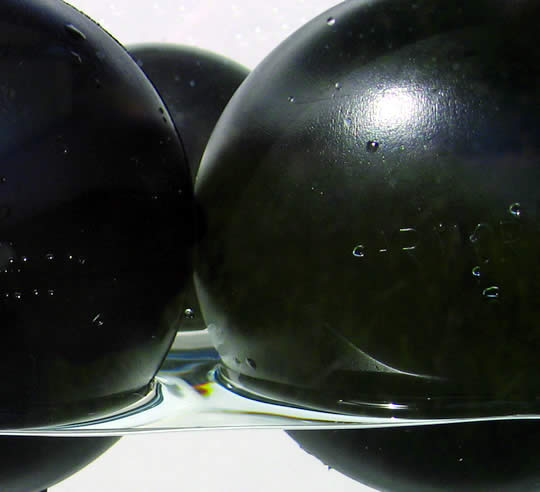
R-Value: R-8 | Maximum insulation
Rhombo Hexoshield® 189
The highest-insulation floating cover in the AWTT lineup. Ideal for anaerobic digesters and cold-region lagoons where heat retention is critical for methane production and year-round biological treatment performance.
Learn more →Frequently Asked Questions — Wastewater
Common questions from wastewater operators and engineers evaluating AWTT floating cover systems.
How do floating covers prevent algae growth in wastewater lagoons?
Can floating covers capture biogas from anaerobic wastewater lagoons?
How do floating covers help with NPDES discharge permit compliance?
Do floating covers work on both municipal and industrial wastewater lagoons?
How do floating covers reduce odor from wastewater treatment ponds?
What maintenance do floating covers require on wastewater lagoons?
Ready to Solve Your Wastewater Water Storage Challenges?
Contact AWTT for a custom floating cover recommendation tailored to your wastewater operation — including site assessment, specification sheets, and ROI analysis.
Engineering Tools & Resources
Evaporation Rate Calculator
Estimate evaporation losses on your pond or reservoir and the ROI of a floating cover, using five FAO-56 / Harbeck methods with real-time weather.
Heat Loss & ROI Calculator
Model heat loss from a heated pond with the ASHRAE 5-component balance, then compare insulation savings and 20-year cost of ownership.
Not Sure Which Cover?
Answer a few questions about your site conditions and get a personalized product recommendation.
Technical Specifications
View full engineering specs, wind resistance data, R-values, and material compliance details.