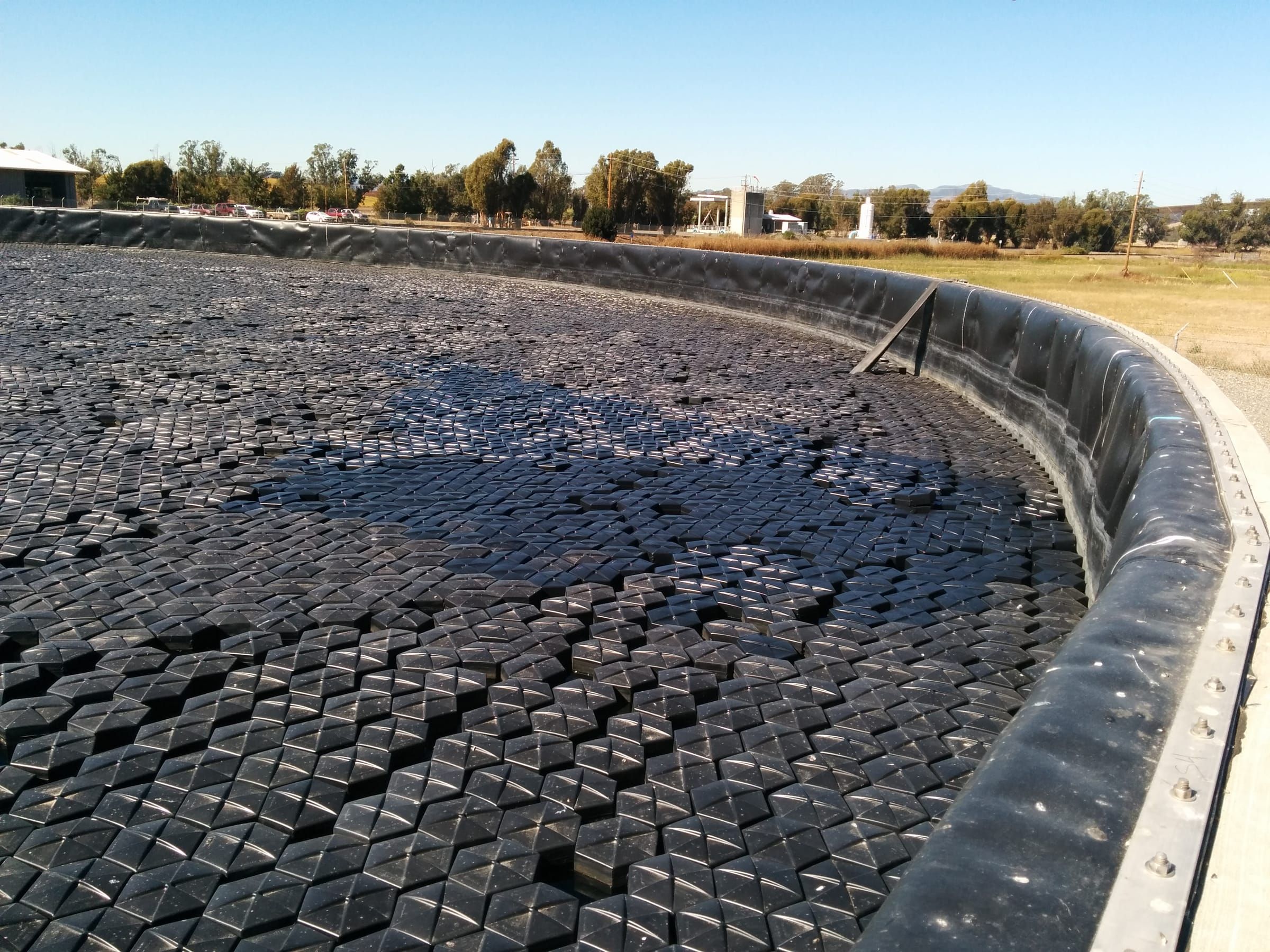
Pond Surface Area & Floating Cover Coverage Calculator
Estimate water surface area for ponds and tanks of any shape — and see exactly how many floating cover units you'll need with a live 3D preview.
Accurate surface area is the first number every floating cover project needs — it drives quote pricing, product count, freight, and installation schedule. The AWTT Surface Area & Coverage Estimator computes water surface area for rectangular ponds, round tanks, and irregular shapes in seconds, accounting for sloped sides and freeboard using frustum geometry. Engineers and procurement teams use it to convert tape-measure dimensions to a quote-ready cover requirement.
Results display in either Imperial (ft², gallons) or Metric (m², m³) and update live as you type. A built-in 3D preview renders your pond or tank with floating cover product variants — Armor Ball®, Hexprotect®, and Rhombo Hexoshield® — at full or partial coverage. Export a screenshot for project documentation, or click "Get a Quote" to pre-fill the AWTT contact form with your dimensions and total area.
Surface Area & Coverage Estimator
Calculate total water surface area for one or more ponds or tanks
Showing all ponds/tanks side by side
Drag to rotate · Scroll to zoom · Pinch on mobile · Right-click to pan
Related calculators
Evaporation Rate Calculator
Five FAO-56 / Harbeck methods, real-time weather, monthly chart, and a 5-tier Value Stack ROI overlay.
Heat Loss & ROI Calculator
ASHRAE 5-component heat balance plus dynamic flow-through outlet-temperature predictor and 20-year TCO.
Specification Builder
Generate a CSI 3-part floating cover specification section with product selection, piece count, and an indicative budget band.
The Problem — Why It Matters
Facility operators and engineers face these measurable challenges that AWTT floating covers directly address.
Wrong Area Drives Wrong Quotes
Undersized cover orders leave gaps that admit algae, debris, and evaporation; oversized orders blow project budgets and create disposal waste. The first source of error in a floating cover specification is almost always a manual area calculation on a notebook or spreadsheet.
Sloped Earthen Ponds Distort Manual Math
Earthen ponds are not boxes — sloped banks reduce the actual water surface area at the rim by a setback factor that depends on freeboard and bank slope. Treating a sloped pond as a flat rectangle overstates surface area by 5–30% on typical industrial geometries.
Multi-Cell Facilities Need Combined Totals
Wastewater treatment plants, mining tailings facilities, and chemical processing sites often operate multiple ponds or tanks. Submitting an RFQ with per-cell math invites errors; combined totals across many cells in one document are what engineering and procurement teams actually need.
Unit Conversions Cause Specification Drift
Imperial dimensions feed a project specified in m², and metric inputs land in a procurement system priced in ft². Manual unit conversion in spreadsheets is a known source of specification drift on international and multi-region projects.
Round Tanks Need Different Geometry
Cylindrical and conical tanks need diameter-based area math (πr²) and, for tapered tanks, frustum volume. Generic surface area calculators ignore the cover-relevant case where a tank is partly drawn down or filled below the rim.
No Visual = Wrong Cover Variant Specified
Cover product selection (modular spheres, hexagonal tiles, rhombic tiles, insulated covers) depends on pond shape, perimeter access, and visual coverage density. Without a 3D preview at quote time, the wrong variant is often specified — and the mismatch shows up only at installation.
The AWTT Solution
Modular, maintenance-free floating covers engineered to directly solve surface area challenges in industrial liquid containment.
Frustum Geometry Built In
The calculator applies frustum math (truncated cone for round tanks, prismatoid for rectangular ponds) so sloped sides and freeboard are automatically subtracted from the rim measurement. Earthen pond results match what a survey crew would measure at the actual water surface.
Unlimited Ponds and Tanks in One Project
Add as many ponds, tanks, and cells as your facility has. Each item keeps its own name, shape, and dimensions. The bottom panel always shows the combined total — ready to drop into an RFQ or specification document.
Three Shapes, One Calculator
Choose Rectangular for boxy ponds and basins, Round for cylindrical and conical tanks, or — by entering only a known area — feed irregular and free-form shapes directly. All three update the combined project total live.
Imperial and Metric on One Click
Toggle between ft²/gallons and m²/m³ instantly. Every input, label, and result re-formats — no spreadsheet conversion errors, no copy-paste mistakes between RFP and quote.
Live 3D Preview of Your Cover
The integrated WebGL preview renders your pond or tank with the actual AWTT cover product you're evaluating — Armor Ball, Hexprotect, or Rhombo Hexoshield — at full or partial coverage. Rotate, zoom, and screenshot for project documentation.
One-Click Quote Handoff
"Get a Quote" pre-fills the AWTT contact form with every dimension, area, volume, and product selection. Procurement reaches engineering with a complete brief — no back-and-forth email loop to nail down numbers.
Technical Specifications — Surface Area
Recommended Products
AWTT engineers recommend these floating cover systems for applications related to surface area.
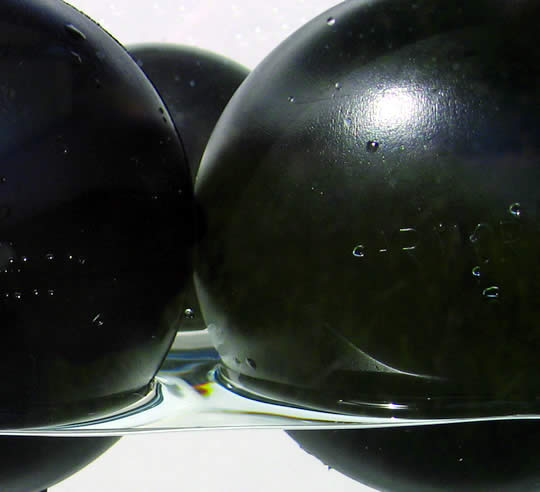
Modular spheres | All pond sizes
Armor Ball®
The most flexible AWTT cover for variable shapes and depths. Modular spheres conform to irregular shorelines and partial-fill conditions — making them the default starting point for first-time floating cover projects.
Learn more →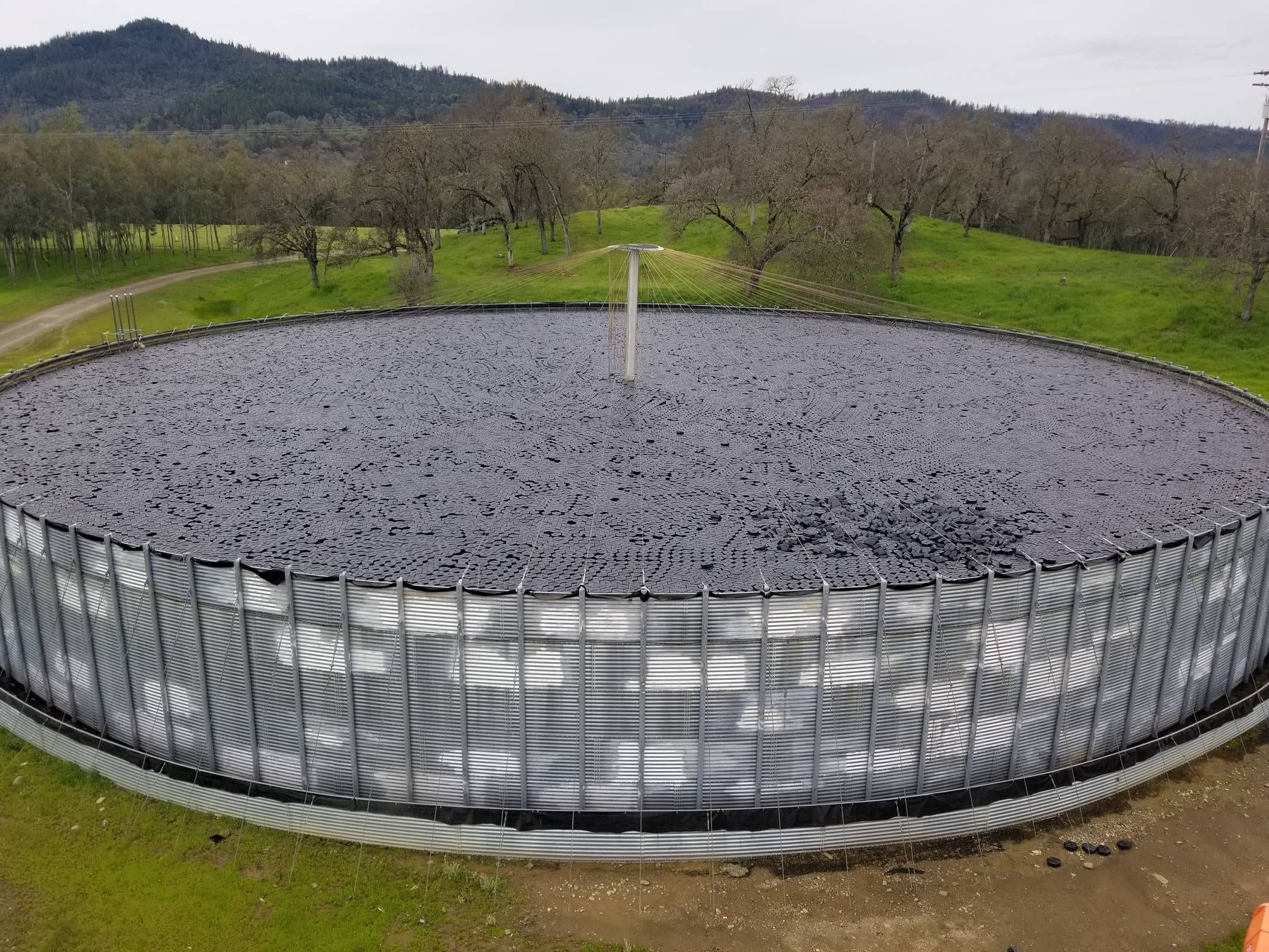
Coverage: up to 99% | Hexagonal tiles
Hexprotect® AQUA
When maximum surface coverage matters — municipal water supply, drought-region reservoirs — Hexprotect AQUA delivers up to 99% surface area coverage with interlocking hexagonal tiles.
Learn more →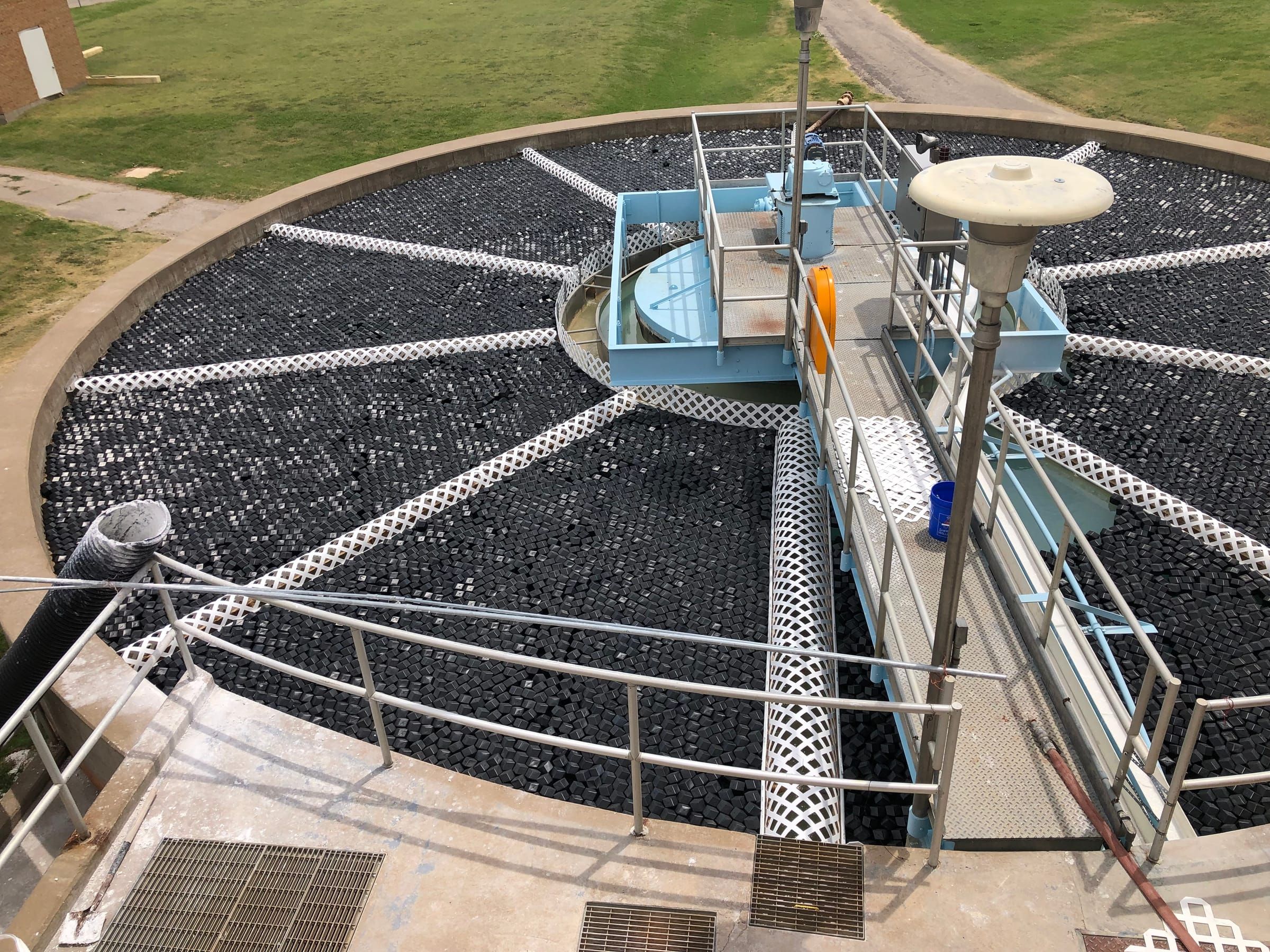
Evap reduction: up to 98% | Hybrid
Rhombo Hexoshield®
For projects where evaporation reduction is the primary driver — arid-region reservoirs, mining tailings, frac ponds — Rhombo Hexoshield achieves the highest evaporation control in the AWTT range.
Learn more →Frequently Asked Questions — Surface Area
Common questions from engineers and operators using this calculator.
How accurate is the calculator for sloped earthen ponds?
Can I calculate multiple ponds or tanks in one session?
What units does the calculator support?
Does the 3D preview reflect actual product coverage density?
Do I need to know the pond depth?
How do I send the results to AWTT for a quote?
Can I use this for natural lakes or irregular reservoirs?
Related Engineering Calculators
Other free AWTT engineering calculators for sizing floating covers, quantifying water loss, and projecting ROI.
Evaporation Rate Calculator
Live-weather pond evaporation with 5 physical models (Penman-Monteith, Priestley-Taylor, Hargreaves-Samani, aerodynamic, empirical) and per-product cover savings.
Open calculator →Heat Loss & ROI Calculator
ASHRAE 5-component heated-pond model with 3-scenario cost comparison and 20-year lifecycle TCO for insulated covers.
Open calculator →Ready to Talk with an AWTT Engineer?
Contact AWTT for a custom floating cover recommendation — including site assessment, specification sheets, and ROI analysis.
Engineering Tools & Resources
Evaporation Rate Calculator
Estimate evaporation losses on your pond or reservoir and the ROI of a floating cover, using five FAO-56 / Harbeck methods with real-time weather.
Heat Loss & ROI Calculator
Model heat loss from a heated pond with the ASHRAE 5-component balance, then compare insulation savings and 20-year cost of ownership.
Not Sure Which Cover?
Answer a few questions about your site conditions and get a personalized product recommendation.
Technical Specifications
View full engineering specs, wind resistance data, R-values, and material compliance details.