A floating cover is an engineered barrier that sits directly on the surface of a liquid — pond, reservoir, lagoon, or tank — to suppress evaporation, block sunlight, contain odors and volatile organic compounds (VOCs), and exclude wildlife. Unlike fixed roof structures or tensioned membrane systems, a floating cover rises and falls with the liquid level, maintaining continuous contact with the surface regardless of volume changes.
Since 2004, AWTT (Advanced Water Treatment Technologies) has pioneered modular floating cover technology, inventing the world’s first pre-loaded hexagonal floating cover in 2006. With 700+ installations across 25 countries and more than 20 million square feet deployed, AWTT’s systems have been validated by the U.S. Department of Energy and proven through Category 4 hurricanes. This guide covers everything engineers, facility managers, and procurement teams need to know about floating covers — from fundamental physics to product selection.
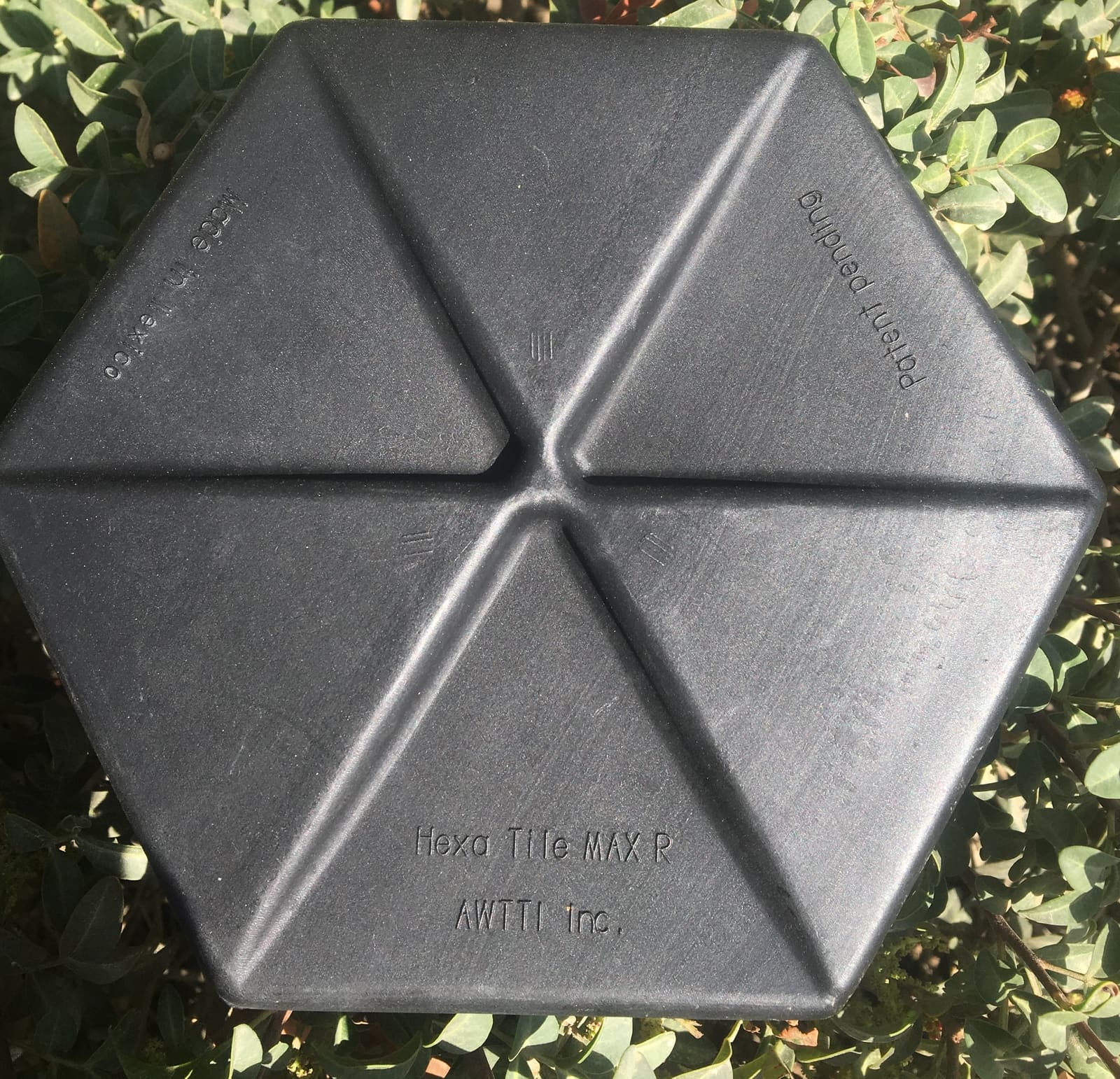
How a Floating Cover Works
The operating principle is straightforward: a floating cover exploits buoyancy to remain on the liquid surface while creating a physical barrier between the liquid and the atmosphere. This barrier accomplishes four things simultaneously:
- Blocks solar radiation — Eliminating UV penetration prevents photosynthetic algae growth and reduces thermal heating of the liquid.
- Suppresses evaporation — By eliminating the air-water interface (or drastically reducing its exposed area), evaporative mass transfer drops by 90% or more.
- Contains emissions — VOCs, hydrogen sulfide, ammonia, and other gaseous byproducts are trapped beneath the cover surface.
- Excludes wildlife and debris — Birds, insects, windblown sediment, and organic material cannot reach the liquid surface.
A well-designed floating cover achieves all of this passively — no mechanical systems, no energy consumption, no operator intervention. Once deployed, the cover self-levels as the liquid rises or falls, maintaining performance through seasonal cycles, storm events, and normal operational fluctuations.
Why Floating Covers Exist: The Problems They Solve
Evaporation Losses Cost Millions
An uncovered 10-acre pond in the American Southwest can lose 15 to 22 million gallons per year to evaporation. In mining, oil and gas, and municipal water storage, that translates directly to increased pumping costs, chemical treatment expenses, and purchased makeup water. A single uncovered reservoir can waste $200,000 to $1,000,000+ annually in lost water value alone — before factoring in downstream treatment costs.
Algae and Biological Growth
Sunlight plus nutrients equals algae. In drinking water reservoirs, algal blooms create taste and odor complaints, increase disinfection byproduct (DBP) formation potential, and in severe cases trigger public health advisories. In wastewater and industrial lagoons, excessive biological growth fouls equipment, disrupts treatment processes, and accelerates sludge accumulation.
Odor and VOC Emissions
Wastewater treatment plants, biogas digesters, rendering facilities, and chemical storage lagoons generate odorous and often hazardous emissions. Regulatory agencies including the EPA, state air quality boards, and local permitting authorities increasingly require emission containment. A floating cover is often the most cost-effective path to compliance.
Wildlife Contamination and Regulatory Risk
The Migratory Bird Treaty Act (MBTA), state wildlife regulations, and facility-specific discharge permits create legal liability for operators of uncovered ponds containing hazardous or process liquids. Mining tailings, oil and gas produced water, and chemical storage ponds are particularly vulnerable. A single bird mortality event can trigger enforcement actions, fines, and operational shutdowns.
Regulatory Compliance
From EPA’s Clean Air Act requirements to state-level potable water reservoir regulations, the trend is clear: uncovered liquid storage faces escalating regulatory pressure. Floating covers provide a documented, verifiable compliance mechanism that satisfies multiple regulatory frameworks simultaneously.
Types of Floating Covers
Not all floating covers are created equal. The five primary categories differ significantly in performance, durability, installation complexity, and total cost of ownership.
| Type | Coverage | Wind Resistance | Best For | AWTT Product |
|---|---|---|---|---|
| Ball Covers | ~91% | Low — displacement risk | Bird deterrence on small ponds | — |
| Hexagonal Modular Tiles | Up to 99% | 35–130+ MPH, hurricane-proven | Industrial, mining, water utilities | HexProtect, EconoHex |
| Hybrid Panels | High | High | Specialty flow-through / venting | Rhombo |
| Insulated Floating Covers | Up to 99% | Hurricane-proven | Heated digesters, cold-climate | Hexprotect® MAX R |
| Traditional Geomembrane | ~100% | Requires anchor trenches | Single-piece sheet installs | — |
Ball Covers (Shade Balls / Bird Balls)
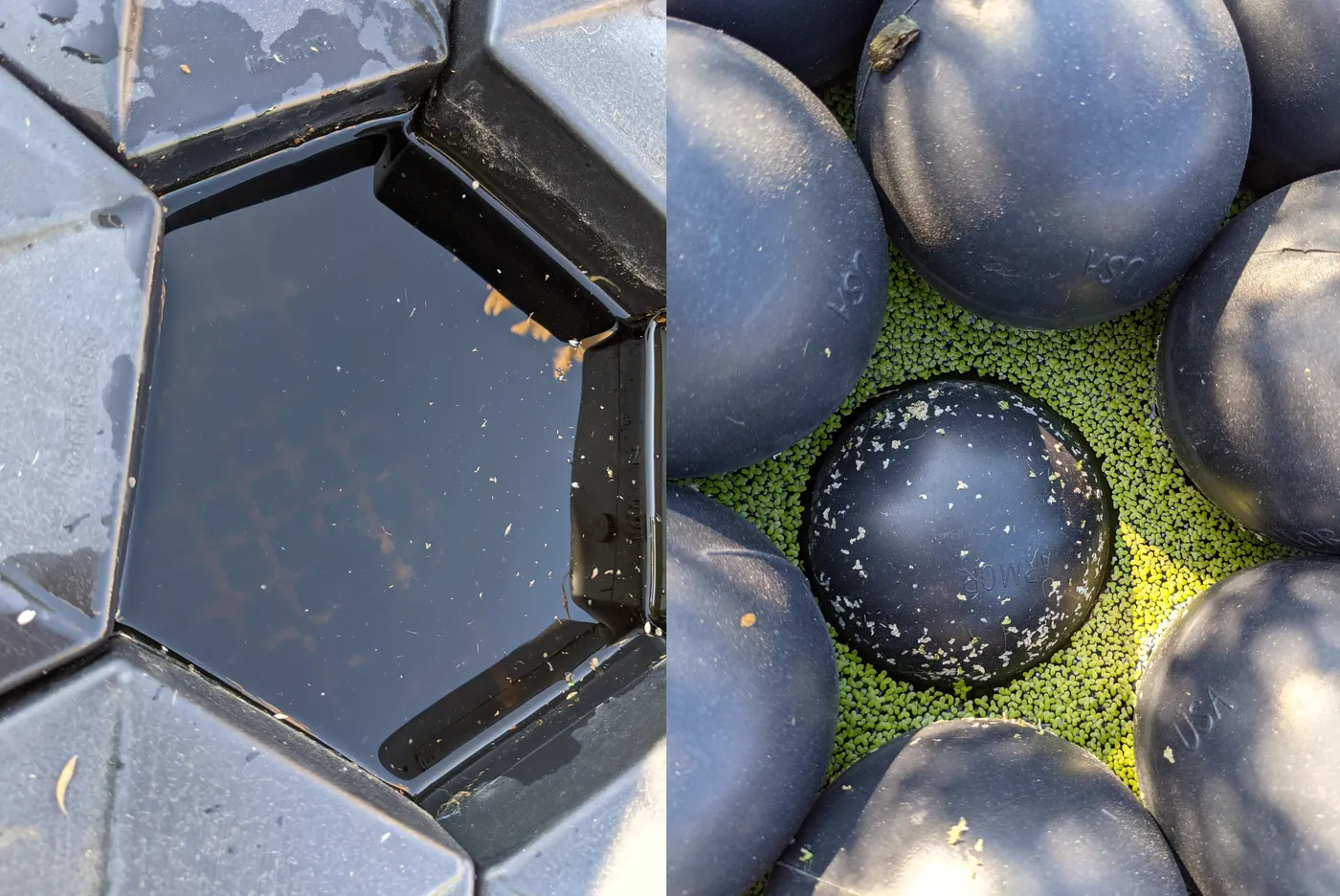
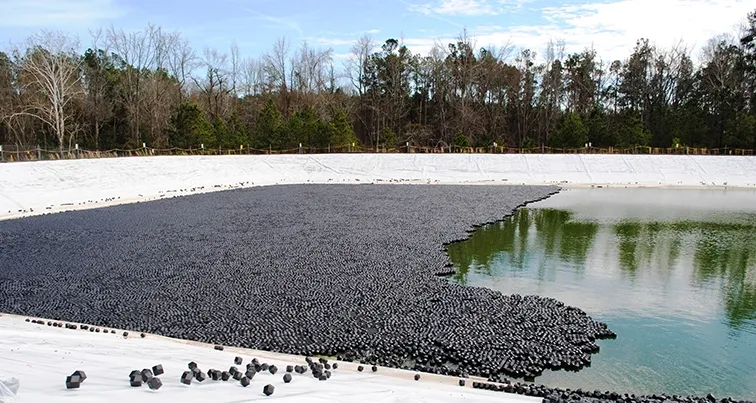
Individual hollow spheres (typically 4-inch HDPE) floated en masse on the liquid surface. They provide approximately 91% surface coverage at best, with significant wind displacement risk. Ball covers are a low-cost entry point but offer limited evaporation control and no emission containment. Best suited for bird deterrence on smaller ponds.
Hexagonal Modular Tiles (AWTT HexProtect and EconoHex)
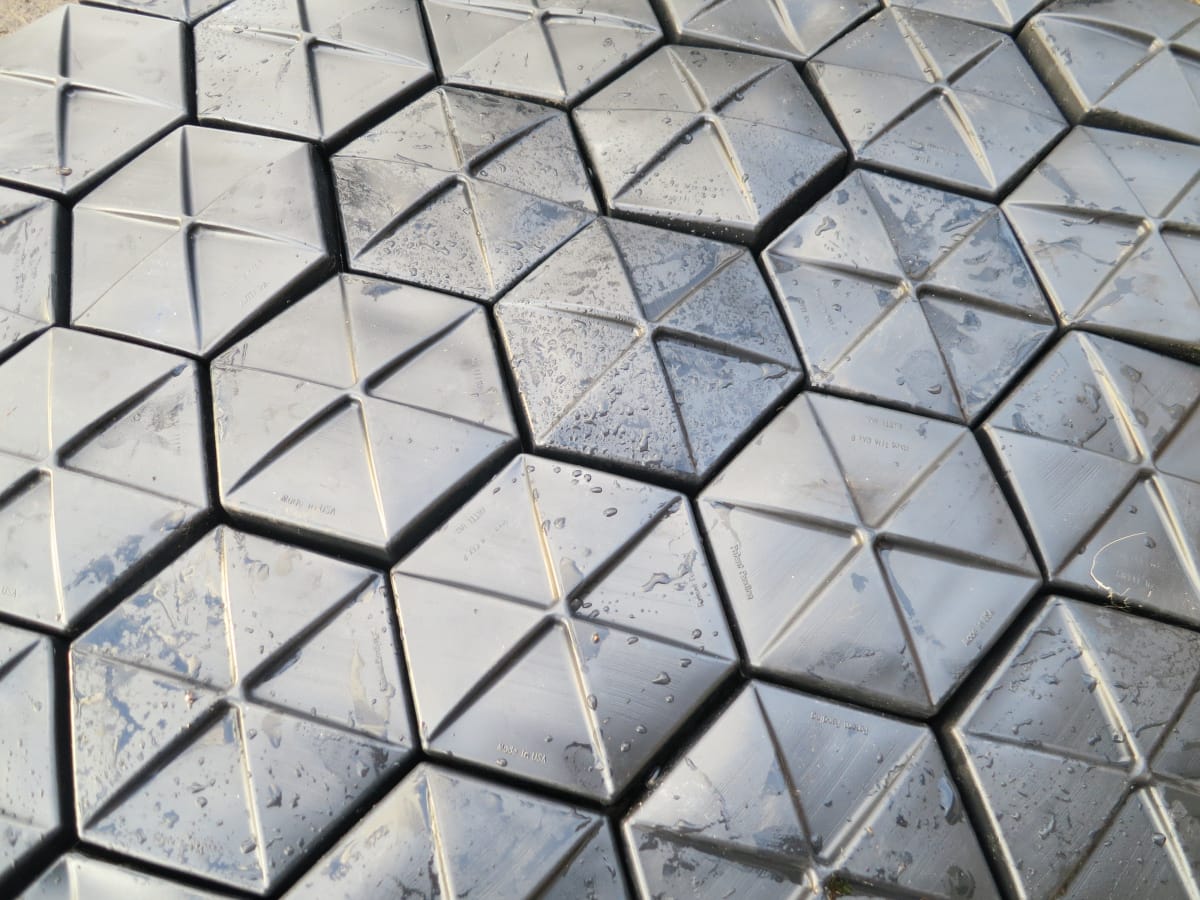
AWTT’s original invention — interlocking hexagonal modules that tile the surface with up to 99% coverage. Pre-loaded chambers ship with water inside at 100%–300% of basic tile weight to resist wind uplift. No anchoring, no cables, no mechanical fasteners. Available in standard and insulated configurations. This is the technology behind AWTT’s 700+ installations worldwide.
Hybrid Panels (AWTT Rhombo)
Rhombus-shaped panels combining the interlocking geometry of hexagonal systems with enhanced coverage characteristics. Designed for applications requiring specific flow-through or venting characteristics while maintaining high surface coverage.
Insulated Floating Covers (Hexprotect® MAX R)
Rigid insulated panels delivering R-values from R-7 to R-17+ for applications where thermal management is critical — heated digesters, process tanks, and cold-climate installations. These panels reduce heat loss, lower energy costs, and maintain biological process temperatures in anaerobic digesters and similar systems.
Traditional Geomembranes (Solid Sheet Covers)
Single-piece HDPE, RPP, or XR-5 membranes spanning the entire pond surface. While they achieve near-100% coverage, geomembranes require extensive anchoring infrastructure, are vulnerable to wind damage, trap rainwater and gas beneath the surface, and demand ongoing maintenance. Tears, punctures, and seam failures are common failure modes. For a detailed comparison, see our Modular vs. Solid Cover Analysis.
For complete product specifications and configurations, visit our Products page.
How Pre-Loaded Ballast Works
AWTT pioneered pre-loaded floating cover technology in 2006, fundamentally changing how modular covers resist wind forces. The principle is elegant:
Each hexagonal module contains integrated ballast chambers — hollow compartments pre-loaded with water at the factory to 100%–300% of basic tile weight. This built-in mass sits at or just below the waterline, lowering each tile’s center of gravity and locking the cover in place from the moment of deployment, independent of wind conditions.
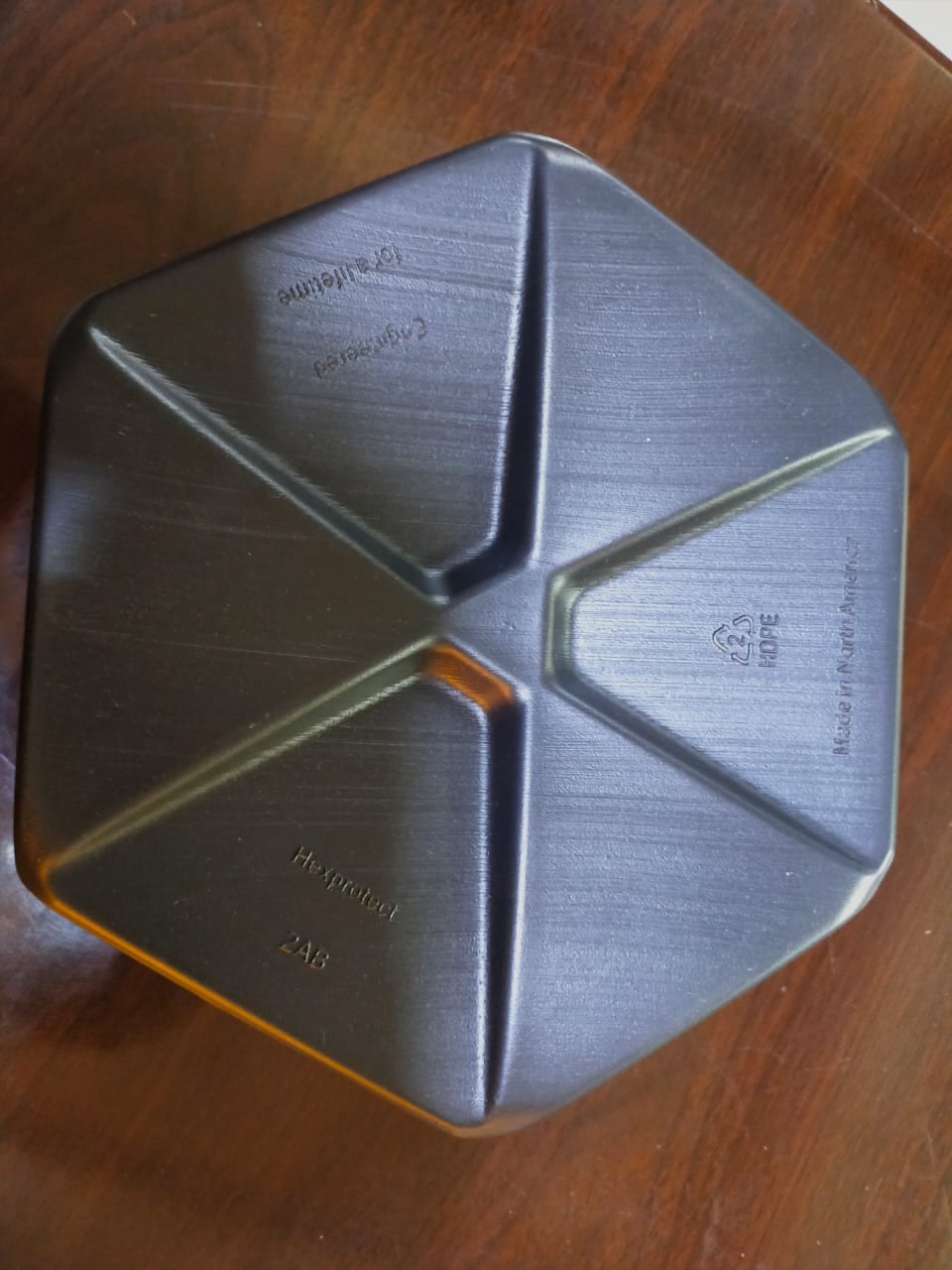
This creates a passive, maintenance-free response to wind loading:
- No anchoring cables — The cover is free-floating, which means it accommodates any liquid level change without adjustment.
- No mechanical fasteners — Nothing to corrode, fatigue, or fail.
- No operator intervention — The ballast is built in at manufacture.
- No edge attachment — The cover can be deployed on irregularly shaped ponds, lined or unlined, with sloped or vertical walls.
AWTT’s patented pre-loaded designs have been validated through real-world hurricane events, including Hurricane Florence (2018), Hurricane Dorian (2019), Hurricane Nicole (2022), and Hurricane Helene (Category 4, 2024). In every case, AWTT floating covers remained intact and functional with zero maintenance required after the storm.
Key Performance Metrics
When evaluating floating covers, the following specifications determine real-world performance. All values below represent AWTT product ranges across the full product line.
| Metric | AWTT Range | Significance |
|---|---|---|
| Surface Coverage | 91% – 99% | Higher coverage = greater evaporation and algae suppression |
| Evaporation Reduction | 90% – 98% | Directly reduces water loss and chemical consumption |
| Wind Resistance | 35 – 130+ MPH | Determines survivability in storm-prone regions |
| Thermal Insulation (R-value) | R-1 to R-17+ | Critical for heated digesters and cold-climate applications |
| Operating Temperature | -70°F to +160°F | Covers the full range from Arctic to hot process liquids |
| UV Resistance | 15,000+ hours accelerated testing | Ensures long-term material stability under solar exposure |
| Chemical Compatibility | pH 2–13, hydrocarbons, H2S, brine | Validated for the most aggressive industrial environments |
| Design Lifespan | 25+ years | Backed by field data from installations dating to 2006 |
For detailed spec sheets and engineering data, visit our Technical Data library.
To estimate evaporation savings, chemical reduction, and ROI for your specific site, use our online calculators.
Industries and Applications
AWTT floating covers are deployed across 14+ industries on five continents. The following represent the primary application categories.
Drinking Water and Potable Reservoirs
Municipalities and water utilities use floating covers to maintain water quality by blocking algae growth, preventing contamination from birds and debris, and reducing disinfection byproduct precursors. Compliance with EPA’s Long Term 2 Enhanced Surface Water Treatment Rule (LT2) is a common driver.
Wastewater Treatment
Lagoons, equalization basins, and anaerobic ponds at municipal and industrial wastewater facilities use covers for odor control, VOC containment, and algae suppression. Floating covers reduce chemical dosing requirements and improve effluent quality.
Mining and Tailings
Tailings storage facilities, heap leach ponds, and process water reservoirs in gold, copper, lithium, and other mining operations use covers for evaporation reduction, wildlife exclusion (MBTA compliance), and cyanide/acid containment.
Oil and Gas
Produced water ponds, frac water storage, and flowback containment in upstream operations. Covers reduce water loss, contain hydrocarbon vapors, and meet state air quality requirements.
Biogas and Anaerobic Digestion
Covers on anaerobic digesters and biogas lagoons reduce heat loss — directly improving methane yield and reducing heating energy costs. Insulated Hexprotect® MAX R panels are particularly effective in this application.
Dairy and Agriculture
Manure lagoons, irrigation ponds, and agricultural process water storage. Covers control odor emissions (a growing regulatory concern for large dairy operations), reduce evaporation from irrigation reserves, and prevent nutrient-loading from bird waste.
Airports
Stormwater retention ponds and deicing fluid collection basins at commercial airports use floating covers primarily for wildlife deterrence — reducing bird strike risk in accordance with FAA Advisory Circular 150/5200-33C.
Chemical and Industrial Plants
Process water storage, chemical containment ponds, and cooling water basins. Chemical compatibility across pH 2–13 and hydrocarbon resistance make AWTT covers suitable for the most demanding industrial environments.
Cement and Aggregate
Wash water ponds, process lagoons, and dust suppression water storage at cement plants and aggregate operations.
Additional Applications
Power generation cooling ponds, desalination brine storage, aquaculture facilities, fire suppression reservoirs, and military installations round out the deployment base.
Installation and Maintenance
One of the most significant advantages of modular floating covers over traditional geomembranes is the simplicity of deployment.
Installation
- Tool-free deployment — Individual modules are placed on the water surface by hand or with light equipment. No welding, no mechanical fasteners, no specialized labor.
- No confined space entry — Modules are deployed from the pond edge. Workers do not enter the water or work beneath a suspended membrane.
- Rapid coverage — A typical crew of 2–4 workers can cover 10,000+ square feet per day, depending on site access and pond geometry.
- Any shape or size — Modular covers conform to irregular pond geometries, around pipes, baffles, aerators, and other in-pond infrastructure. No custom fabrication required.
- Phased deployment — Cover a portion of the pond now and expand later. No redesign or reconstruction required.
Maintenance
- Zero scheduled maintenance — No tensioning, no pump-outs, no seam inspections, no ballast adjustments.
- Self-leveling — Covers automatically track the liquid surface through filling, drawdown, and seasonal cycles.
- Self-healing coverage — If modules are displaced by extreme conditions, they naturally re-close as wind subsides. No manual repositioning required in normal operation.
- Individual module replacement — If a module is ever damaged (an uncommon event), it can be replaced individually without disturbing the rest of the cover. No pond draining, no membrane patching, no downtime.
- 25+ year operational lifespan — AWTT’s earliest installations (2006) remain in continuous service with no degradation in performance.
Floating Cover vs. Geomembrane: A Brief Comparison
Traditional geomembrane covers (solid sheet HDPE, RPP, or XR-5) have been used for decades but carry significant operational burdens that modular floating covers eliminate.
| Factor | Modular Floating Cover (AWTT) | Traditional Geomembrane |
|---|---|---|
| Installation | Tool-free, days | Weeks to months, specialized welding crews |
| Rainwater Management | Rain passes through to pond | Requires pumps to remove ponded water |
| Gas Management | Vents passively through module gaps | Requires gas collection / venting system |
| Wind Resistance | Pre-loaded ballast, hurricane-proven | Requires anchor trenches, prone to wind damage |
| Maintenance | Zero scheduled maintenance | Ongoing: seam inspections, pump maintenance, tear repair |
| Pond Access | Remove individual modules as needed | Entire cover must be cut or rolled back |
| Expansion / Modification | Add or remove modules freely | Requires new fabrication and welding |
| Lifespan | 25+ years, field-proven | 10–20 years typical, degradation at seams |
For a detailed engineering comparison with cost analysis, read our complete Modular vs. Solid Cover Guide.
How to Choose the Right Floating Cover
Selecting the optimal floating cover depends on several site-specific factors:
- Primary objective — Evaporation reduction, algae control, odor/VOC containment, wildlife exclusion, or thermal insulation? Most sites have multiple objectives.
- Liquid chemistry — pH, temperature, dissolved solids, hydrocarbon content, and specific chemical exposure dictate material selection.
- Climate and wind exposure — Sites in hurricane zones, high-wind corridors, or extreme cold/heat environments require products rated for those conditions.
- Pond geometry and infrastructure — Size, shape, in-pond equipment (aerators, mixers, baffles), and access constraints influence product selection.
- Regulatory requirements — Specific permit conditions may mandate coverage percentages, emission reduction levels, or material certifications.
- Budget and lifecycle cost — Initial cost, installation labor, maintenance burden, and expected lifespan determine true total cost of ownership.
AWTT offers two tools to streamline selection:
- Product Selector Tool — Answer a few questions about your application and receive a recommended product configuration.
- How to Choose a Floating Cover Guide — A detailed decision framework covering all critical selection criteria.
For complex or large-scale applications, contact our engineering team directly for a site-specific assessment and proposal.
Frequently Asked Questions
How long does a floating cover last?
AWTT modular floating covers are engineered for a 25+ year operational lifespan. Our earliest installations, dating to 2006, remain in continuous service with no measurable degradation. Materials are UV-stabilized, chemically resistant (pH 2–13), and rated for operating temperatures from -70°F to +160°F.
Can floating covers survive hurricanes and extreme weather?
Yes. AWTT’s pre-loaded ballast technology has been proven through multiple major hurricanes, including Hurricane Florence (2018), Hurricane Dorian (2019), Hurricane Nicole (2022), and Hurricane Helene (Category 4, 2024). Wind resistance ratings range from 35 to 130+ MPH depending on product configuration. Zero AWTT installations have been lost to storm events.
Do floating covers work on irregularly shaped ponds?
Absolutely. Modular covers are inherently adaptable — individual modules conform to any pond geometry, including curved edges, irregular shorelines, and obstructions such as pipes, aerators, baffles, and monitoring equipment. No custom fabrication or template-fitting is required.
How are floating covers installed?
AWTT modular covers require no tools, no welding, and no specialized labor. Modules are placed on the water surface from the pond edge by a crew of 2–4 workers. Typical deployment rates exceed 10,000 square feet per day. There is no confined space entry, no in-water work, and no heavy equipment required for most installations.
What maintenance is required?
None on a scheduled basis. AWTT modular covers are self-leveling, ship pre-loaded with ballast, and require no tensioning, pump-outs, seam inspections, or ballast adjustments. If a module is ever damaged, it can be replaced individually without disturbing the surrounding cover — no pond draining or cover removal required.
Are floating covers approved for drinking water applications?
Yes. AWTT products used in potable water applications are manufactured from NSF/ANSI 61 certified materials, the standard required for products in contact with drinking water. Municipalities and water utilities across the United States and internationally use AWTT floating covers on finished water reservoirs and distribution system storage.
About AWTT
Advanced Water Treatment Technologies (AWTT) has been engineering modular floating cover solutions since 2004. As the original inventor of pre-loaded hexagonal floating covers (2006), AWTT holds patented designs that have been recognized with a U.S. Department of Energy award for innovation in water conservation technology.
With 700+ installations across 25 countries and more than 20 million square feet of floating cover deployed, AWTT delivers the deepest field experience and most extensive performance dataset in the industry.
Ready to evaluate a floating cover for your site?